Launch and Recovery System Solutions for ROV Operations
Compare ROV launch and recovery systems (LARS) built by experienced manufacturers and suppliers to ensure consistent, controlled deployment and retrieval of underwater vehicles for research vessels, offshore platforms, and naval support ships.
If you design, build or supply ROV Launch and Recovery Systems (LARS), create a profile to showcase your capabilities and connect with visitors who have an active requirement for your solutions.
Launch and Recovery System Solutions for ROV Operations
Overview by
Summer James
Updated:
ROV launch and recovery systems serve as the primary interface between a vessel and an underwater vehicle. They manage lift lines, umbilicals, tethers, and structural loads while supporting controlled deployment and retrieval. Sea state, vessel motion, and hydrodynamic forces influence system design, which typically incorporates hydraulic cylinders, shock absorbers, davit arms, winches, and A-frames mounted on skid frames or deck tracks.
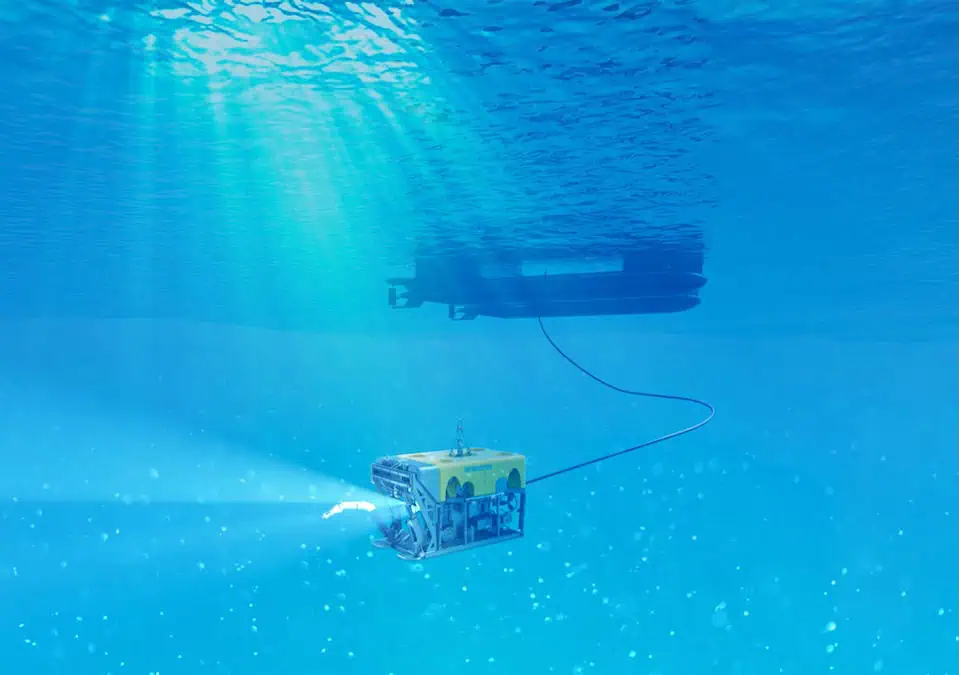
During launch, the system lowers the remotely operated vehicle (ROV) through the splash zone and stabilizes it until it is clear of surface motion. During recovery, it secures the vehicle using a docking head or recovery cradle and returns it to deck level while maintaining umbilical tension. Operators control winch speed, system actuation, and line handling using dedicated consoles.
Types of ROV LARS Systems
ROV launch and recovery architectures differ based on mission requirements, vehicle size, and vessel constraints. Common designs include:
A Frame Systems
A frames provide a stable, pivoting structure to deploy and retrieve ROVs from the vessel’s side or stern. They typically use hydraulic power units and hydraulic cylinders to control movement and lifting angles. A frames may integrate sheaves, guide wires, and docking heads to stabilize the vehicle.
Davit Systems
Davit systems offer compact handling solutions suitable for smaller vessels, lightweight ROVs, and nearshore operations. Davits can incorporate davit arms, sheaves, and fairleads to manage lift lines and umbilicals.
Winch and Umbilical Handling Systems
Winches control lift lines and tension throughout the deployment cycle. ROV winches may incorporate electric winch motors or hydraulic drives, depending on operational requirements. Umbilical winch systems manage vehicle power, data, and communications cables, using sheaves, hose reels, and fairlead assemblies to control payout and retrieval.
Skid Frame and Deck Track Systems
Skid frames or deck tracks allow LARS units to be repositioned on the deck for optimal launch alignment. They are used across marine research vessels, offshore platforms, and naval ships to accommodate varying mission configurations.
Tether Management System (TMS) Integration
Many ROVs use a tether management system that maintains a controlled tether length while the LARS winch manages the main umbilical. Integration ensures efficient transitions between surface handling and subsurface maneuverability.
Applications Supported by Launch and Recovery Systems
Ocean Exploration
ROV LARS units support a wide range of ocean exploration missions, enabling controlled deployment of vehicles equipped with cameras, mapping sonars, and sampling tools. Reliable launch and recovery is essential for working at depth where sea state and vessel motion can affect vehicle stability. These systems help maintain consistent access to deepwater environments for geological surveys, biological studies, and long-duration observation tasks.
Environmental Monitoring
Marine scientists use ROV LARS systems to deploy vehicles that collect environmental data, water samples, and imagery of sensitive habitats. The ability to repeatedly launch and retrieve ROVs in changing sea conditions allows research teams to document coastal and offshore ecosystems, assess environmental impacts, and conduct long-term monitoring programs with minimal operational delay.
Subsea Maintenance
Subsea maintenance operations rely on LARS units to support divers and ROVs performing inspection and repair work. Controlled handling reduces the risk of equipment damage during transfer between the deck and the water. Tasks commonly supported include the maintenance of underwater structures, mooring lines, subsea cables, and marine research installations that require routine servicing.
Infrastructure Inspection
ROV LARS systems enable inspection of offshore and nearshore infrastructure, including pipelines, risers, subsea manifolds, port structures, and bridge foundations. Stable deployment improves the quality of visual and sensor-based assessments, supports structural integrity evaluations, and helps identify early signs of fatigue or corrosion.
Underwater Construction
Offshore construction projects use ROVs for site surveys, installation guidance, and verification of structural placement. LARS units help maintain operational continuity as vehicles are repeatedly deployed to support piling operations, foundation installation, trenching, and cable burial activities. Predictable handling reduces downtime and improves coordination with other marine construction equipment.
Aquaculture Operations
Aquaculture facilities deploy ROVs for net inspections, mooring checks, seabed monitoring, and routine health assessments within large marine enclosures. LARS systems provide reliable access to pens and offshore fish-farming installations, enabling repeated launch cycles that support daily operational tasks and extended inspection periods.
Offshore Wind Operations
ROV LARS units play a critical role in offshore wind operations by supporting foundation surveys, scour monitoring, cable inspections, and structural assessments throughout the turbine lifecycle. Controlled deployment and retrieval allow crews to conduct inspection and maintenance tasks at regular intervals, even in dynamic sea states typical of wind farm locations.
Naval Missions
Naval operations employ LARS for a variety of underwater tasks, including mine countermeasures, hull inspections, search and recovery operations, and support for autonomous underwater vehicles. Navy missions require dependable handling systems capable of operating in complex sea conditions, often integrating with specialized unmanned platforms for security, reconnaissance, and mine-hunting roles.
Oil and Gas Operations
ROV LARS equipment is widely used across the oil and gas sector to support routine inspections, corrosion monitoring, emergency response, and the repair of subsea installations. LARS units provide consistent transfer of work-class and observation-class vehicles used during pipeline inspections, wellhead surveys, and platform maintenance tasks across shallow and deepwater environments.
Deepwater Exploration
Scientific and industrial deepwater projects rely on ROV LARS systems to deploy vehicles to extreme depths. These missions demand robust winches, tension-management equipment, and high-capacity structures capable of supporting long umbilicals and heavier vehicle payloads. Stable launch and recovery contribute directly to mission continuity and data quality.
Components and Subsystems
ROV LARS units comprise mechanical, hydraulic, and electrical subsystems that work together to ensure reliable operations. Components may include:
Winches and winch systems with electric or hydraulic drives
Shock absorbers and hydraulic cylinders for load damping
Sheaves, fairleads, and guide wires for cable routing
Docking heads, recovery cradles, and launch cradles for vehicle capture
HPU units and hydraulic power units for system actuation
Hose reels, umbilicals, and lift lines
Control consoles for real-time handling and monitoring
Subsystem selection depends on the required load rating, sea-state performance, and compatibility with specific ROVs or other underwater vehicles.
LARS for USVs, UUVs, and AUVs
Although ROV LARS systems are the most common, unmanned surface vehicles and unmanned underwater vehicles also require specialized handling equipment. Launch and recovery system designs for USVs may incorporate crane systems, davit systems, or compact A frames, depending on platform size. UUV and AUV operations often use docking cradles, guidance rails, or guide wires for controlled retrieval, particularly in naval operations where automated interfaces improve mission tempo.
Autonomous underwater vehicles typically employ simplified tether-management architectures because they lack continuous umbilicals. However, many AUV deployment missions still rely on LARS units with winches, roller systems, and fairlead arrangements to ensure consistent handling during marine research and offshore wind operation tasks.
Comparison With UAV Launch and Recovery Systems
UAV launch and recovery systems are fundamentally different from marine LARS solutions. While ROV and UUV systems rely on mechanical lifting, winches, and deck-mounted handling equipment, UAV systems often use catapults, arresting nets, runways, or vertical takeoff platforms. Although both involve controlled deployment and retrieval, they are not interchangeable due to distinct environmental, aerodynamic, and operational requirements.
Operational Considerations
Marine conditions influence nearly every aspect of LARS operation. Vessel stability, wave height, and deck layout determine required load paths and actuation ranges. Deepwater operations often require high-capacity winches, increased umbilical lengths, and robust shock absorption. Naval operations may incorporate enhanced materials, corrosion resistance, and redundant hydraulic power units.
Other considerations include deck space, weight limits, compatibility with ROV latching systems, and maintenance schedules. Regular inspection of sheaves, fairleads, shock absorbers, and hydraulic lines helps ensure safe, long-term operation.
Compliance and Relevant Standards
ROV LARS systems may be designed in accordance with marine classification society guidelines, defense standards, and offshore handling requirements. Although specific standards vary by region and application, considerations often include:
Structural load ratings and fatigue assessments
Hydraulic power system safety requirements
Lifting equipment regulations for marine and offshore environments
Compatibility with naval operation handling specifications
Many organizations follow established practices for marine cranes, davits, subsea winches, and ROV handling equipment to ensure consistency across vessel platforms
Robosys Automation has partnered with ACUA Ocean and OREC to secure UK funding for the C.A.S.I project, which will develop collaborative USV and ROV technologies for offshore MASS operations
Aug 14, 2025
Advancing Unmanned Systems Through Strategic Collaboration
UST works with major OEMs to foster collaboration and increase engagement with SMEs, to accelerate innovation and drive unmanned systems capabilities forward.