



Viasat, a developer of secure connectivity solutions, has introduced a next-generation satellite service portfolio specifically engineered to support the evolving demands of government Uncrewed Aerial Vehicle (UAV) operations.
The new VuaLe portfolio is designed to meet stringent government requirements, offering enhanced flexibility, security, and operational control through a diverse range of terminals and connectivity services.
This suite of services includes Uncrewed Air, L-MAX, G2X Air, G2X Air Plus, and K-MAX, each tailored to provide specific mission benefits. These options allow operators to select flexible, budget-conscious configurations for various applications, including Intelligence, Surveillance, and Reconnaissance (ISR), public safety, border security, defense, scientific research, and emergency response.
A central component of the launch is Uncrewed Air, a service providing reliable and cost-effective L-band connectivity through Viasat’s global network. This service is intended to enable continuous and resilient communications, making secure satellite links available to a wider range of operators for mission-critical UAV tasks.
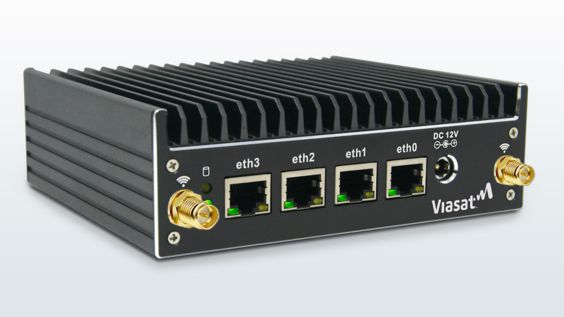
To support these connectivity options, the company has also released a series of compact, lightweight, and low-power terminals. These units, some weighing as little as 440 grams, provide a dependable Command and Control (C2) link via the L-band, enabling continuous communication even in challenging environments.
The small Size, Weight, and Power (SWaP) profile of these terminals makes them suitable for smaller UAV platforms that require global reach and reliability in challenging environments.
Todd McDonell, President, International Government, Viasat, commented, “The launch of this new service portfolio enforces Viasat’s commitment to advancing UAV communications with secure, resilient, and flexible solutions. As demand grows for UAV missions, we aim to enable our customers across government and defense industries to operate with greater situational awareness, operational efficiency and cost control.”