Unmanned Underwater Vehicles (UUV)
Discover cutting-edge solutions from 6 leading global suppliers
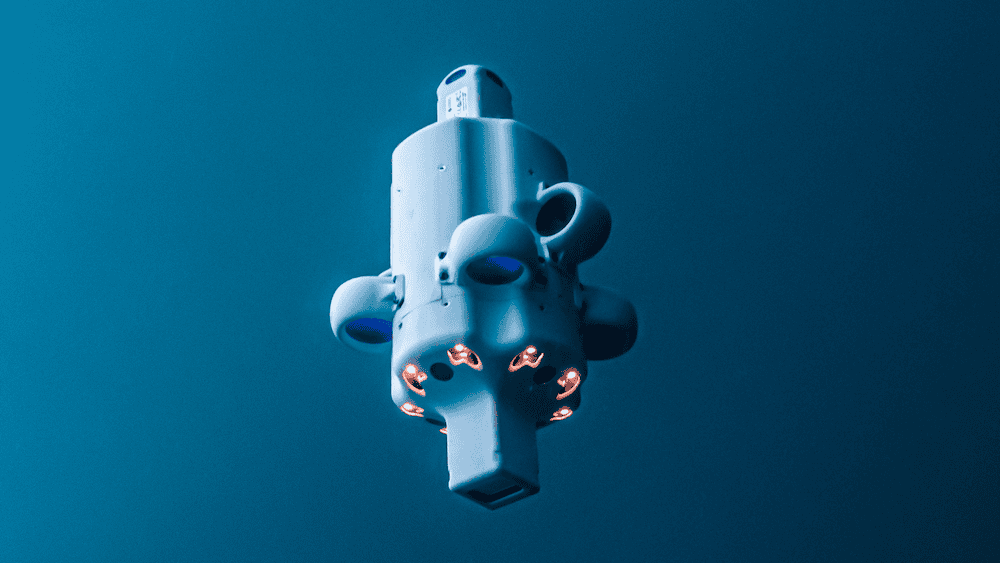
AeroVironment, through its subsidiary VideoRay, has expanded its Unmanned Underwater Vehicle (UUV) lineup with the introduction of the Mission Specialist Wraith, a compact system developed for demanding, high-precision subsea missions.
The new platform is designed to deliver true six-degree-of-freedom maneuverability using 10 vectored thrusters, enabling it to maintain full stability and control in any orientation, including vertical, inverted, or fully rolled positions. This configuration allows the vehicle to operate effectively at depth and in strong currents while retaining precise handling. The system is capable of producing up to 80 pounds of forward thrust along with simultaneous lift, supporting rapid transit to target areas and accurate station-keeping during complex operations.
Chris Gibson, Chief Executive Officer at VideoRay, commented, “Modern operations increasingly depend on access, awareness, and freedom of maneuver below the surface. Wraith gives forces a compact, rapidly deployable system that delivers the precision and control once reserved for much larger vehicles, helping operators extend reach, reduce risk to personnel, and respond faster in complex maritime environments. It expands what compact UUVs can achieve while improving overall mission efficiency.”
The Wraith has been developed around VideoRay’s open-architecture Mission Specialist design approach, allowing the platform to be quickly reconfigured and to support straightforward integration of third-party payloads. These can include imaging systems, navigation sensors, and manipulation tools, enabling the vehicle to support a wide range of subsea inspection, defence, and scientific tasks.
The first release of the platform is the Mission Specialist Wraith Expeditionary configuration, which represents the initial stage of a planned spiral development strategy. Future versions are expected to offer increased operating depth, greater payload capacity, extended endurance, and broader system flexibility, ensuring the platform can continue to evolve in line with emerging operational requirements. This approach reflects AeroVironment’s continued focus on modularity, adaptability, and field serviceability within its multi-domain autonomous systems portfolio.