
ParaZero Technologies Ltd. has reported a series of significant technical and regulatory milestones achieved throughout 2025 for its DropAir Precision Airdrop System.
The company has transitioned its technology from battlefield-tested applications into validated solutions for civilian, medical, and humanitarian sectors. This expansion follows a year of rigorous testing and development aimed at addressing logistics gaps in high-risk or inaccessible environments where landing a drone or flying manned aircraft is often too dangerous.
Development progress accelerated in February 2025 when the project moved to Phase II with the Israeli Ministry of Defense. This was followed by key regulatory achievements in April and August, where the Israeli Ministry of Defense – Defense Export Control Agency (DECA) granted global marketing approvals for DropAir. These approvals cover integrations with both Heven Drones and Steadicopter rotary platforms, allowing for international sales across defense and commercial markets.
Technical reliability was highlighted in June 2025 during a reproducibility test involving 50 consecutive successful deployments. The system’s precision capabilities were further demonstrated in September during a joint field trial with the Israeli Ministry of Defense Directorate of Defense R&D, the Ministry of Health, the IDF Medical Corps, and Rambam Medical Center. During this trial, the system delivered blood transfusions dropped from 200 meters above ground level. Post-recovery medical inspections confirmed that the blood units remained undamaged and suitable for human transfusion.
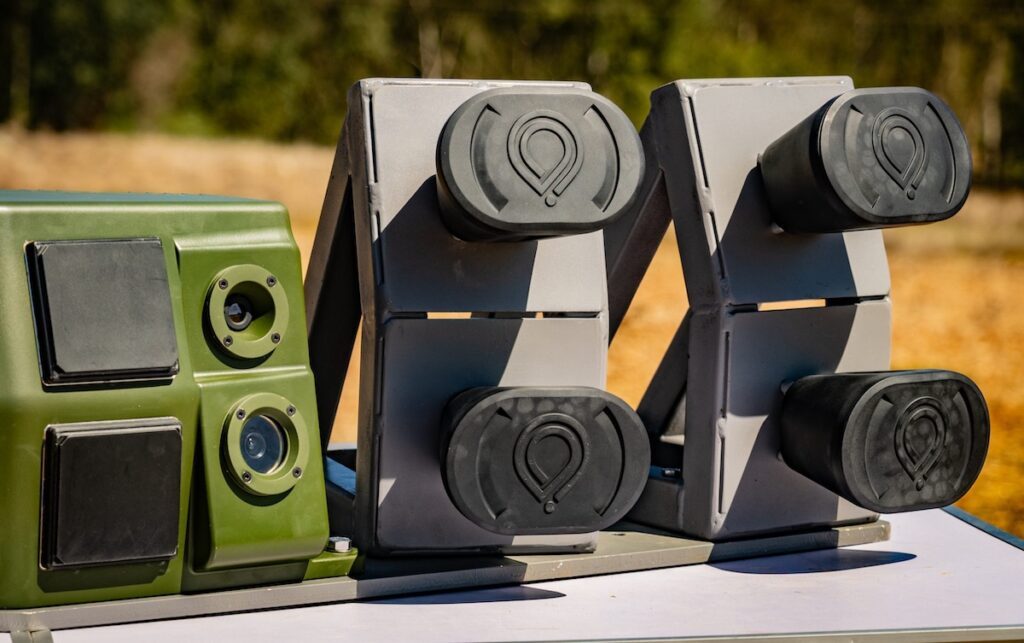
The air drop system utilizes a modular design and a patented delayed low-altitude parachute deployment. This mechanism is designed to minimize drift in adverse weather or windy conditions, allowing drones to release payloads from higher altitudes and exit the area immediately to ensure maximum survivability. The technology is intended for the delivery of critical supplies including medical items, ammunition, food, water, and communication gear without the requirement for a safe landing zone.
While developed to meet urgent operational necessities in modern warfare, the system is now being positioned for use in natural disasters such as floods, earthquakes, and wildfires. In these scenarios, damaged infrastructure or remote locations often prevent traditional ground or air access.
ParaZero’s technology integrates with various military and commercial platforms, including those from Elbit Systems, to provide logistics support in all-weather, day and night conditions. As emergency services and commercial operators seek uncrewed solutions for environments where manned aircraft cannot operate, the 2025 results serve as a benchmark for the reliability of drone-based precision delivery.