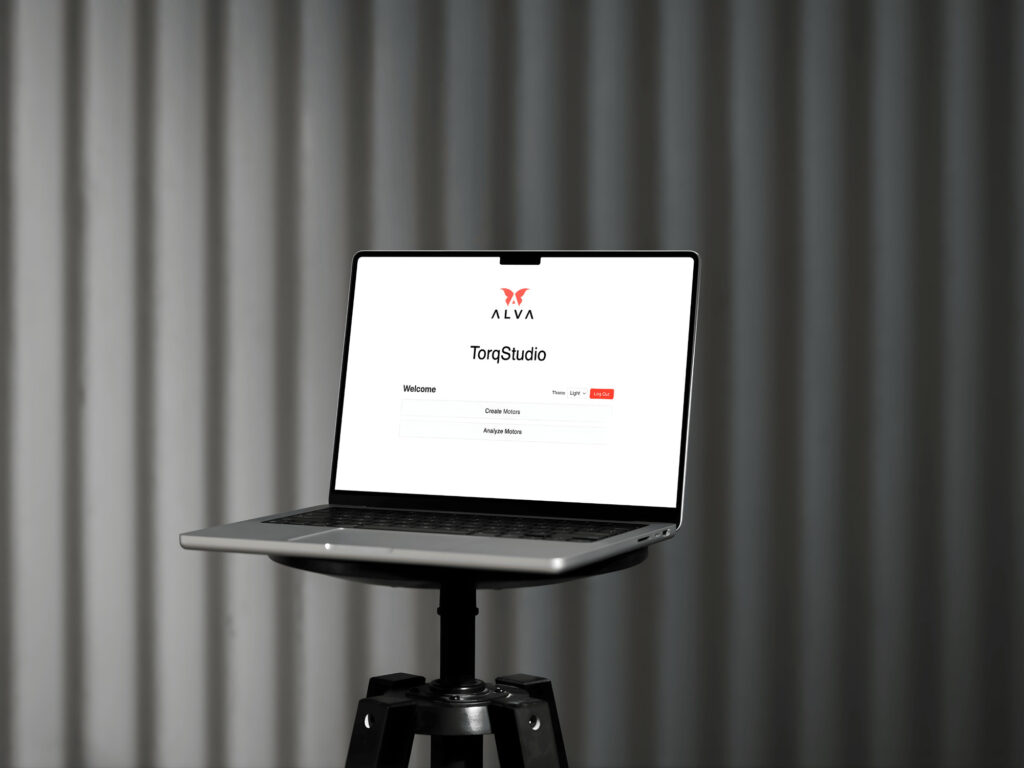

Alva Industries has launched TorqStudio, a dedicated software platform designed to allow engineers to design, optimize, and analyze electric motors prior to hardware prototyping.
The system facilitates early-stage development by converting basic size constraints into fully manufacturable motor designs within minutes. By utilizing analytical models developed by Alva, the platform validates performance at specific operating points to reduce development uncertainty.
Anton Franzén, Director of Product Management at Alva Industries, commented, “With TorqStudio, engineers can move from high-level requirements to data-driven motor designs extremely quickly. The platform removes much of the uncertainty typically associated with early motor design and gives users immediate insight into what is technically possible.”
The design process begins with the user defining primary constraints, such as axial length and outer diameter. TorqStudio automatically generates and filters thousands of potential motor candidates, presenting the most efficient solutions based on motor mass and motor constants. This allows engineering teams to visualize trade-offs and select designs that are ready for manufacturing. Once a design is finalized, it can be saved to a centralized database, exported as a datasheet, or submitted for a formal quotation to begin the procurement process.
In addition to design generation, the platform features robust analysis tools for evaluating motor behavior under specific conditions. Users can input variables including supply voltage, ambient temperature, cooling parameters, torque, and switching frequency. The software then generates speed-torque maps and provides detailed data on electrical power, AC/DC current, efficiency losses, and stator temperatures.
To streamline the workflow, TorqStudio supports the simultaneous analysis of multiple operating points, with data import capabilities for tools like Excel. The environment allows for the direct comparison of custom-generated designs against Alva’s standard motor portfolio. By centralizing these assets in a single database, the platform aims to accelerate development cycles and allow for more confident validation of thermal and performance margins before physical prototypes are built.