Aliaksei Stratsilatau, founder and CEO of UAVOS, discusses the engineering challenges and broader significance of the DARPA Lift Challenge.
From an engineering perspective, Stratsilatau describes the DARPA Lift Challenge as an exceptionally demanding problem. Achieving a 4:1 payload-to-empty-weight ratio for a Vertical Take-Off and Landing (VTOL) aircraft requires engineers to move beyond conventional aerospace design approaches and fundamentally reconsider the balance of mass efficiency, energy utilization, structural design, propulsion integration, and flight control.
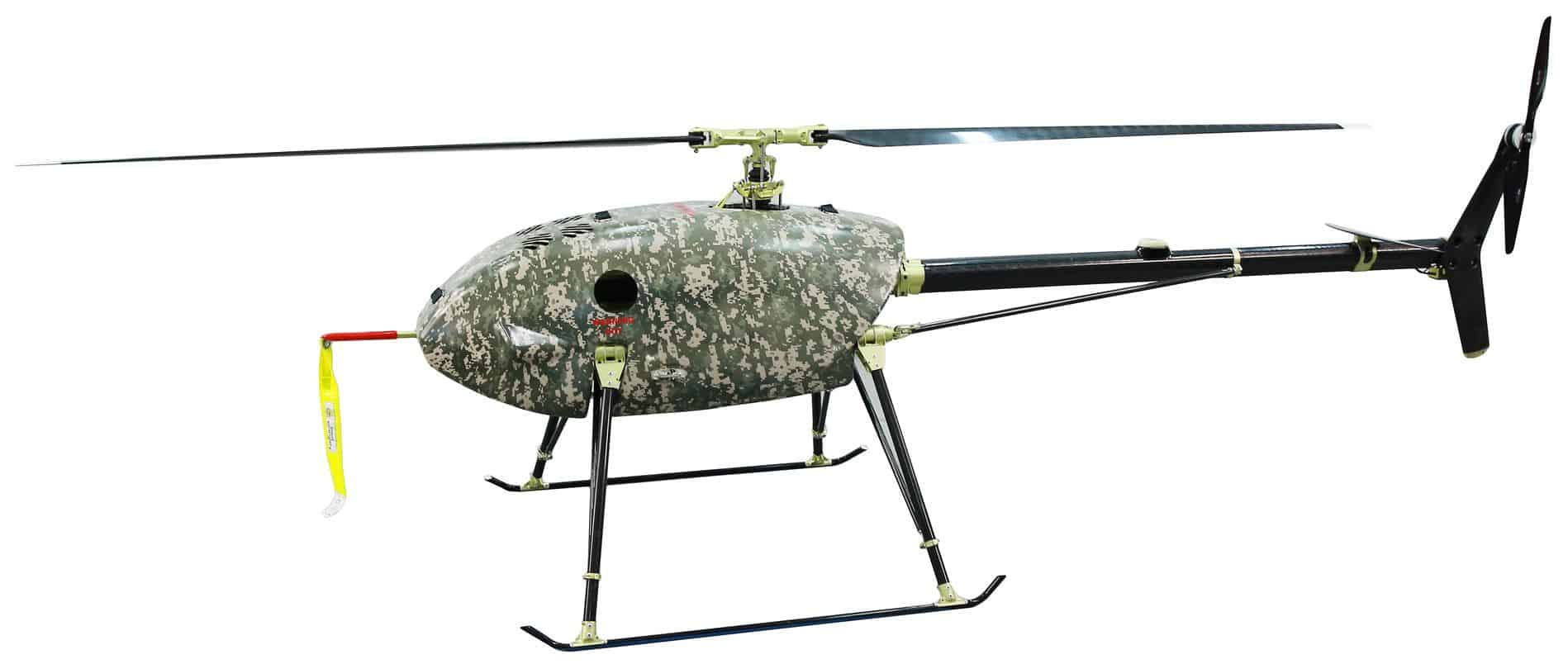
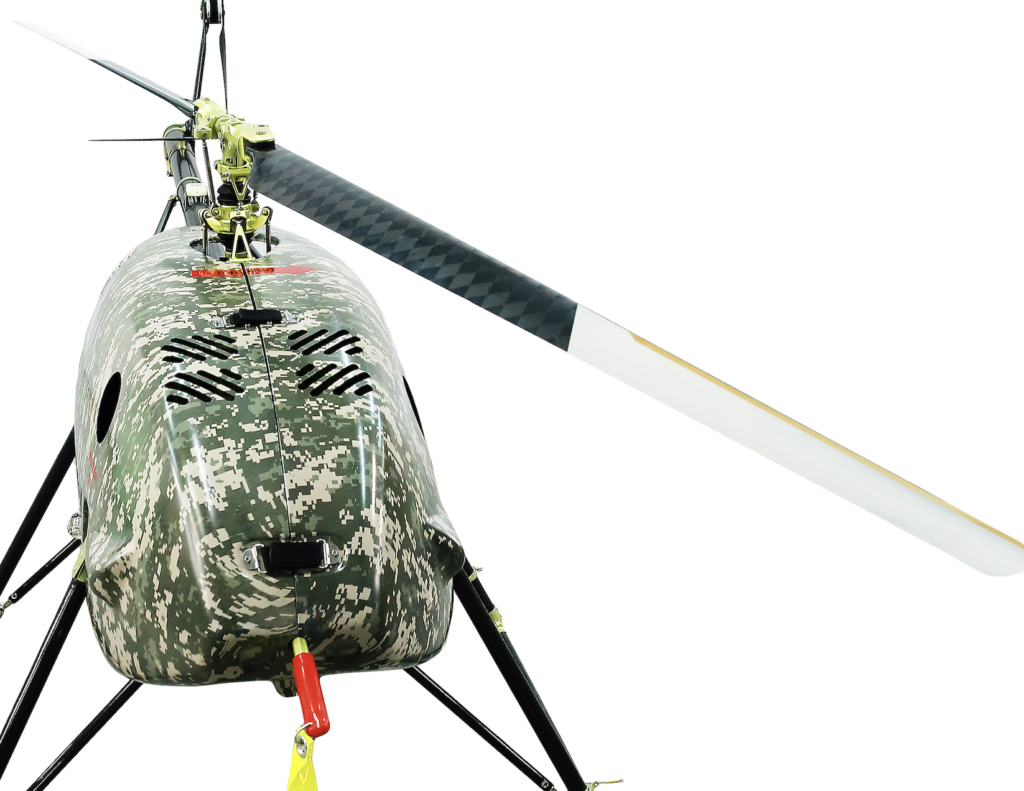
For comparison, the Mi-26, a highly capable heavy-lift platform, has a payload-to-MTOW ratio of approximately 0.36. Smaller platforms such as the Robinson R44 operate closer to 0.40. UAVOS’s gasoline-powered UVH-170 helicopter achieves a payload-to-MTOW ratio of approximately 0.33, or 0.16 at maximum fuel capacity. According to Stratsilatau, these figures reflect decades of engineering refinement focused specifically on platforms designed for efficient lift.
What makes the DARPA Lift Challenge particularly difficult is not simply the ratio itself, but the constraint that the power source must remain within the aircraft’s 55 lb weight budget. Every kilogram allocated to batteries or fuel directly reduces structural capacity, leaving minimal room for conventional design tradeoffs.
In practical terms, a 55 lb aircraft carrying a 220 lb payload would represent an 80% payload fraction of MTOW, a figure with no precedent in operational rotorcraft.
Clean-Sheet VTOL Design Requirements
Stratsilatau explains that this challenge cannot be won by simply scaling up existing commercial drone platforms. Instead, it requires a clean-sheet design, systems-engineering approach in which geometry, structural weight, and energy density are co-optimized from the very first design iteration. In UAVOS’s assessment, success depends on the ability to architect the vehicle as an integrated system rather than on incremental adaptation.
A viable solution to the challenge could have significant implications for tactical military resupply, emergency response operations, and commercial logistics applications. It would also demonstrate that meaningful heavy-lift capability and high payload efficiency do not necessarily require large, operationally complex aircraft.
Role of Autonomy & Flight Control Systems
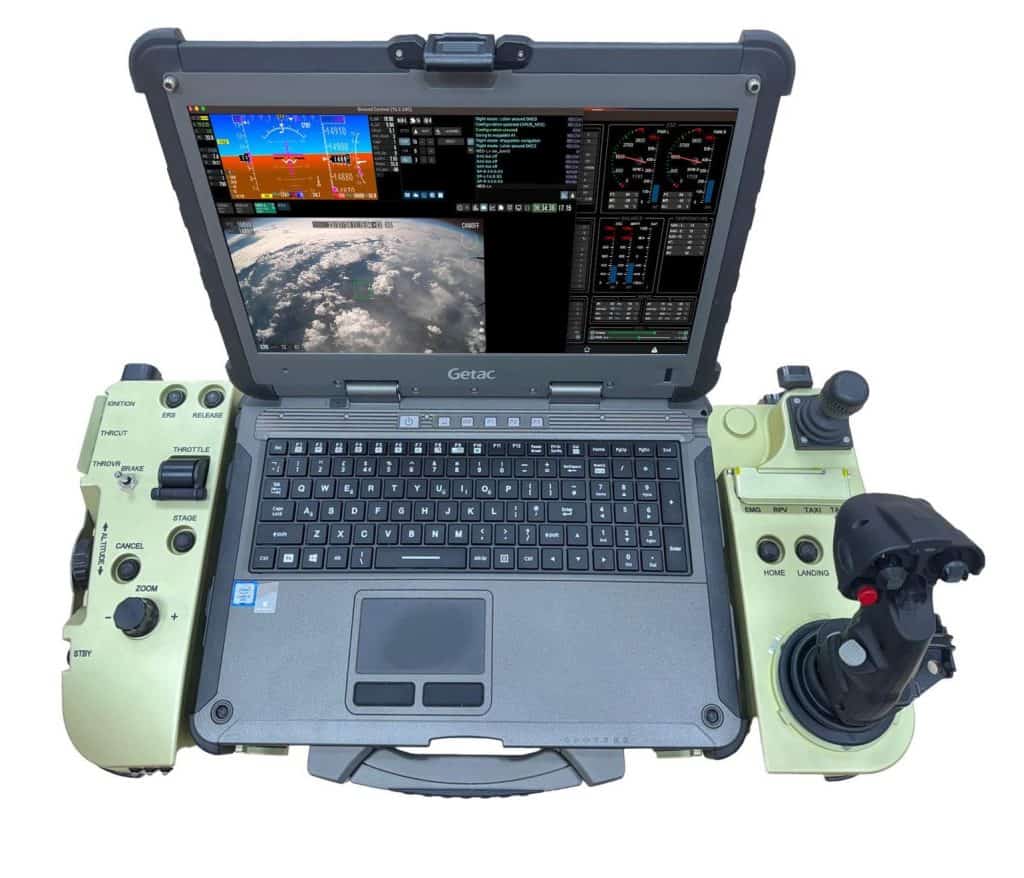
In this context, Stratsilatau highlights the role of advanced autopilot, control, and autonomy systems. According to UAVOS, these systems are not simply auxiliary technologies, but key enablers for maintaining stability across challenging flight regimes, extracting performance from unconventional VTOL configurations, and expanding the practical operational envelope. Their integration could support entirely new categories of aircraft and operational concepts.
UAVOS is currently partnering with several startup teams participating in the competition and continues to follow the DARPA Lift Challenge with great interest. Internally, the company is actively discussing a wide range of possible solutions, including alternative aerodynamic layouts, propulsion architectures, and control strategies.
In Stratsilatau’s view, the DARPA Lift Challenge represents an important initiative capable of accelerating innovation across the broader aeronautics sector.