
Reconnaissance Drone
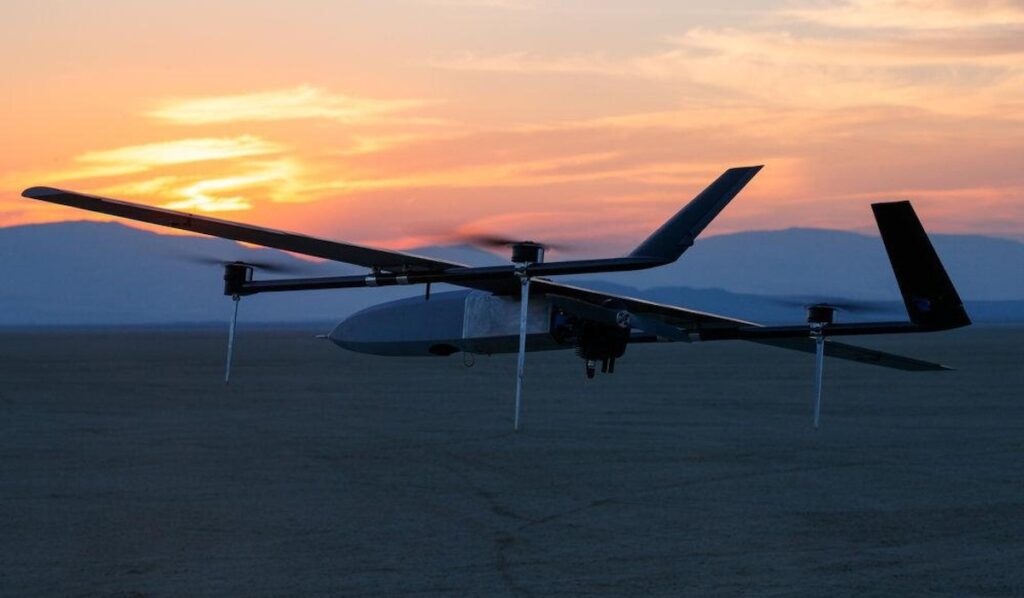
Discover cutting-edge solutions from 7 leading global suppliersSky-Watch’s live demonstration at the WITU training ground in Zielonka, Poland, showcased the RQ-35 Heidrun, an Unmanned Aerial System (UAS) developed for advanced capabilities and reconnaissance support, operating in a real-world environment.
 The event demonstrated the drone’s features, such as its ease of use, adaptability, and resilience in demanding environments. The RQ-35 Heidrun has a flight endurance of up to 150 minutes and a range of up to 45 kilometers, enabling extended operational capabilities.
The UAS has a compact and lightweight design for quick deployment and straightforward transport, making it ideally suited for reconnaissance units operating near the frontline.
The RQ-35 Heidrun can be carried and operated by a single individual, with its tablet-based control system eliminating the need for specialized equipment, making it accessible to less experienced operators.
Its design also enables fast deployment and operation so units can respond quickly to tactical situations.
The system’s fail-safe mechanisms, such as automatic return to the operator’s position in the event of communication loss or low battery, ensure continued mission success. The UAS is also developed for easy repairs and serving in the field to minimize downtime in critical missions.
 The RQ-35 Heidrun itself has completed over 500 missions with minimal losses. It can operate GNSS-denied environments and resist electronic warfare interference, highlighting its battlefield resilience, as well as transfer real-time data to provide a competitive advantage.
This live demonstration in Poland therefore provided an opportunity to go beyond technical specifications and see the RQ-35 Heidrun in operation, understanding its practical applications and potential impact on modern tactical missions.
Participants highlighted how observing the RQ-35 Heidrun firsthand gave critical insights into its operational dynamics, and showcased how the system enhances situational awareness and decision-making. The demonstration also emphasized the drone’s adaptability such as when performing under electronic warfare conditions.
Colonel J. Jespersen, Defence Attache, Danish embassy, Warsaw, stated, “Drones will be part of future warfare for sure. It is crucial to have situational awareness, know where the enemy is in order to be able to survive and accomplish your mission. So, on the lower tactical level, knowing what is behind the next hill, what is across this forest is extremely important.”
Read the full article here >>