Gotonomi offers a range of UAV satcom terminals that leverage the Viasat Velaris network to provide near global connectivity. But why is satellite connectivity crucial in enabling Beyond Visual Line of Sight (BVLOS) drone operations?
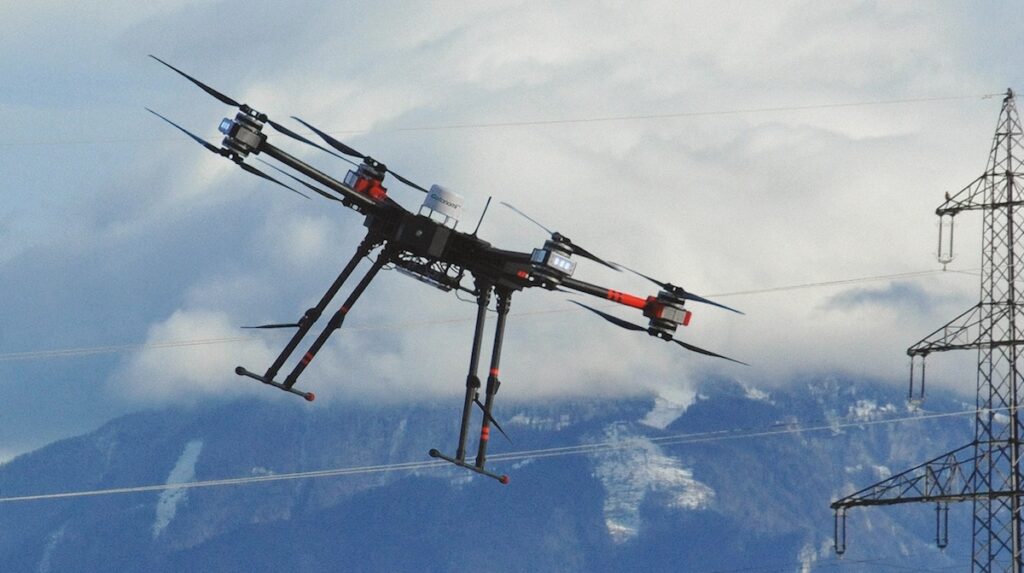
 BVLOS involves drone operation out of sight of a human controller. Many applications require drones to cover large distances and perform missions such as long-range infrastructure inspection, wide-area surveillance, and remote delivery. These operations are transformative for industries that need to operate over large areas, but maintaining reliable communication with drones over these extended ranges is a significant challenge. Gotonomi addresses this challenge by offering satellite communication solutions that provide uninterrupted connectivity, even in remote and challenging environments.
Regulatory and Safety Requirements for Connectivity
In BVLOS operations, regulatory bodies such as the U.S. FAA and European aviation authorities require continuous, reliable communication links. The FAA mandates that operators obtain special waivers to conduct BVLOS flights (14 CFR Part 107) and prove that the operation can be conducted safely with minimal risk. This includes having dependable command-and-control (C2) links and contingency plans for link failure.
Drones operating BVLOS must have systems that provide redundancy and high availability in the event of communication disruption. Similar requirements are outlined under the European Specific Operations Risk Assessment (SORA) guidelines, which also stress the importance of reliable telemetry and control links.
Safety also relies on communication to navigate shared airspace and respond to air traffic or no-fly zones. In an emergency, real-time telemetry (position, speed, health status) must be accessible, and the operator must be able to command the drone to return home or land safely. These critical operations are all dependent on a robust communication link, making it a cornerstone of BVLOS safety.
Comms for BVLOS: Terrestrial or Satellite Links?
Many UAVs rely on terrestrial communication options, such as cellular networks or point-to-point radio. While these are often adequate for urban or sub-urban environments, they are less suitable for BVLOS missions, especially in remote or challenging areas. Satellite communications, however, provide global coverage and high reliability, making them essential for long-range UAV operations, ensuring continuous, fail-safe communication links even in the most isolated regions.
Comparing Terrestrial and Satellite Communications for BVLOS Operations
| FEATURE / FACTOR | TERRESTRIAL (RADIO / LTE) | SATELLITE (e.g. Viasat Velaris) |
| Coverage | Limited to line-of-sight or cellular tower range; unreliable in remote, rural, or mountainous areas | Global coverage, including oceans, deserts, and remote regions |
| Range | Typically a maximum range of 20–50 kilometres; limited by terrain, buildings, and vegetation | Supports long-range missions conducted by remote operators, enabling centralised operation of dispersed drone fleets |
| Reliability | Vulnerable to outages, interference, congestion, and ground infrastructure failure. Not designed as a ‘safety of life service’ | Minimal ground infrastructure; >99.95% availability on aviation-grade services |
| Redundancy / Fallback | Redundancy is generally achieved by having a multiple SIM solution using different network providers. However, this does not overcome range issues or altitude issues due to crosstalk. | Primary control and non-payload communication (CNPC) over satcom, and secondary link for other data, e.g. video |
| Weather Resilience | Depending on the frequency used, performance may degrade in rain or extreme weather; high-frequency bands are especially vulnerable, but lower frequencies (e.g. used for cellular) are resilient | Frequency dependent. L-band signals from Viasat’s GEO constellation (used by Gotonomi) are resilient to rain fade, making operation possible in adverse weather. K-band and higher frequencies are vulnerable |
| Integration with Aviation | Consumer-grade networks not built for aviation needs; may lack prioritisation and reliability | Gotonomi terminals offer dedicated UAV connectivity via the Viasat Velaris Service, which uses dedicated and protected spectrum known as Aeronautical Mobile Satellite (Route) Service – AMS(R)S, and includes features like encrypted links, prioritised ATC data, and integration with airspace management |
| Scalability | Difficult to scale across remote environments without extensive infrastructure investment | Enables wide-area operations with zero ground infrastructure required for end-users, other than an internet connection for remote operators |
| Cost / Bandwidth | Low cost, high bandwidth (where coverage is available), but unreliable in underserved areas | Lower bandwidth (suitable for C2 and compressed data), but improving in affordability; hybrid use optimises data costs and performance |
| Latency | Low latency in good network conditions, but can be very high in congested areas | Higher latency (700ms one way for GEO), but acceptable for telemetry, control, and low-bitrate video with buffering. Prioritisation is available for safety of life services, which improves latency consistency |
While terrestrial networks are important for UAV applications, satellite communication provides the necessary global coverage, reliability, and redundancy to ensure safe BVLOS operations. Satellite communication is especially critical in remote or rural environments where terrestrial connectivity may be unreliable or unavailable.
Viasat Velaris: A Network Built for Aviation-Grade Connectivity
Viasat’s Velaris network is a leading option for UAV satellite connectivity, designed specifically to support BVLOS operations. Unlike general-purpose satellite internet, Velaris offers a dedicated L-band safety service, with high reliability, priority messaging for C2 and airspace integration, and aviation-grade management standards. The network is trusted by regulators, offering global coverage and supporting hybrid use with terrestrial cellular links.
Velaris supports bandwidth up to 200 kbps, which is sufficient for essential functions such as telemetry, C2 data, and compressed video. Importantly, that bandwidth is reserved and stable within a dedicated and protected spectrum.
Gotonomi: Facilitating BVLOS with Low-Low-Size, Weight and Power Satcom Terminals
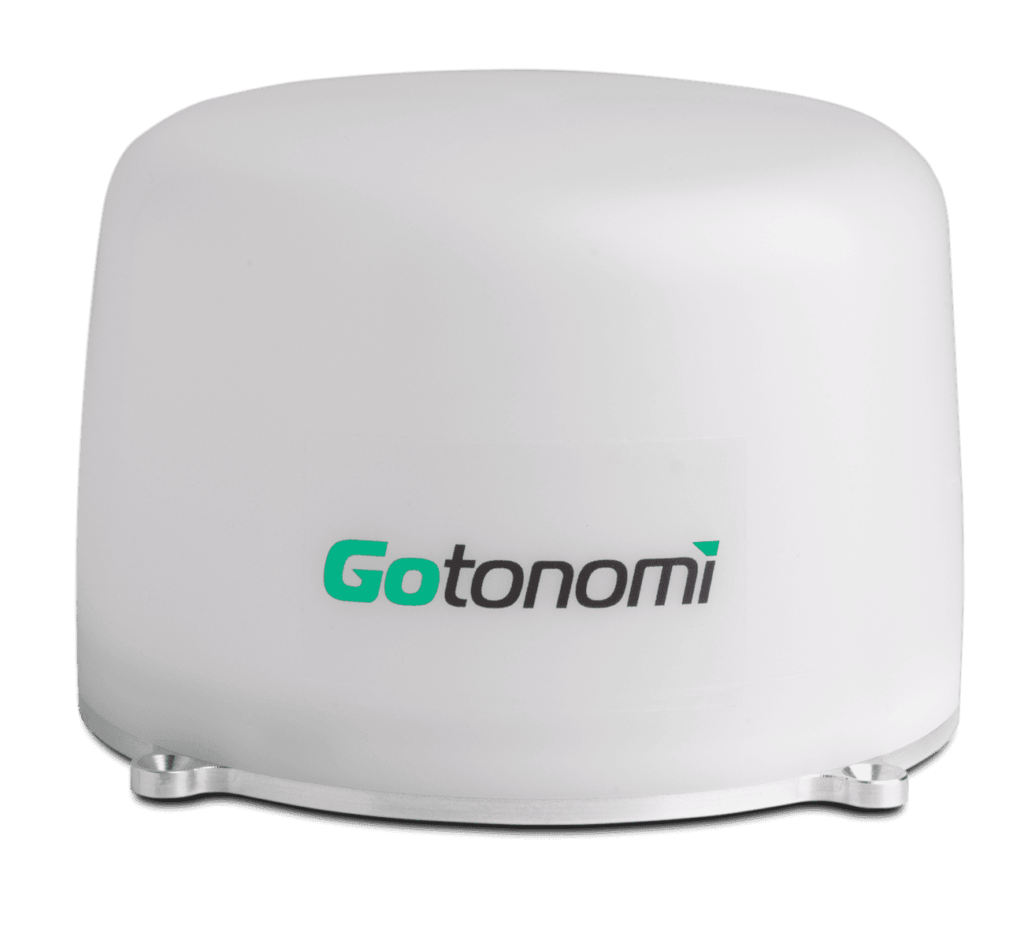
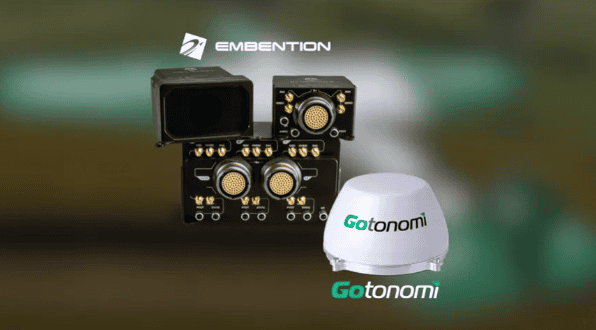
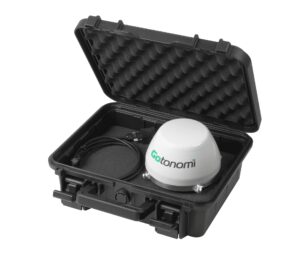
A barrier to satellite communication adoption in UAVs has been the size, weight, and power (SWaP) requirements of traditional satellite terminals. Gotonomi addresses this challenge with its range of low-SWaP satellite terminals designed for UAVs. These compact systems, such as the V200, weigh as little as 405g including an integrated antenna and require no gimbals or pointing mechanisms.
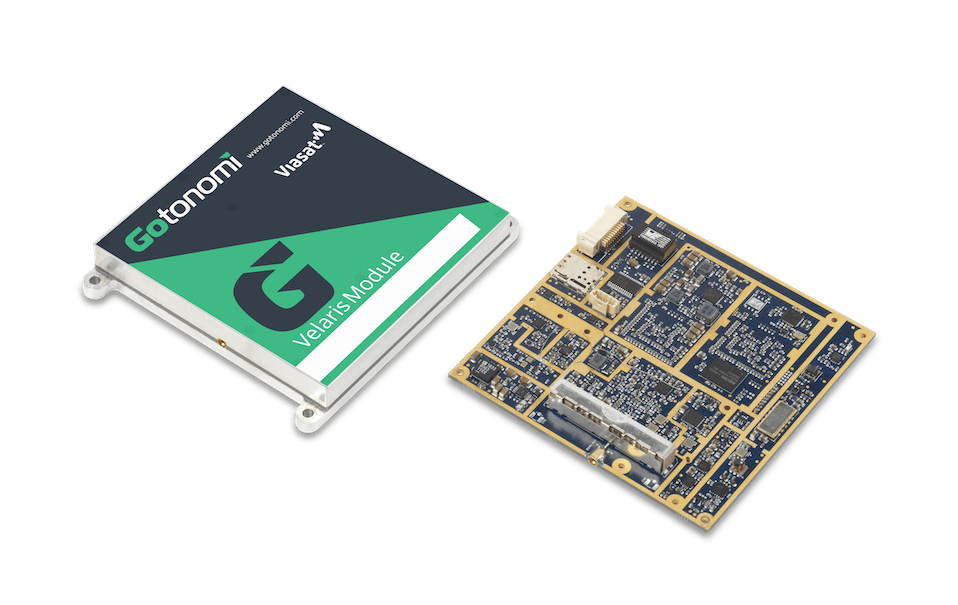
Gotonomi’s terminals deliver up to 200 kbps over the Viasat Velaris network, enabling continuous connectivity without compromising flight time or payload capacity. Their low power consumption (typically 20W during transmit and receive) and weight makes them suitable even for smaller UAVs, weighing under 25kg. Gotonomi also offers modular options like the Velaris Module (core satcom board) and Multi-Link Module, which adds LTE and edge compute, giving OEMs flexibility to integrate satcom across a range of airframes.
Gotonomi’s terminals have been proven in real-world trials, and the terminals are certified with Viasat type approval and CE marking, ensuring they meet regulatory standards for commercial deployment.
Additionally, Gotonomi provides airtime and integration support, offering operators a reliable “always-on” model, avoiding idle link fees, and ensuring uninterrupted communication.
To further streamline deployment, Gotonomi has partnered with Videosoft Global to create an Inspection and Surveillance Bundle. This turnkey solution integrates Gotonomi’s Multi-Link terminal with Videosoft’s ultra-low-bandwidth video streaming software, enabling real-time video transmission over satellite even in areas without terrestrial coverage.
Conclusion
Conducting BVLOS drone operations requires more than just range, it demands continuous and reliable communication links. While terrestrial networks are useful in some cases, they are insufficient for many BVLOS missions, especially in remote locations. Satellite communication provides the necessary global coverage, reliability, and redundancy, ensuring safe and scalable UAV operations.
Gotonomi, with its compact satellite terminals and Viasat’s Velaris network, is helping make satellite connectivity practical for small UAVs, even those with strict size, weight, and power constraints. With these technologies, UAV operators can confidently scale BVLOS operations, ensuring regulatory compliance, safety, and operational success.
Just as GNSS is essential for positioning, satcoms are critical for BVLOS flight. By keeping drones connected, controllable, and compliant, satellite communications enable safe long-range operations, whether for inspection, delivery, or emergency response.