Analog Modules Inc. (AMI) details the operating principles, efficiency considerations, and reliability challenges associated with linear laser diode driver designs. Read more >>
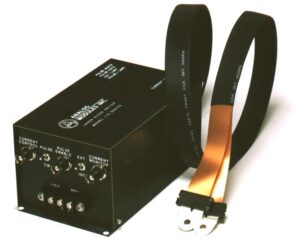
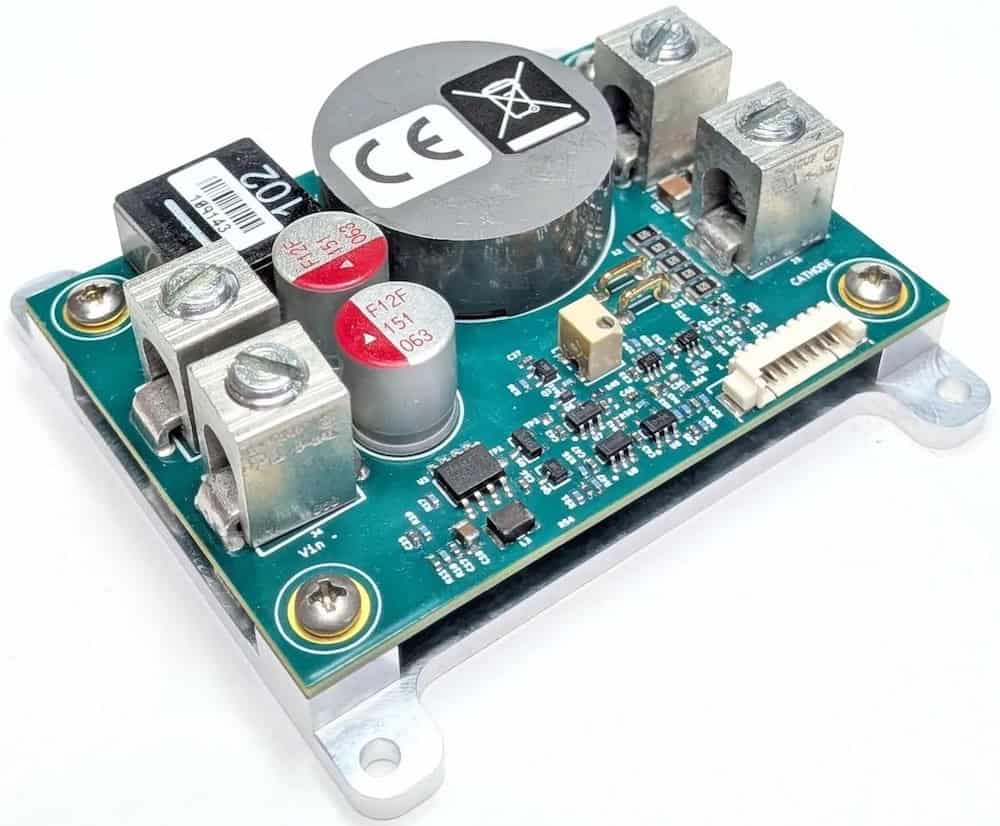
AMI Model 779A Laser Diode Driver.
AMI’s Model 778 Laser Diode Driver and current Model 779A use a conventional linear architecture in which storage capacitors are charged to a voltage above the diode load, while transistor-based regulation controls current delivery. In this approach, capacitor voltage droop, Equivalent Series Resistance (ESR), transistor losses, and sense resistor losses directly affect efficiency during high-current pulse operation.
A representative configuration delivering 200A, 400µs pulses to an 18V diode load requires approximately 20mF of capacitance to limit droop to 4V. In the example provided, ESR losses, transistor voltage drop, and sense resistor losses increase the required initial capacitor voltage to 23.9V, resulting in an efficiency of approximately 75% under nominal conditions.
When temperature variation, capacitor aging, and diode load changes are considered, capacitance decreases and ESR increases significantly, requiring the initial capacitor voltage to rise to approximately 36V in worst-case conditions. Under these conditions, driver efficiency falls to roughly 50%, while peak transistor dissipation can exceed 2kW.
Military qualification requirements further increase stress on linear laser diode driver systems due to wide operating temperature ranges and long service life requirements. Higher operating voltages are necessary to compensate for capacitor degradation and diode load variation over time, increasing stress on transistor switching devices and requiring multiple devices to remain within safe operating limits.
Commercial aluminum electrolytic capacitors also present reliability concerns due to outgassing and drying at elevated temperatures, while sealed long-life capacitor technologies can reduce some variation in capacitance and ESR at the expense of increased cost. As a result, standard linear laser diode driver designs are less suitable for military systems operating across extended temperature ranges and service lifetimes.
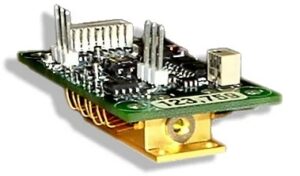
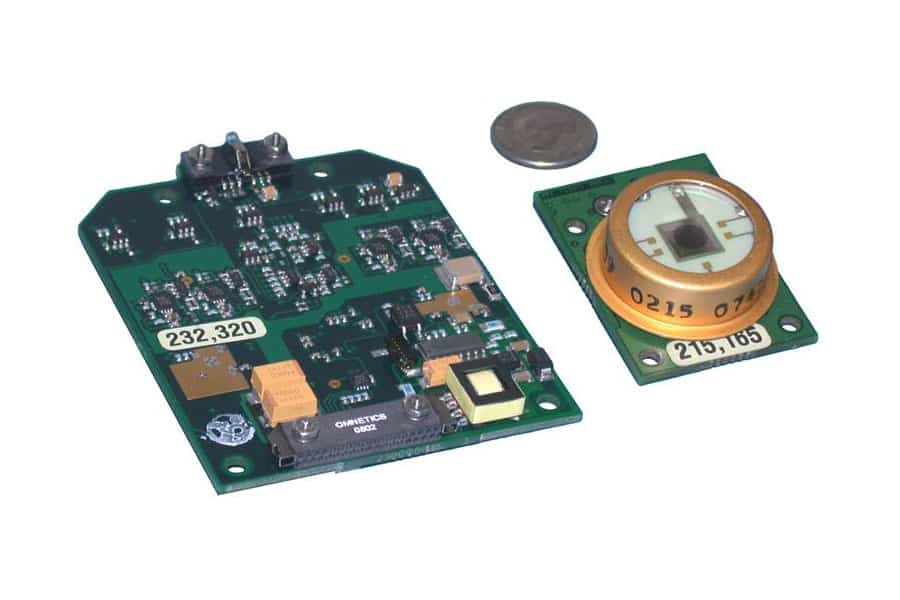
AMI 781 Compact PCB QCW Laser Diode Power Module.
Intelligent & Switching-Based Driver Approaches
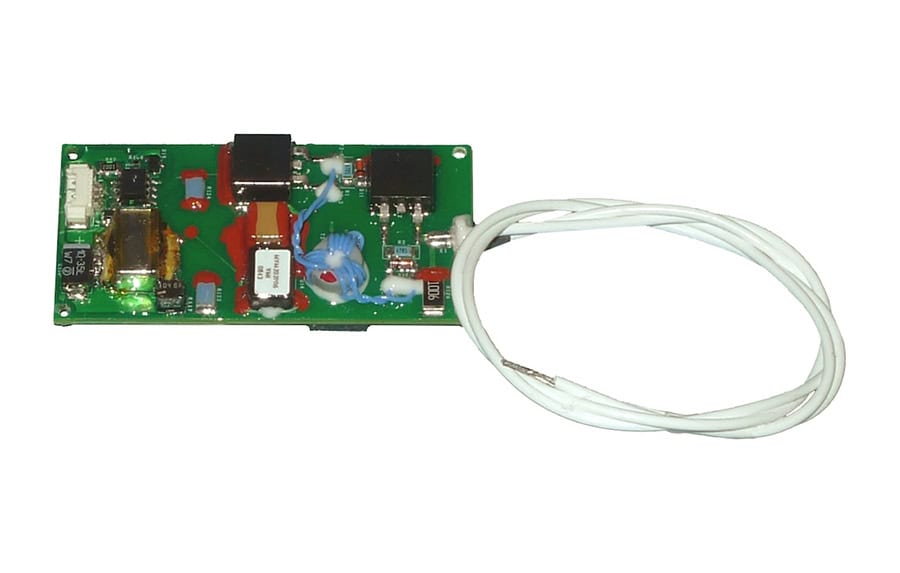
AMI’s Model 771 introduced adjustable storage capacitor voltage control to better match instantaneous operating conditions. Later intelligent linear driver designs incorporated digital signal processing and multiple sensor inputs to dynamically regulate storage capacitor voltage, reducing excess transistor dissipation while maintaining sufficient charge for laser pumping requirements.
While linear laser diode drivers offer lower EMI, lower complexity, and lower cost in some low-current or high-speed applications, switching-based driver architectures offer greater tolerance to capacitor and diode load variation while improving efficiency in high-current laser pumping systems.
Read ‘Linear Laser Diode Driver Design’ for more information.