
D-Fend Solutions, a specialist in counter-unmanned aircraft system (C-UAS) technologies, has outlined the advantages and limitations of leading drone detection methods, providing security stakeholders with an informed perspective on safeguarding increasingly complex airspace environments. Access the full whitepaper here >>
With unauthorized drones presenting one of the fastest-growing threats, careful evaluation of detection approaches is critical for selecting the most suitable technology for specific operational scenarios.
The review below examines D-fend Solutions’s insights into the effectiveness of both legacy and modern drone detection systems, including radar, electro-optical sensors, radio frequency (RF) directional finders, acoustic solutions, and RF-based cyber technologies. Each method brings unique capabilities but also notable challenges that must be addressed for reliable C-UAS operations.
Radars for Drone Detection
Radar has traditionally served as a foundational detection technology, offering broad coverage and long-range monitoring. While legacy systems were primarily designed for larger aircraft, they often struggle to track small unmanned aerial systems (sUAS) due to size constraints.
Recent advancements, including Electronically Scanned Array (ESA) and Micro-Doppler technology, have improved radar sensitivity for detecting smaller drones. However, distinguishing drones from birds and other small airborne objects can remain problematic, frequently producing false positives. Radar also depends on clear line-of-sight and is susceptible to weather-related degradation, such as reduced performance in fog or rain. In urban environments, reflections from tall buildings can generate multiple signals, complicating accurate tracking.
Electro-Optical Sensors
Electro-optical/infrared (EO/IR) systems are commonly used in conjunction with radar to confirm detections and reduce false alerts. These sensors identify drones through visual and thermal signatures, enhancing verification.
Their effectiveness, however, can be limited by environmental and line-of-sight constraints. Darkness, fog, and precipitation reduce imaging clarity, while dense urban landscapes obstruct visibility. Furthermore, EO verification often requires human interpretation of imagery, adding to staffing demands.
RF Directional Finders
RF directional finders detect drone activity by scanning common communication frequencies and comparing signals against established libraries of control protocols. They can estimate direction and support tracking when deployed in networks of multiple sensors.
These systems maybe constrained by limited spatial resolution and cannot provide reliable identification of specific drone models. Reflections in urban or mountainous terrain can further distort results, sometimes pointing sensors in the wrong direction. Effective coverage often requires complex multi-sensor deployments.
Acoustic Detection
Acoustic solutions identify drones by analyzing the unique sound profiles of their motors and propellers. These systems are portable and simple to deploy, relying on libraries of known drone acoustic signatures.
In practice, background noise severely can impact reliability. Airports, stadiums, and city environments often drown out drone acoustics, and quieter drone designs exacerbate the issue. Acoustic sensors cannot always provide accurate positional data or identification, limiting their utility in real-world security operations.
RF-Based Cyber Solutions
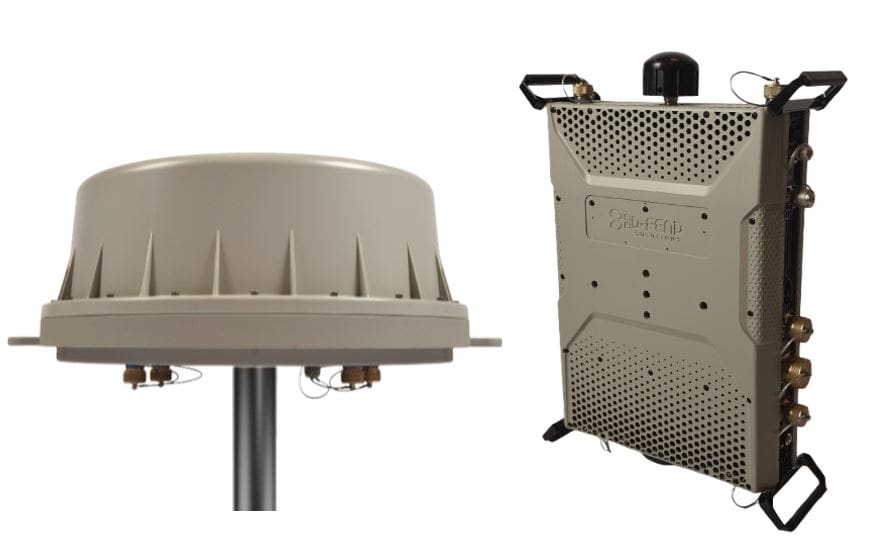
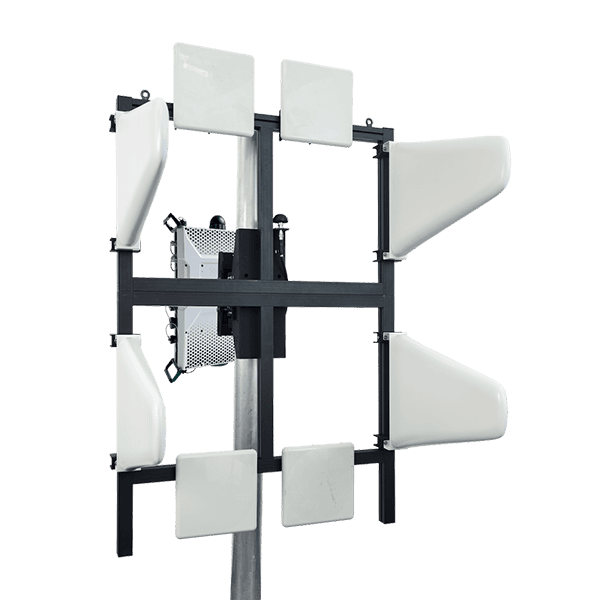
RF-based cyber detection technologies present a more comprehensive alternative. These systems continuously and passively scan for drone communication signals, enabling classification of aircraft as authorized or unauthorized without false positives. They can determine the type of drone, its precise position, point of origin, and in many cases the operator’s location.
Because they do not depend on line-of-sight or quiet conditions, RF cyber solutions function effectively in varied environments. Detection and mitigation can be integrated into a single workflow, creating a more efficient end-to-end approach. EnforceAir2 from D-Fend Solutions exemplifies this capability, delivering precise real-time tracking unaffected by adverse weather and automating threat recognition to reduce the need for human oversight.
Operational Considerations
Organizations authorized to deploy counter-UAS technologies must assess environmental factors that can directly influence performance. Line-of-sight limitations, RF noise, and signal propagation characteristics can all affect detection reliability.
D-Fend Solutions recommends a multi-layered strategy that combines complementary detection technologies while incorporating RF-based cyber solutions. This increases the probability of intercepting potential threats, and supports a more resilient and holistic approach to airspace protection.