Discover World-Leading Unmanned and Autonomous Technologies
Discover cutting-edge solutions from leading global suppliersR2 Wireless and Ôguen Tecnologias have formed a strategic partnership aimed at addressing illicit drone activity across the metropolitan region of São Paulo.
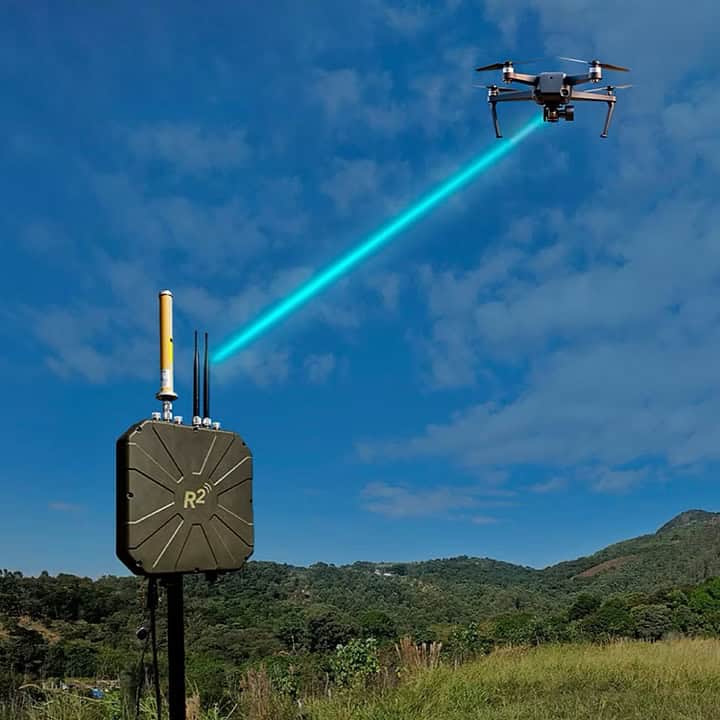
Through the partnership, the companies plan to introduce a municipal-scale drone detection network based on a fully managed subscription model. According to the companies, São Paulo will become the first city in the world to implement a municipal-scale Drone Detection as a Service network.
The initiative responds to the growing use of homemade, modified and improvised drones by criminal organizations operating in Brazil’s largest city. It is intended to provide continuous and scalable airspace monitoring without requiring public agencies or private organizations to purchase, operate and maintain their own detection systems.
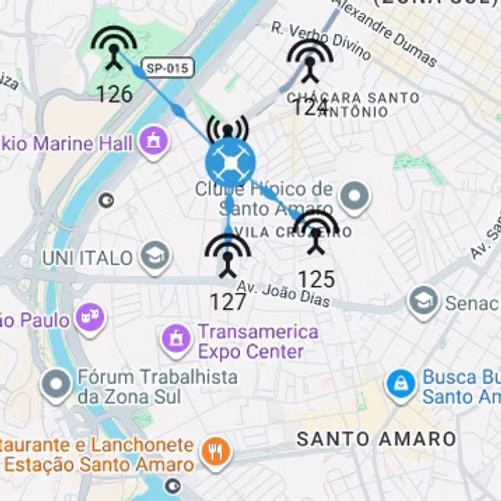
The service will be offered through an Anti-Drones-as-a-Service platform, providing drone detection, geolocation and real-time airspace awareness through a monthly software subscription. The model is designed to reduce the infrastructure costs and operational responsibilities associated with deploying and maintaining individual counter-drone systems.
R2 Wireless’ technology operates at the physical radio frequency layer. Rather than relying on databases of known drone protocols, frequencies or communication signatures, the system detects and geolocates RF signals directly.
This approach is intended to support the detection of commercial drones, modified platforms, homemade first-person-view drones, spoofed or anonymized aircraft and custom-built systems. The companies state that focusing on the underlying RF signal enables the platform to detect future drone architectures that have yet to emerge.
Onn Fenig, CEO of R2 Wireless, commented, “Urban airspace is the next frontier of public safety. Criminal organizations are adapting faster than legacy detection technologies can keep up. R2 Wireless’s technology was designed precisely for this challenge—it does not rely on protocols or data hidden behind encryption or spoofing. By operating at the physical RF layer, we detect and geolocate the signal itself, regardless of how it is disguised. Bringing this battle-tested capability to São Paulo is both a strategic milestone and a public safety imperative.”
Under the managed-service model, subscribing organizations will receive continuous monitoring, adaptive threat intelligence and ongoing software updates. The service is intended to reduce the need for customers to invest in costly infrastructure or replace rapidly outdated hardware.
The platform is designed to support thousands of customers simultaneously and can be used to protect critical infrastructure, airports and logistics hubs, government facilities, entertainment venues, commercial and residential properties, executive protection activities and agricultural operations.
Hen Harel, CEO of Ôguen Tecnologias, added, “Brazil demands solutions that are operational, scalable, and immediately deployable. We are in active discussions with public security authorities, who have shown tremendous enthusiasm for the viability and effectiveness of this technology and recognize the enormous impact that a robust, adaptable, service-operated airspace defense can have in combating the evolving tactics of organized crime. This partnership ensures that institutions across São Paulo can access world-class anti-drone protection through a sustainable service model. We are proud to integrate and operationalize this capability for one of the world’s most important metropolitan regions.”