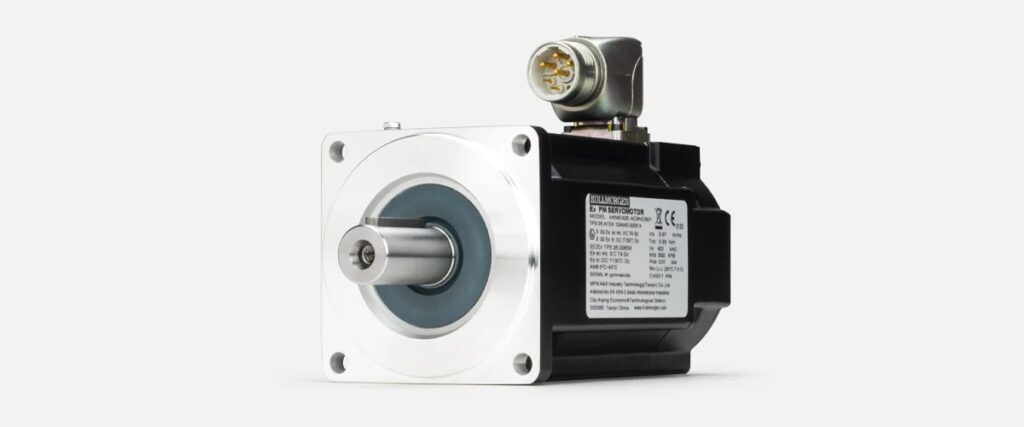
Kollmorgen, a developer of precision motor and motion solutions for Unmanned Aerial Vehicles (UAVs) and robotics, has introduced the AKME Series of hazardous location servo motors.
The new series features ATEX and IECEx global certifications for use in Zone 2 and Zone 22 environments. It is built upon the established quality and reliability of the AKM servo motor platform, aiming to provide machine builders with compact and versatile performance in settings containing ignitable dusts or gases.
These motors are available in IEC frame sizes 2-7 and are designed to operate with drives powered by various voltages, including 48 and 75 Vdc, as well as 120, 240, or 400 Vac. They reach speeds of up to 5,000 rpm and support multiple feedback options such as resolver, SFD-M, ComCoder, EnDat, Hiperface, and BiSS B.
Chris Cooper, Global Director, Product Management, commented, “We are delighted to extend our renowned line of AKM servo motors into a wide range of hazardous location applications. We have always offered the highly regarded Goldline, PMDC EP and MX Stepper series explosion-proof motors, but now with the AKME series we are serving many more customers, applications and industries.
“With AKME servo motors, engineers have greater flexibility than ever before to fit a more cost-effective, HazLoc motor to their Zone 2 and Zone 22 machine applications rather than forcing a larger, overspecified Zone 0 or Zone 1 motor into their design.”
To deliver a complete motion solution, the motors are matched with Kollmorgen’s AKD, AKD2G, and Kollmorgen Essentials™ (KED) servo drives, ensuring high torque density, responsiveness, and precision.
Kollmorgen designed the series to meet stringent safety standards. ATEX certification ensures compliance with European Union requirements for equipment used in potentially explosive environments, while IECEx certification meets internationally recognized standards established by the International Electrotechnical Commission.
These safety ratings make the motors suitable for industrial environments such as pharmaceutical production, food processing, grain elevators, and paint booths, where flammable gases or dust may be present.