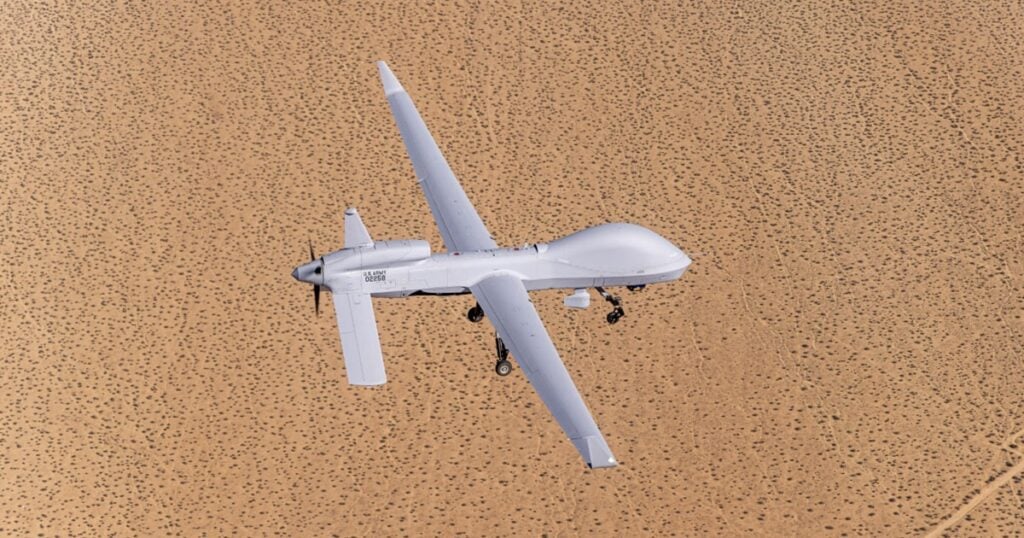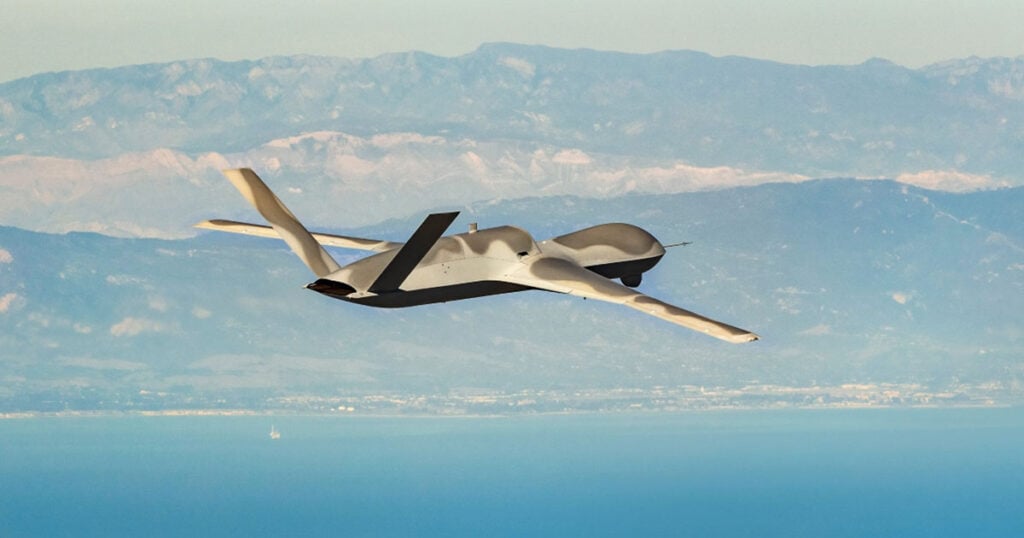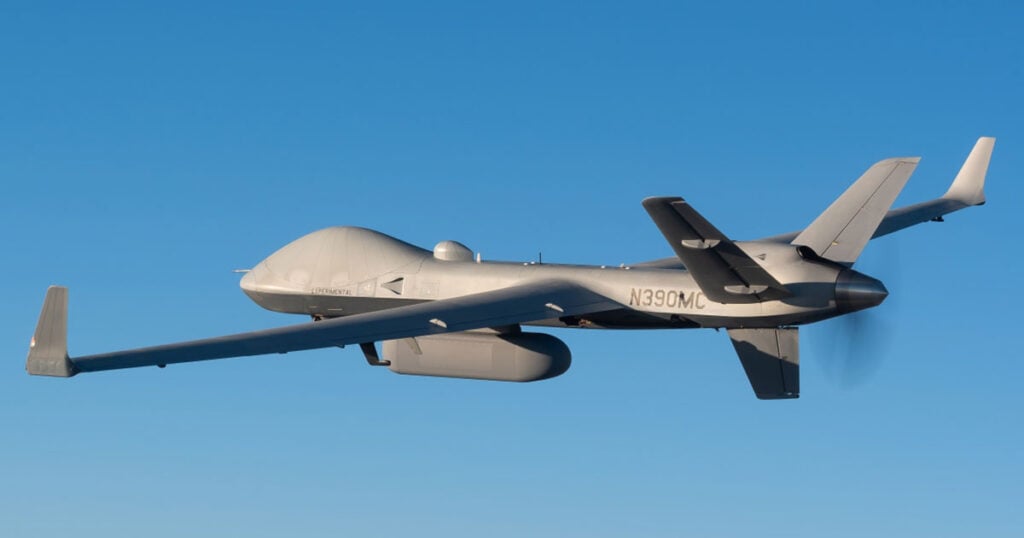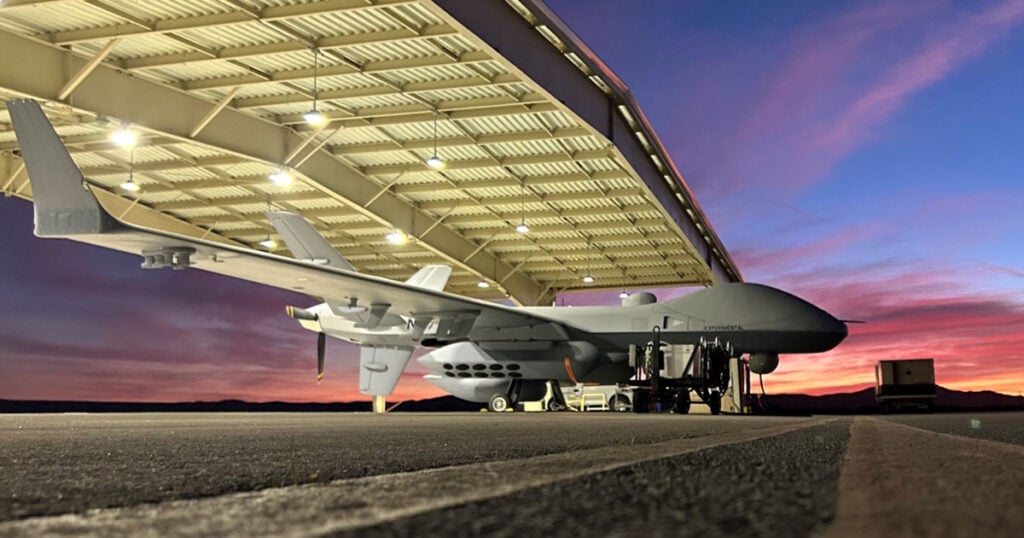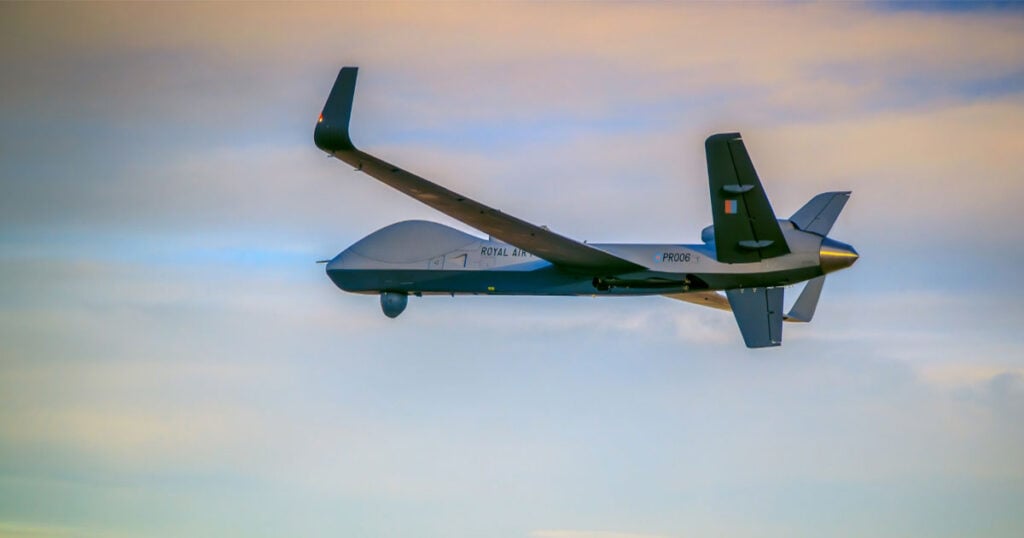
The UK’s Military Aviation Authority has issued a Military Type Certificate to the RAF’s Protector RG Mk1, based on the MQ-9B SkyGuardian® by GA-ASI, verifying it safe to operate without geographic restrictions, including over populous areas.
The certification represents a significant milestone for large UAS, marking it as safe to operate without geographic restrictions, including over populous areas. GA-ASI is believed to be the first manufacturer of large, unmanned aircraft to receive an MTC based on rigorous compliance with STANAG 4671, the NATO standard for UAS airworthiness.
Obtaining the MTC has been a goal of GA-ASI since the inception of the MQ-9B in January 2014. The company took its proven UAS platform, the MQ-9A, and added performance enhancing features while ensuring that the design was capable of meeting NATO’s STANAG 4671 Edition 2 airworthiness requirements.
To meet these requirements, the aircraft includes numerous enhancements uncommon in other large UAS. These include lightning protection, fire protection, anti-icing systems and a fatigue-and-damage-tolerant building block design approach. All flight critical software and related equipment was designed in compliance with the rigor of DO-178C/254.
Mission software is rigidly separated from flight critical software. These features not only address the aircraft’s airworthiness but also enhance its reliability and operational flexibility.
GA-ASI CEO Linden Blue, commented, “Earning an MTC for MQ-9B was a herculean effort and a seminal achievement for our company. We invested over $500 million as part of an 11-year effort to develop an unmanned aircraft that meets NATO’s rigorous airworthiness standards.
“This included three flight test aircraft, full component and system-level environmental testing to DO-160G and applicable Mil-Standards, full scale static test airframe test to ultimate ground and flight loads, bird strike, hail protection and full-scale fatigue testing to three lifetimes (3x 40,000 notional aircraft flight hours = 120,000 hours total). Our engineers developed over 140,000 pages of detailed technical data verifying that the MQ-9B met those demanding requirements. I congratulate our team for this outstanding accomplishment, and I know our customers need this type certification, which will open civil airspace for their flight operations.”
Gp. Capt. Neil Venables, Type Airworthiness Authority and holder of the Protector Type Certificate, added, “Achieving the award of a first in class Military Type Certificate has required years of dedication and perseverance and is a testament to the hard work of all involved. It is a privilege to be the first to be awarded an MTC for the Protector Air System.”
The Royal Air Force continues to take delivery of new Protector aircraft at their home at RAF Waddington. The UK has 10 aircraft of the 16 it has ordered.
MQ-9B is an advanced medium-altitude, long-endurance UAS: it includes the SkyGuardian® and SeaGuardian® models, as well as the Protector operated by the RAF.
In addition to the UK, GA-ASI has MQ-9B orders from Belgium, Canada, Poland, Japan Coast Guard, Japan Maritime Self-Defense Force, Taiwan, India, and the U.S. Air Force in support of the Special Operations Command. MQ-9B has also supported various U.S. Navy exercises, including Northern Edge, Integrated Battle Problem, RIMPAC, and Group Sail.