


Meshmerize examines the challenges of achieving predictable drone networking at scale, highlighting how drone networking failures can occur at the radio-link level before mesh routing becomes the primary concern. Read more >>
The whitepaper states that range, interference, asymmetric links, and mixed traffic can make the behavior of Wi-Fi-based systems difficult to predict under real deployment conditions. WFB-ng improves predictability at the single-link level through deterministic transmission behavior. Larger deployments require additional capabilities, including traffic-aware Quality of Service (QoS), network-level reliability, channel management, and support for multi-hop mesh networking.
Meshmerize is described as providing direct control over link behavior, including transmission rate, acknowledgment behavior, spatial stream behavior, and link behavior under traffic pressure, before building higher-level networking functions on that foundation.
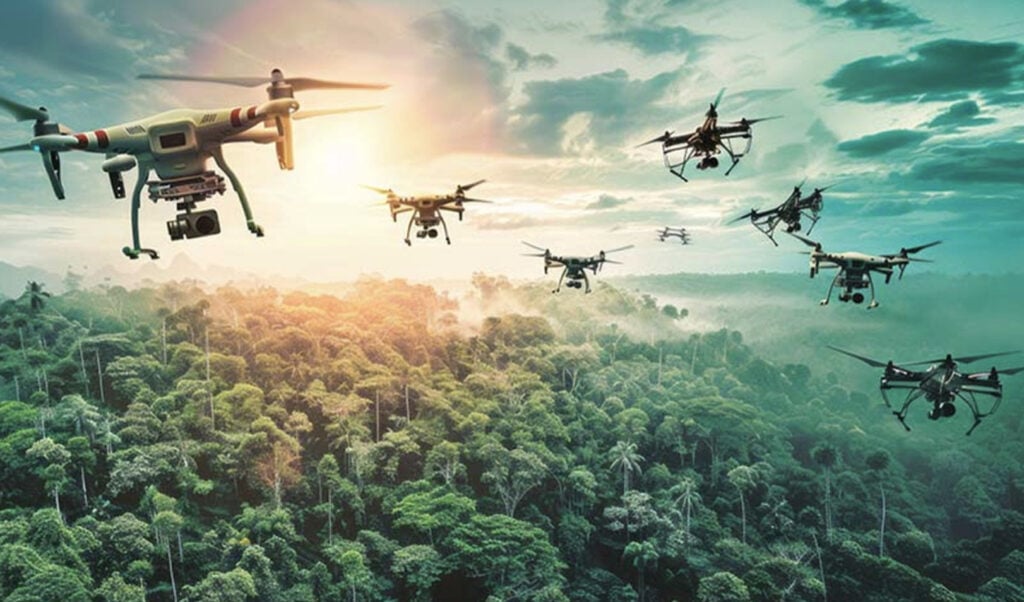
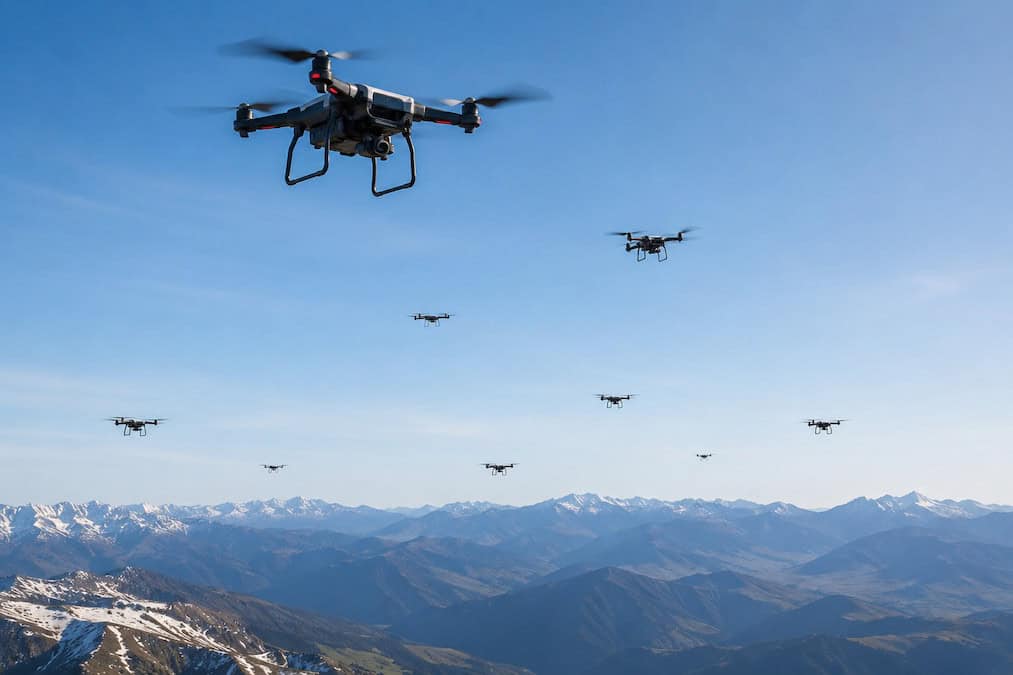
The publication also outlines a deployment methodology that begins with validating link performance in a two-node configuration before expanding the topology while maintaining the same networking model. As a field reference, it cites a published Meshmerize deployment involving more than 50 drones operating up to 50 km from ground control, with simultaneous video streams, 3D geolocation broadcasting, and relay radios, while noting that results depend on hardware configuration, RF conditions, antenna setup, mission geometry, and traffic policy.