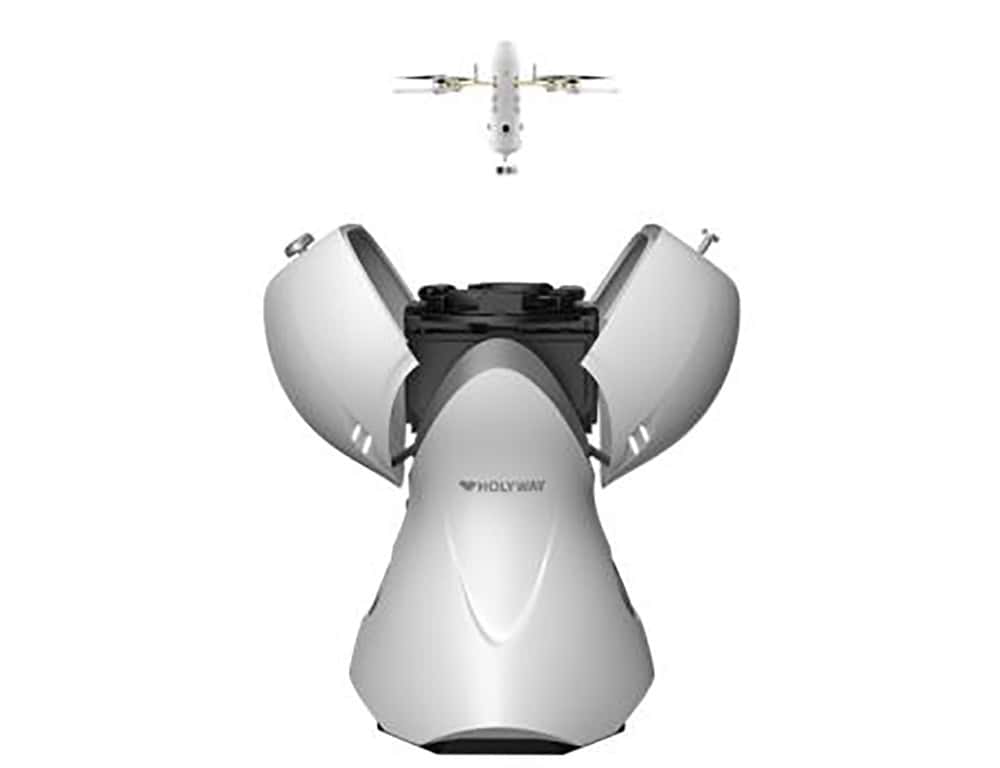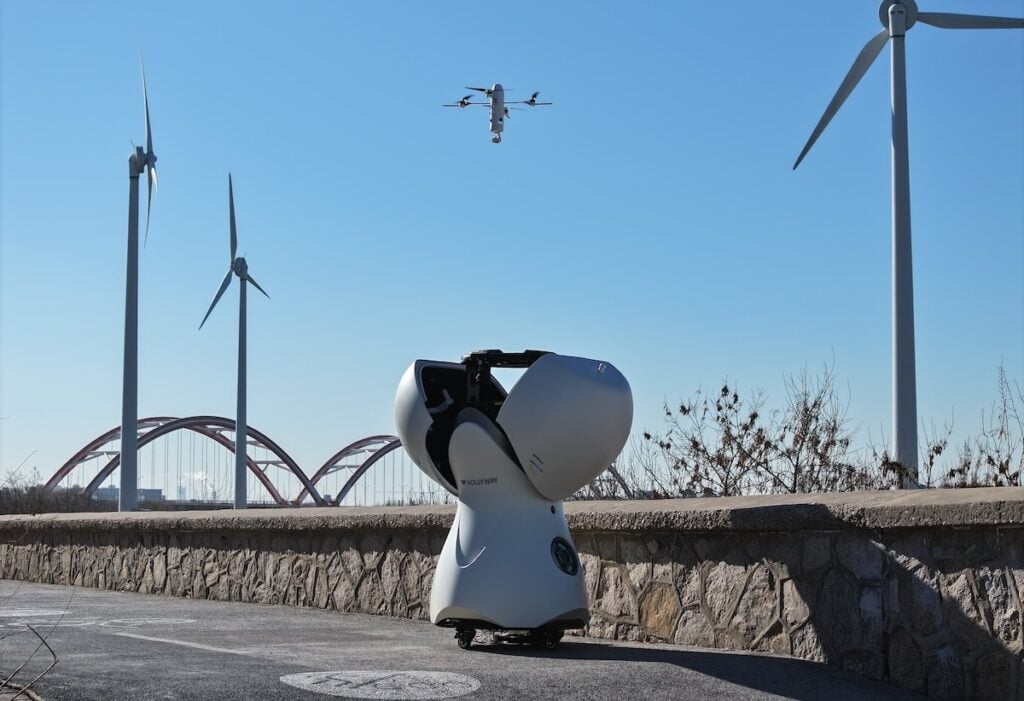



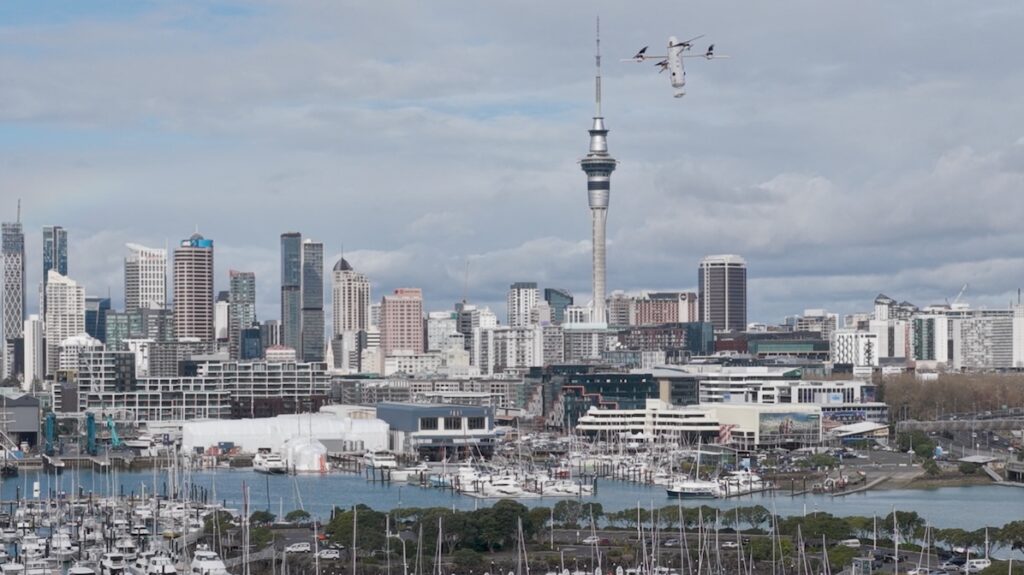
Hollyway addresses sensor rigidity, the second major bottleneck in Drone-in-a-Box (DiB) systems, with an automated payload swapping capability integrated directly into the dock.
 While automated battery replacement has improved drone endurance, many platforms remain limited by fixed payloads. Optical cameras provide detailed daytime imagery but are ineffective in darkness, while thermal cameras support low-visibility operations with reduced visual detail. Hollyway’s system enables drones to autonomously switch between payloads during a landing cycle, allowing one aircraft to perform multiple mission types.
The automated system completes a full sensor exchange in under 60 seconds without manual intervention. Current payload support includes high-definition optical and infrared thermal imaging cameras. During landing, the drone can complete both battery replacement and payload reconfiguration before relaunching with a different sensing capability.
In forestry and fire rescue operations, drones can use optical imaging for daytime situational awareness before switching to thermal imaging to identify hotspots and locate personnel through smoke or darkness. For large-scale event security, drones can transition from daytime crowd monitoring with optical cameras to nighttime infrared surveillance. Operators issue commands remotely while the dock performs the exchange process autonomously.
The integration of automated battery swapping and payload replacement allows a single system to support multiple sensing roles while maintaining operational readiness through automated charging and battery replacement, reducing the need for separate docks or aircraft configured for different mission types.
Beyond optical and thermal imaging, ongoing development includes support for LiDAR, gas detectors, multispectral sensors, and radar systems as part of Hollyway’s broader aerial infrastructure platform development.