




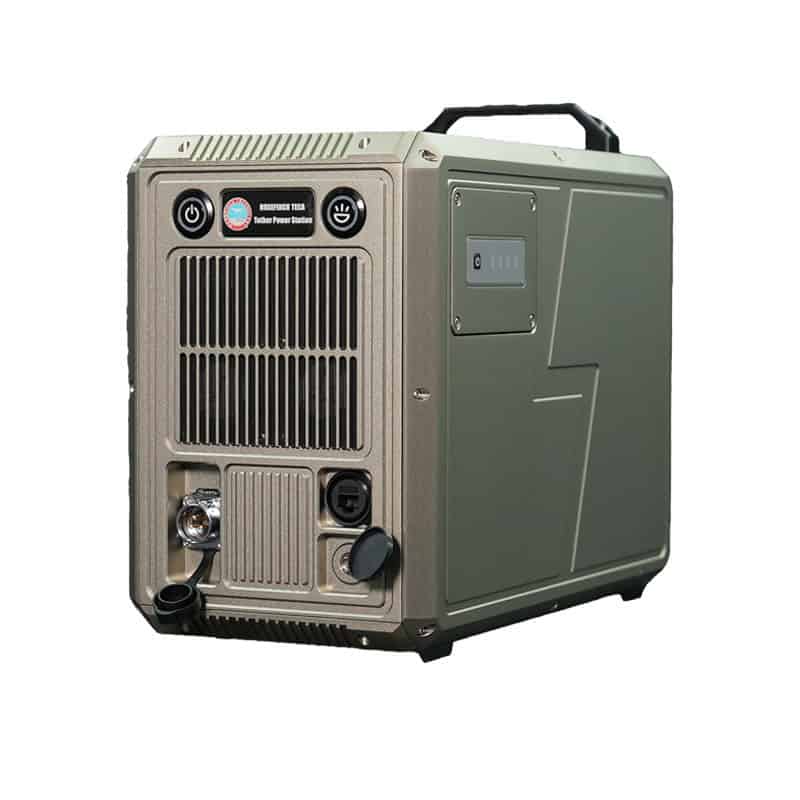
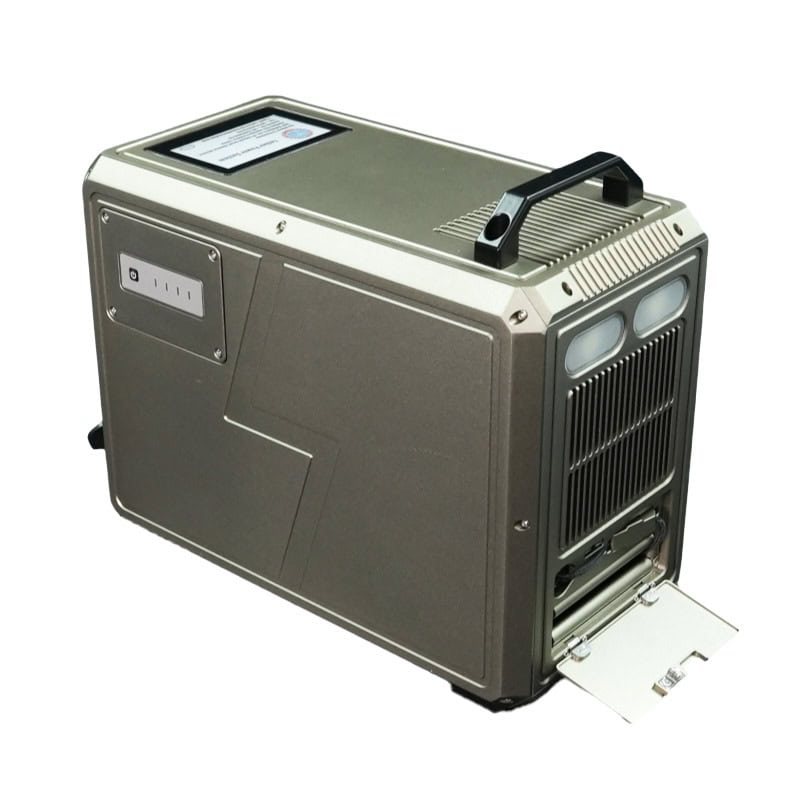
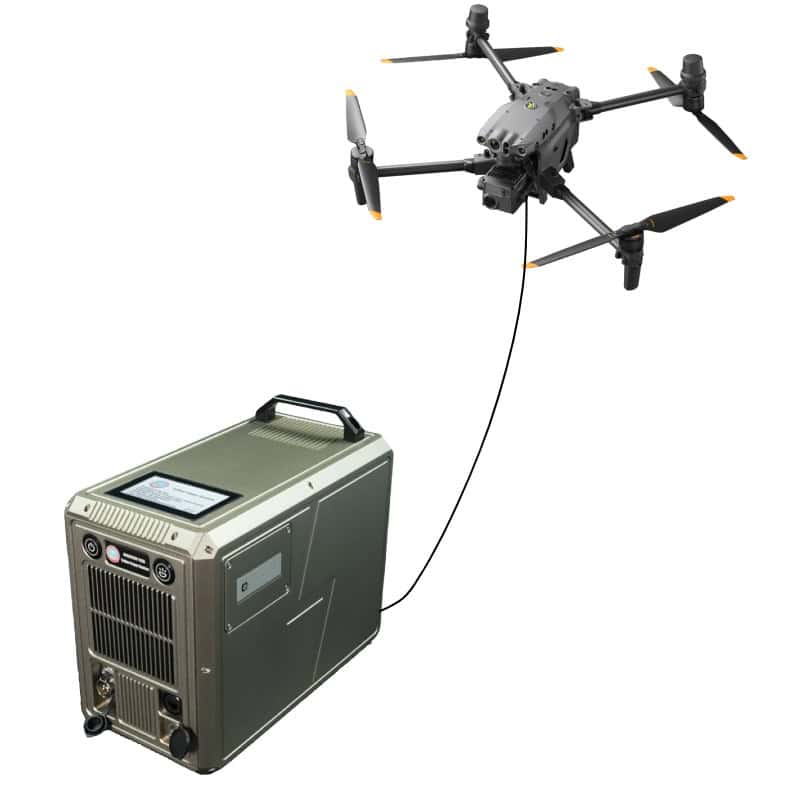
Rosefinch Technology offers a lightweight and portable tethered power solution designed specifically for use with the DJI M30 drone platform. Providing up to 12 hours of persistent hover capability, it delivers stable voltage output and features a backup battery with automatic switching in case of a power outage.
The system's highly durable cable is constructed from lightweight temperature-resistant aviation wire, sheathed in a composite fluoroplastic insulation layer and a high-tensile aviation-grade woven fiber layer. Single-mode fiber cable is also available for optional fiber optic communication. Fully autonomous built-in smart winch control enables the connected UAV to take off and land without any human input.
The tether station has been designed with safety foremost in mind, with complete electrical isolation of high-voltage AC and low-voltage DC power. It incorporates a range of built-in protection and automatic fault detection mechanisms that safeguard against issues such as input overvoltage and undervoltage, output overcurrent, and short circuits.
Specifications:
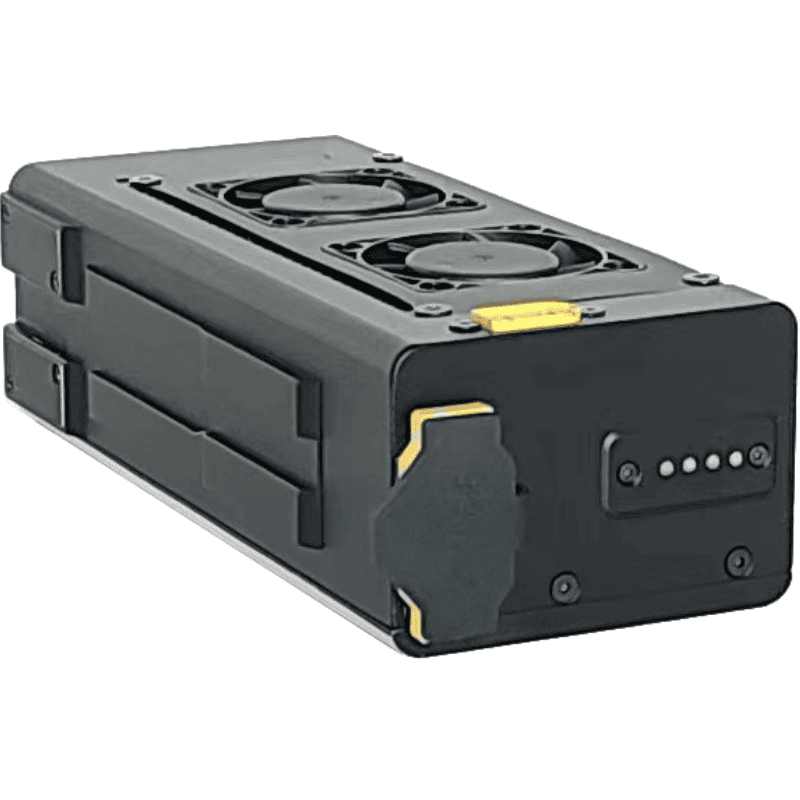
| Dimensions (D x W x H): | 360 x 186 x 268 mm (ground module) 156 x 75 x 48 mm (air module) |
| Weight: | 12 kg incl. 55m cable (ground module) 570 ± 20g (air module) |
| Cable Lengths: | 55m |
| Flight Duration: | 12 hrs |
| Ground Module Input Voltage: | 190 – 240 VAC, 50/60 Hz |
| Ground Module Output Voltage: | 700 – 750VDC adjustable |
| Ground Module Output Power: | ≤3500W (rated long-term output) |
| Air Module Input Voltage: | 580 - 810 VDC |
| Air Module Output Voltage: | 25.2 ± 0.3 VDC |
| Air Module Output Power: | 2000W (rated long-term output) |





