Discover World-Leading Unmanned and Autonomous Technologies
Discover cutting-edge solutions from leading global suppliers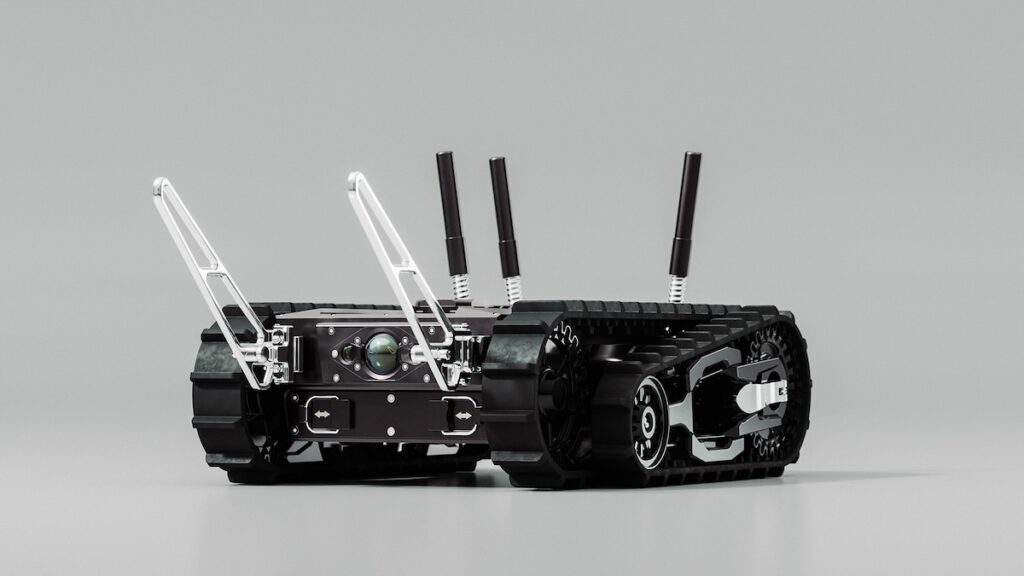
AeroVironment, Inc. has unveiled the TOM 50 RE, a compact, backpackable uncrewed ground vehicle developed by its subsidiary Telerob, at the Eurosatory 2026 defence and security exhibition in Paris.
Weighing less than 10 kilograms (22 pounds) and compact enough to be carried by a single operator, the platform is designed for mobile exploration, mission-accompanying reconnaissance, explosive threat disposal, and operational support. The tracked system features a stair-climbing flipper system and dedicated mobility attachments to navigate stairs, uneven terrain, and interior structures. It provides up to five hours of operational endurance and supports payloads of up to five kilograms without compromising its tactical mobility.
The system is aimed at supporting dismounted forces, explosive ordnance disposal teams, and special operations units, including SWAT, by providing rapidly deployable robotic capability.
“The introduction of TOM 50 RE reflects AV’s commitment to delivering robotic systems that directly address the realities of modern ground combat and explosive threat environments,” said Wahid Nawabi, Chairman, President, and Chief Executive Officer of AV. “Today’s operators need systems that move with them, adapt to multiple missions, and provide immediate intelligence while reducing risk to human life. TOM 50 RE delivers that capability in a highly portable form factor built for the tactical edge.”
For navigation and intelligence gathering, the vehicle is equipped with onboard simultaneous localization and mapping (SLAM) capability. This technology allows the platform to autonomously generate detailed maps of interior spaces, including multi-level buildings and global positioning system (GPS)-denied environments such as underground structures and dense urban terrain. Operators can identify and record points of interest directly within the digital map and export mission data immediately following operations to accelerate intelligence exploitation and follow-on planning.
Situational awareness is maintained through four integrated high-resolution wide-angle cameras with infrared capability, providing 360-degree visibility across day, night, and degraded visual environments. The communication infrastructure utilizes an advanced internet protocol (IP)-mesh radio architecture. This secure, resilient system allows the platform to function as a mobile repeater, extending connectivity for forces operating deep inside structures or complex terrain.
The system features a modular architecture enabled by the Mission Module Interface or an adapter supporting Telerob’s Universal Component Interface. This allows operators to integrate mission-specific payloads, such as advanced camera systems and disruptors, to tailor the vehicle to evolving operational requirements.
“TOM 50 RE was designed to deliver immediate robotic capability at the point of need, where operators face the greatest uncertainty and risk,” said Florian Gruener, Managing Director of Telerob and Product Line General Manager for Uncrewed Ground Vehicles. “Its ability to rapidly conduct these missions in complex terrain allows forces to gain critical situational awareness, mitigate threats, and make faster, more informed decisions—while keeping personnel out of harm’s way.”
The platform is controlled through AV_Halo COMMAND running on the Tomahawk Grip family of systems or the Robo Command Control System, allowing operators to manage the vehicle alongside other uncrewed systems.
The system is engineered to fulfill four primary operational roles. For mobile exploration, it scouts unknown or high-risk environments without exposing personnel to danger. In mission-accompanying reconnaissance, the SLAM capability marks hazards for follow-on forces. For defusing missions, it supports the neutralization of improvised explosive devices using modular disruptor and drop-charge payloads. Finally, in a support role alongside the telemax EVO family of products, it serves as a mobile communications relay and provides additional viewing angles to enhance coordination across distributed teams as part of AV’s expanding portfolio of ground robotic systems.