Discover World-Leading Unmanned and Autonomous Technologies
Discover cutting-edge solutions from leading global suppliers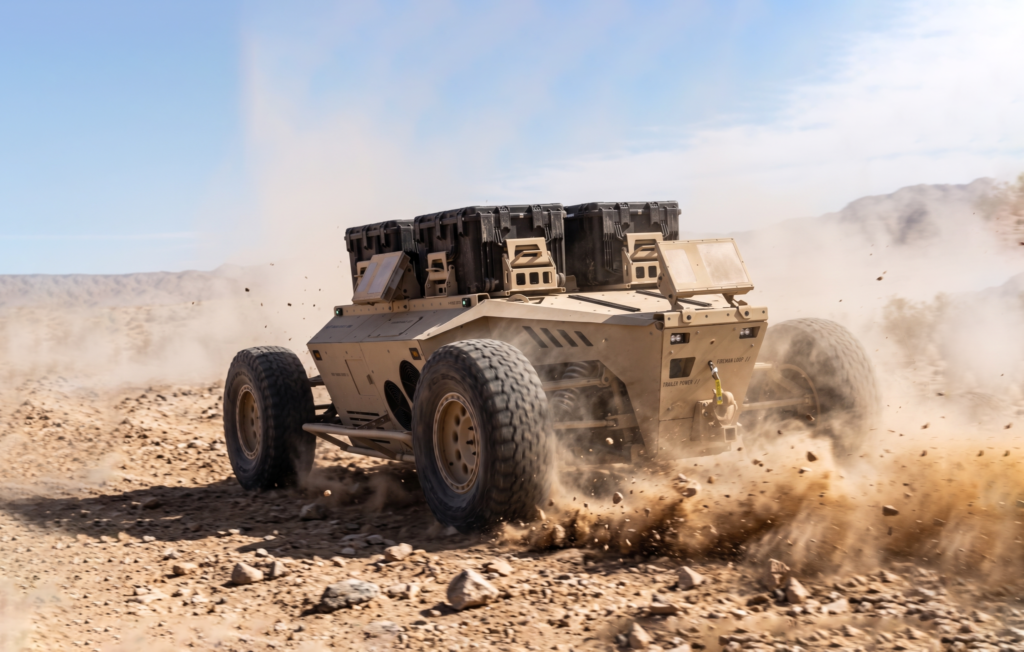
Hypercraft has officially launched Razorback, a next-generation autonomous Unmanned Ground Vehicle (UGV) built as a flexible mission platform for high-consequence environments.
Razorback is designed to replace traditional static hardware with a versatile, distributed autonomous operations node capable of dominating the modern battlespace. It directly addresses the evolving global threats and critical liabilities of personnel-heavy operations and reliance on traditional logistics chains.
The vehicle is powered by a high-performance diesel hybrid-electric powertrain featuring a 50 kW range extender, which peaks at 95 kW, alongside a combined 300 hp four-motor torque-vectoring drive system. This robust architecture enables the platform to carry a 2,400 lb payload over an extended 280-mile range at speeds up to 60 mph.
At its core, the vehicle features a software-defined system based on high-performance computing that enables artificial intelligence, edge processing, and the accelerated integration of autonomy and other mission systems. Razorback utilizes a Modular Open System Architecture with a central-zonal configuration that decouples hardware from software. This design ensures the platform is future-proof, allowing for over-the-air updates and rapid mission-set swaps.
The platform functions as a tactical microgrid by providing 38 kW of exportable power, which can support command posts, directed energy weapons, intelligence, surveillance, and reconnaissance nodes, electronic warfare, and the charging of drones and other vehicles. Razorback is also engineered with redundant advanced mobility features, including a rugged 148-inch chassis, 37-inch tires, 4-wheel hydraulic steering, and neutral steer. This redundancy ensures that operations can continue even if multiple motors, the range extender, or the energy storage system are damaged.
Razorback supports a wide array of mission sets without the need for a human footprint. It provides 360-degree protection against Group 1 and 2 unmanned aerial system threats, delivers critical supplies to forward positions to reduce personnel risk, and establishes energy nodes for command posts and charging stations. Additionally, it serves as an autonomous mobile communications relay node to bridge command and control gaps in obstructed terrain, actively influences the battlespace with mobile electronic warfare, and powers life-sustaining equipment while removing casualties for treatment.
Brian Bowers, CEO at Hypercraft, commented, “Razorback isn’t just a vehicle; it’s the new tactical standard. Razorback responds to the dynamic demands of modern warfare, unifying high-capacity power export in a high-performance off-road vehicle with advanced autonomous capabilities to ensure that forward operations succeed in an ever-changing environment.”