Discover World-Leading Unmanned and Autonomous Technologies
Discover cutting-edge solutions from leading global suppliersAthena Security has developed a new Drone Defense Detection Model integrated into its AI-Assisted X-ray screening system, in response to the U.S. Federal Aviation Administration’s reported 25.6% increase in illegal drone incursions since 2024.
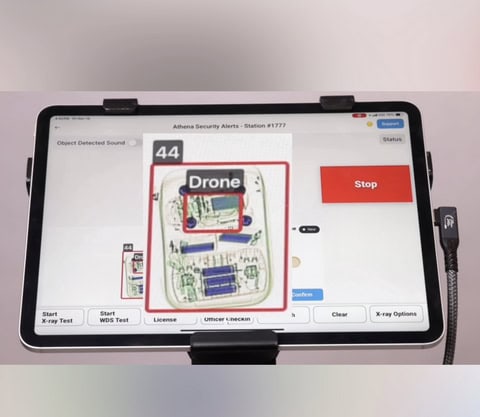
The new technology is aimed at empowering government sites, airports, transportation hubs, and critical infrastructure operators to detect and flag drone components, including those hidden within cargo or luggage, before they can be assembled or reach secure perimeters.
The need for such a preemptive system is highlighted by the rising frequency of major drone incidents worldwide, which has increased by more than 60%. The war in Russia and Ukraine has demonstrated how inexpensive drones, sometimes repurposed commercial or hobby models costing less than $1,000, can be weaponized to strike energy infrastructure, rail networks, ammunition depots, and civilian sites. For instance, in October 2025, a massive barrage of over 300 drones and missiles targeted Ukraine’s energy grid, causing widespread outages.
Collateral consequences have also been seen in Europe’s aviation system, with disruptive drone incursions leading to flight cancellations, postponements, and temporary shutdowns at airports in cities like Munich and Copenhagen. These incidents underscore the ease with which malicious actors can threaten military and civilian targets at a low cost.
Chris Ciabarra, Co-founder and CTO of Athena Security, stated, “Today’s drones are inexpensive, stealthy and scalable. Waiting for an incident is no longer a viable defense. Our goal is to give critical infrastructure operators a chance to stop threats before they reach the secure perimeter – whether the threat arrives by backpack, cargo bay, or is assembled onsite.”
The new AI X-ray model extends Athena Security’s advanced X-ray screening suite beyond conventional threats like knives and guns. It utilizes advanced machine learning to classify drone components or detect their signatures within carry-on or cargo items. This addresses the risk, similar to documented instances in other countries, of military-grade drones being smuggled into restricted territories in pieces and later assembled for attacks.
The Drone Detection Model Capabilities include:
- High-fidelity feature recognition, detecting motors, propellers, electronics, battery packs, and structural drone components, even when disguised or compact.
- Low false-positive tuning, optimized to reduce nuisance alerts in complex environments.
- Integration with access control, allowing the system to trigger alerts, lockdown procedures, or security interventions when a drone payload is flagged.
- Scalability, enabling deployment at checkpoints, perimeter gates, cargo ingress points, and unmanned checkpoint stations.
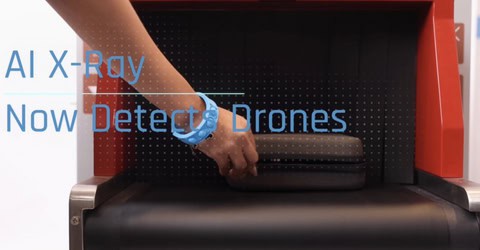
Ciabarra also shared, “One of our clients had a drone incident that compromised their airspace. They needed a way to detect small drones and their components before they became a threat. They understand the risks and asked if we could help – so we built it.”
The detection feature is positioned as a natural extension to the company’s existing AI X-ray, adding a layer of protection for entities already adopting advanced screening.
Athena Security’s move into drone detection is a proactive, forward-looking approach aimed at addressing the increasing use of drones for surveillance, smuggling, sabotage, and asymmetric attacks in the U.S. and allied nations.
The company is actively engaging with federal, state, and municipal agencies to pilot deployments and is exploring partnerships with counter-UAV (C-UAV) vendors, electronic warfare providers, and security integrators to develop end-to-end layered systems.