Discover World-Leading Unmanned and Autonomous Technologies
Discover cutting-edge solutions from leading global suppliers
In September 2025, UST readers turned in force to stories spanning airborne motherships, swarm communications, coaxial drone platforms, naval & modular UAS, and prime-level uncrewed system partnerships. Last month’s most read articles reveal what’s capturing unmanned system enthusiast’s attention across defense, autonomy, and systems integration.
The most read article on UST in September was GA-ASI and AeroVironment’s milestone launching of a Switchblade 600 from an MQ-9A UAS, validating the concept of large unmanned platforms acting as airborne motherships. The test which took place at the U.S. Army Yuma Proving Grounds Test Range, demonstrated how larger UAS may carry and deploy smaller “effectors” deeper into contested airspace, extending operational reach while reducing risk to manned systems.
The modular control handoff, from the MQ-9A’s GCS to a closer ground operator, illustrated a layered command paradigm suited for contested-domain operations. It’s a story that drew broad interest – signaling that the “mothership + launched effectors” model is no longer speculative, but making strides toward practical demonstration.

Also high on UST reader’s interest was TEKEVER’s launch of the AR3 Evolution (AR3 EVO) at DSEI 2025. Evolving from years of field deployment, this modular UAS is designed for contested, multi-domain missions, with features tailored to shipborne launch/landing, resilient communications, and modular payload integration.
The AR3 EVO‘s ability to operate from small maritime decks (5×5 m zones) and to fly in constrained, denied environments underscores the growing emphasis on flexible ISR platforms that can roam across maritime, littoral, and land theaters.

Swarm Communications Gets Real: Meshmerize Reveals MANET for Expendables
Swarm networking was another clear point of focus as Meshmerize revealed a MANET stack purpose-built for expendable drones and robotics, integrated with Wi-Fi radios and offering robust, scalable swarm comms without bespoke hardware.

The architecture offers roaming handoffs, traffic prioritization (C2 over payload), and multipath redundancy and features critical for swarms operating in interference-rich, contested environments.
At Commercial UAV Expo, Ascent AeroSystems introduced SPARTAN, a next-gen coaxial rotor UAS that pushes both endurance and payload limits. Building on its NX30 lineage, SPARTAN is optimized for modularity and all-weather performance, touting over 70 minutes of flight time and payloads up to 15.3 lbs.

The design emphasizes ruggedness (IP54 battery enclosure), MOSA-friendly interfaces, and operational flexibility, all features well-suited to defense, public safety, agricultural, or industrial missions. It’s a compelling evolution in coaxial UAV design that captured attention through both technical aspiration and practicality.
Rounding off September’s top reads was the announcement that BAE FalconWorks and Lockheed Martin Skunk Works are teaming up to co-develop modular, rapidly deployable uncrewed air systems. Their aim: systems that deliver electronic warfare, attack, and other effects, all with multiple launch modalities (air drop, maritime, ground, etc.).
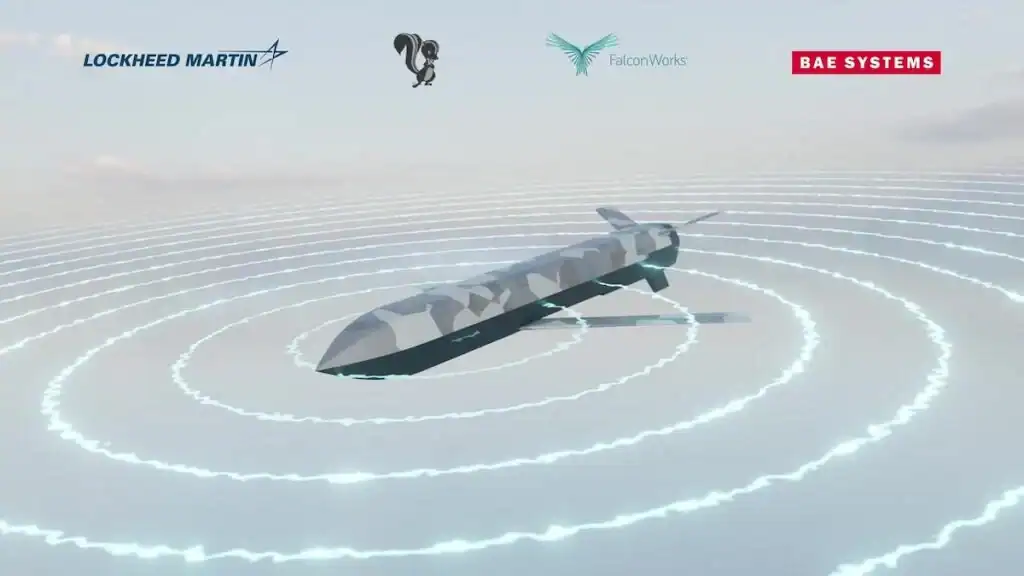
The collaboration melds rapid prototyping and advanced manufacturing expertise from both primes, reflecting a push toward plug-and-play uncrewed systems that can flex to mission demands.
Taken together, September’s most-read articles show an unmanned domain gravitating toward modularity, distributed effects, swarm networking, and maritime/airborne integration. But more than that, they reflect where readers want to go: toward real-world demonstrations, interoperable systems, and scalable architectures.