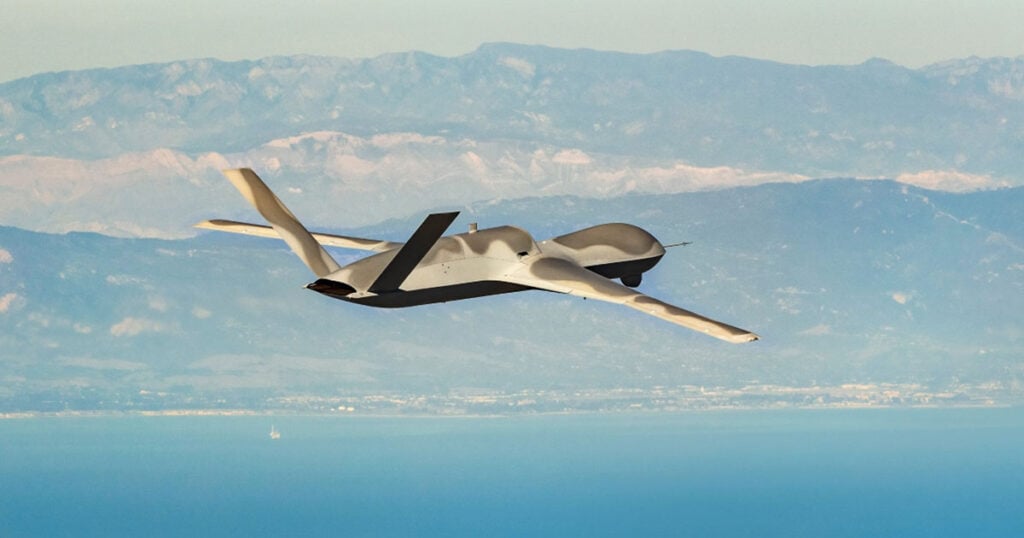
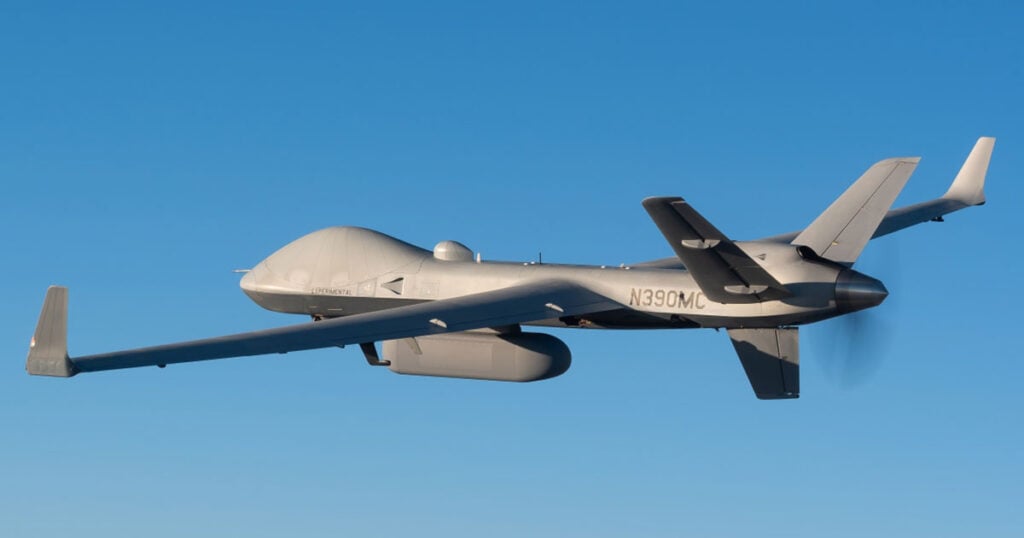
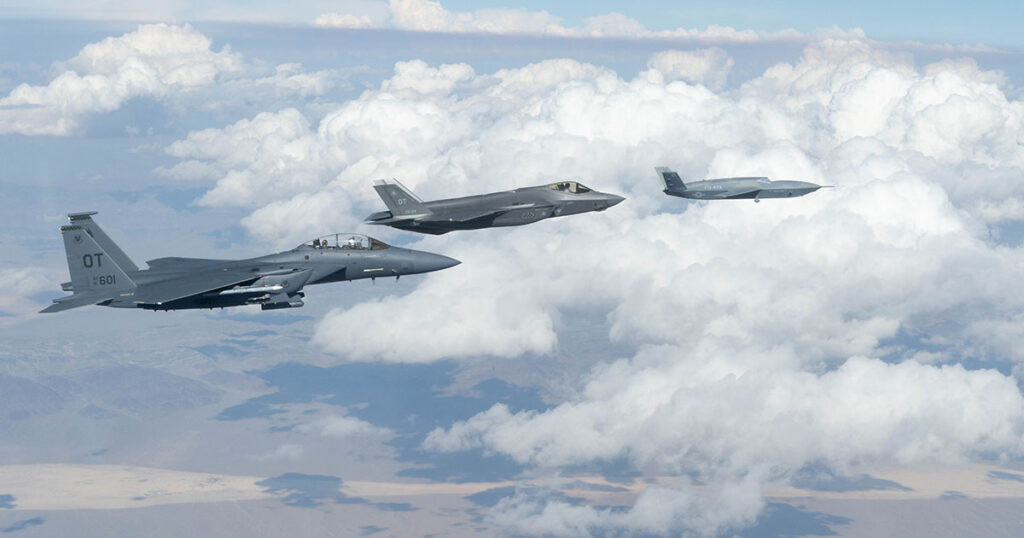
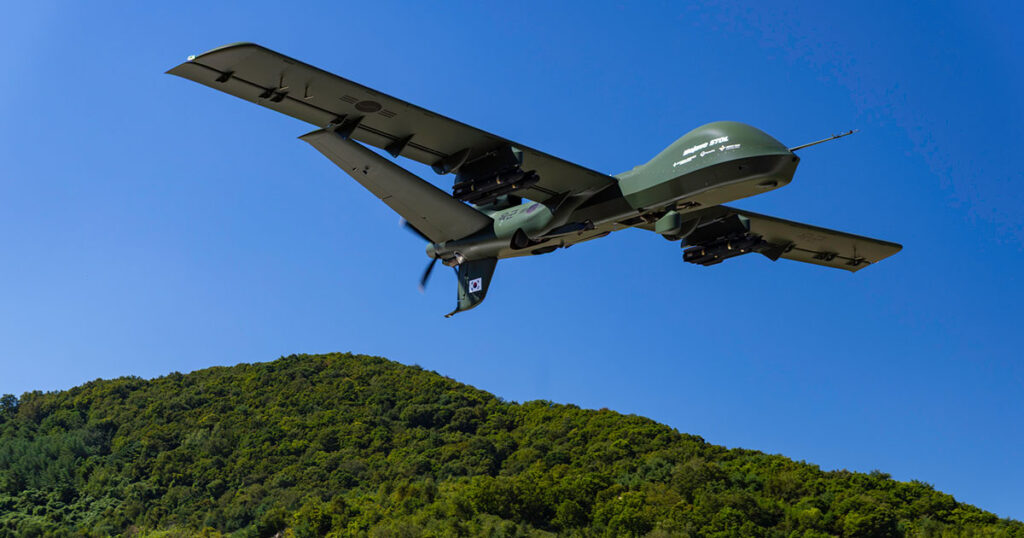
General Atomics Aeronautical Systems, Inc. (GA-ASI) has begun flight testing of the YFQ-42A Collaborative Combat Aircraft (CCA) in coordination with the U.S. Air Force.
The milestone marks another first for GA-ASI in the rapid development of jet-powered uncrewed platforms designed for affordable, high-rate production to support future air dominance.
“What a great moment for the U.S. Air Force and for GA-ASI,” said GA-ASI President David R. Alexander. “It’s been our collaboration that enabled us to build and fly the YFQ-42A in just over a year. It’s an incredible achievement and I salute the Air Force for its vision and I salute our development team for delivering yet another historic first for our company.”
The YFQ-42A is the company’s latest uncrewed jet, optimized for semi-autonomous air-to-air operations. The platform builds on the genus-species design approach first demonstrated with the XQ-67A Off-Board Sensing Station (OBSS), and leverages advanced model-based digital engineering to accelerate development while integrating enhanced air dominance capabilities.
GA-ASI’s autonomy core for the YFQ-42A has been matured through more than five years of flight testing on the jet-powered MQ-20 Avenger®, providing a foundation for AI-driven operational performance. Combining a stealth-focused air-to-air configuration with this trained autonomy core, the aircraft is designed to deliver significant advantages in contested environments.
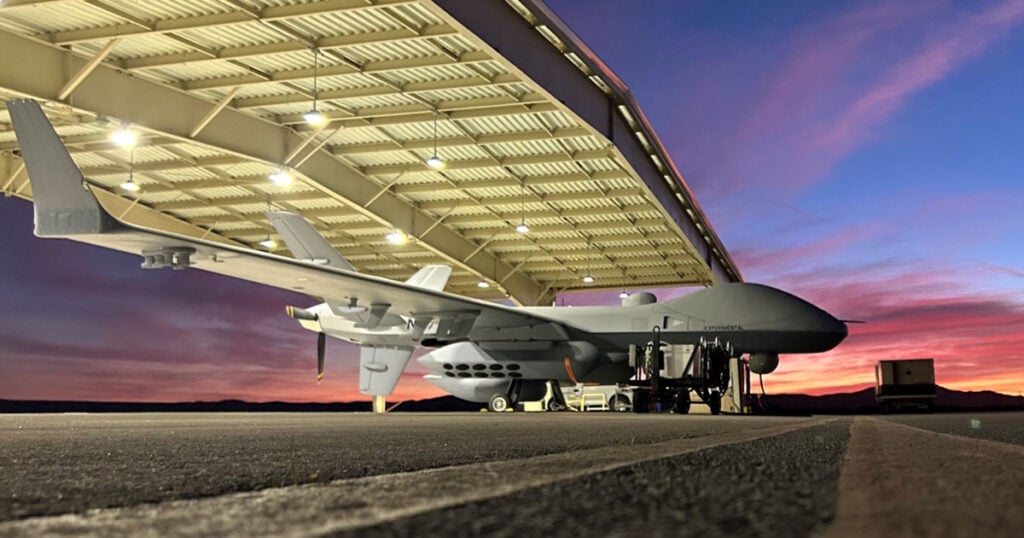
The program is also focused on enabling high-rate production to meet the U.S. Air Force objective of fielding more than 1,000 CCAs within an accelerated timeframe. Ground testing of the YFQ-42A commenced in May 2025.
In March 2025, the U.S. Air Force designated the platform as the YFQ-42A, following GA-ASI’s selection in April 2024 to deliver a fully production-representative CCA. The designation reflects its status as a production-representative fighter-class uncrewed aircraft, with the “Y” prefix to be dropped upon entry into serial production.
GA-ASI has produced more than two dozen uncrewed aircraft types, delivering over 1,200 systems to customers worldwide. The company manufactures more than 100 aircraft annually at its 5 million-square-foot facility in Poway, California. GA-ASI platforms have accumulated nearly 9 million flight hours, with more than 50 aircraft airborne globally at any given moment.