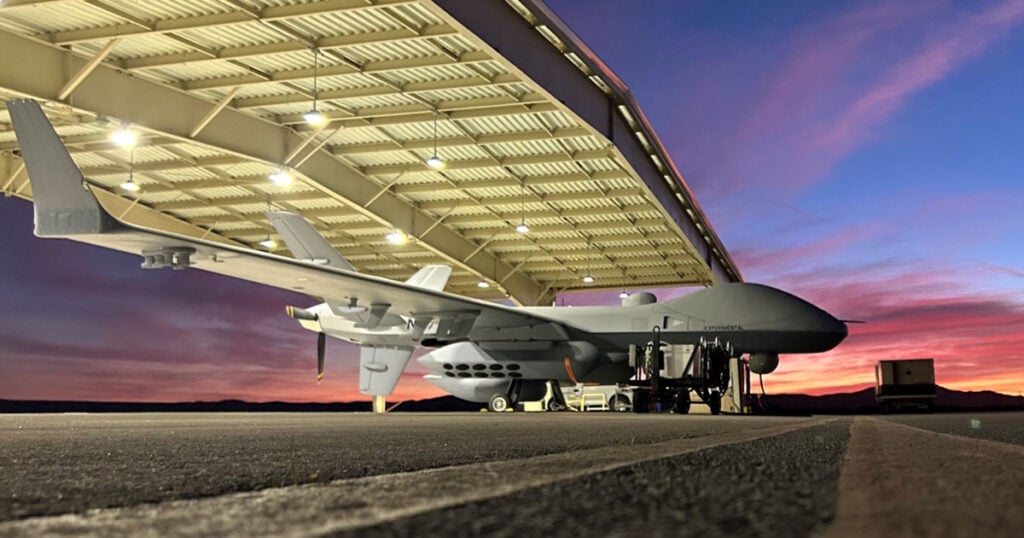
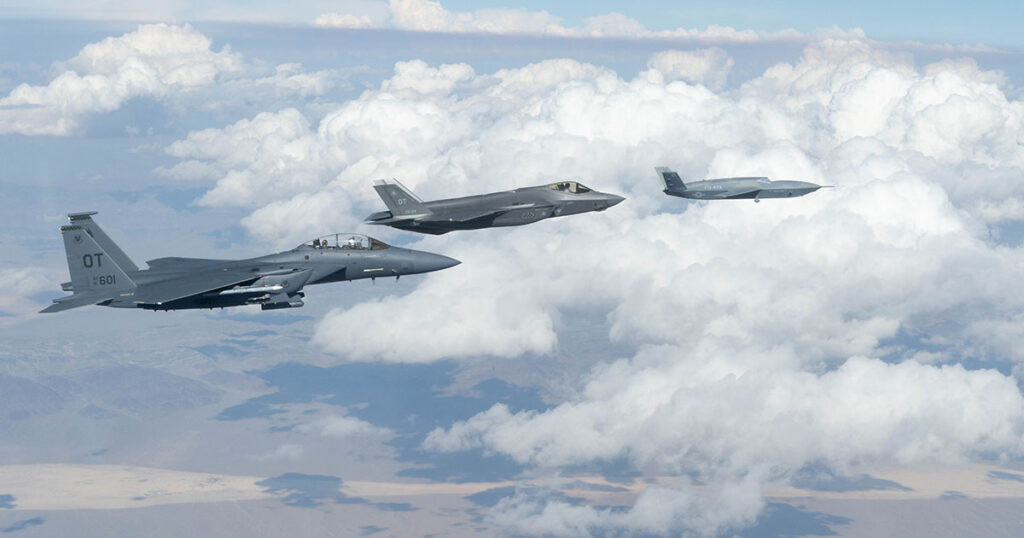
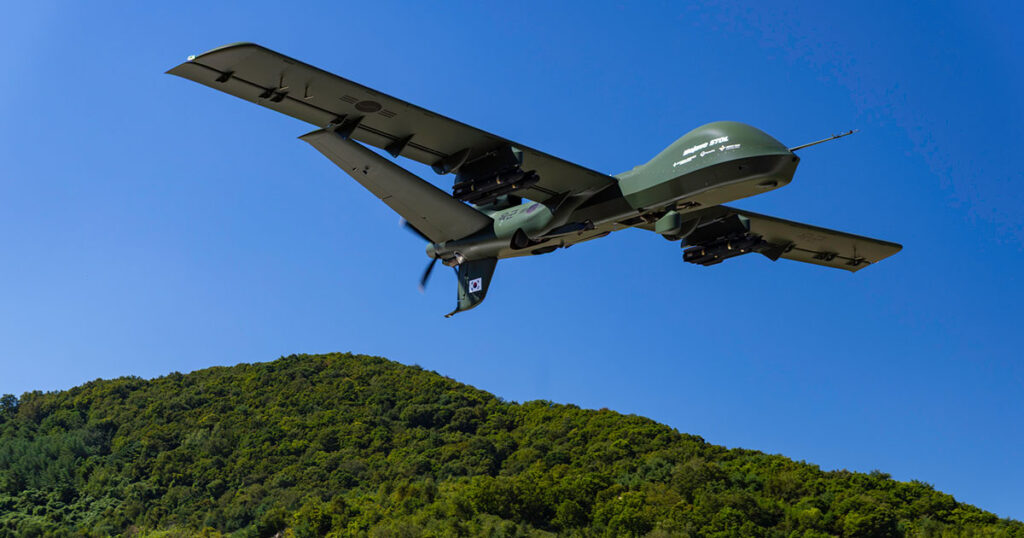
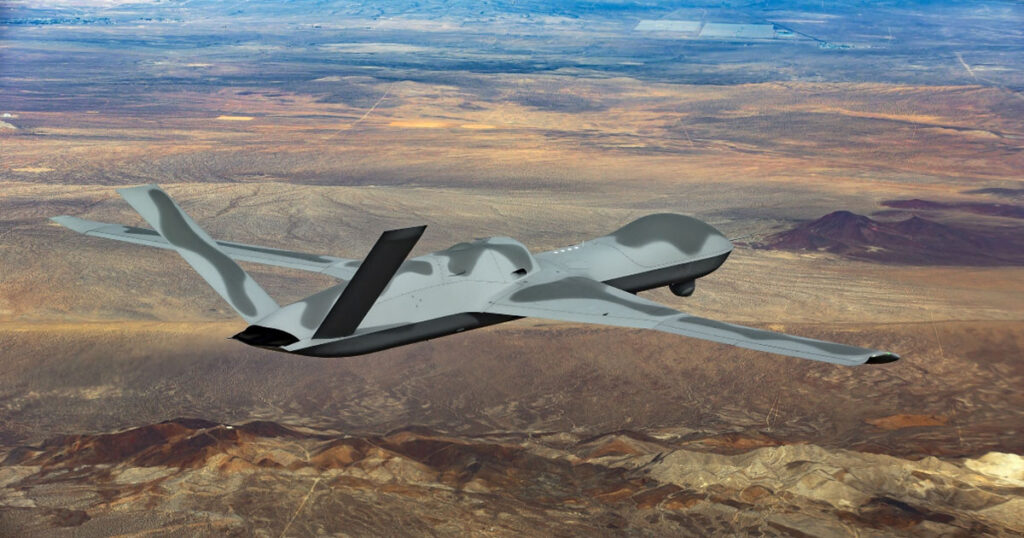
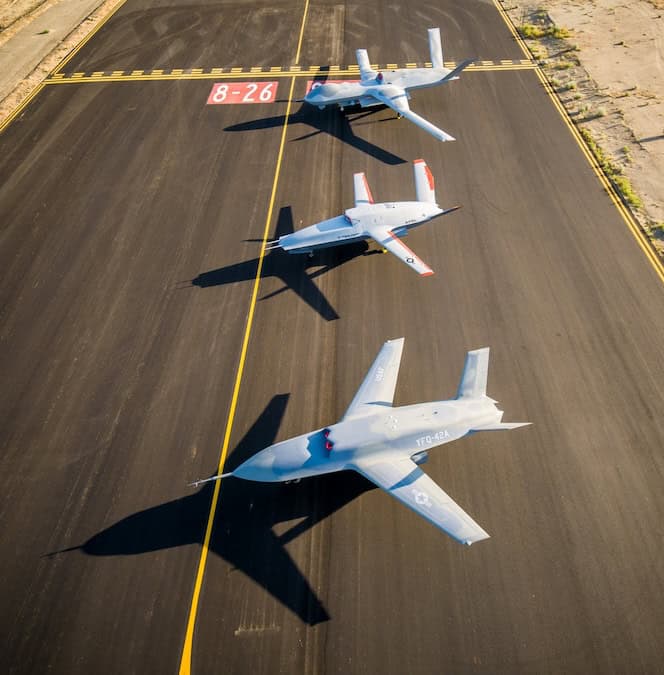
The Predator B UAS. Image courtesy of GA-ASI.
General Atomics Aeronautical Systems, Inc., a leading manufacturer of Remotely Piloted Aircraft (RPA) systems, radars, and electro-optic and related mission systems solutions, has confirmed plans to open a RPA Training Academy in Grand Forks, North Dakota. GA-ASI has signed a 10-year lease and is expecting to break ground soon.
GA-ASI flight crew training will commence early next year and the company expects to welcome its first Foreign Military Sales (FMS) customers shortly thereafter.
“The mission of the GA-ASI Training Academy is to increase the overall capacity for flight crew training on our aircraft systems,” said Linden P. Blue, CEO, GA-ASI. “The Training Academy will complement our customers’ organic training capabilities and fill the growing need across our RPA enterprise to address the pilot shortage.”
Working with leading industry training experts, academia, and local North Dakota industry, the Training Academy in Grand Forks will provide state-of-the-art flight instruction to aircrews operating GA-ASI aircraft. In addition to providing increased capacity to train the company’s own aircrews, the Training Academy also will train FMS customers who are seeking to grow their aircrew numbers to meet current operational demand.
-

- Artist renderings of the proposed Grand Forks Training Academy

Operating year-round, GA-ASI’s RPA Training Academy will offer multiple courses per year using U.S. Government-approved curricula, with the potential of training up to 60 flight crews per year. In addition to training, the Academy also may conduct RPA airspace integration systems testing.
“We selected North Dakota as the site for our new Training Academy because it offered an unequaled opportunity to support both our U. S. Air Force customer and international customers,” said Frank W. Pace, president, Aircraft Systems, GA-ASI. “Uncongested skies, an optimal training range, and strong support for continued RPA development from local, state, and federal government representatives, including outstanding advocacy from Senator John Hoeven [R-ND] and Representative Kevin Cramer [R-ND], provide a great environment to support our customers’ training requirements.”
Over the last two decades, GA-ASI has trained hundreds of company and customer aircrews at its Gray Butte and El Mirage Flight Operations Facilities near Palmdale, California. Opening the North Dakota Training Academy will provide an additional resource to meet growing worldwide demand for RPA training operations, as well airspace integration testing.
GA-ASI will operate from a five-and-a-half acre location within the Grand Sky complex which is co-located on Grand Forks Air Force Base (AFB). The Grand Forks AFB presently serves as the base of operations for U.S. Department of Homeland Security/Customs and Border Protection Predator® B aircraft and MQ-1 Predator A aircraft operated by the North Dakota Air National Guard.
GA-ASI aircraft have amassed over 3.5 million flight hours, maintaining the highest reliability ratings in the U.S. Air Force, and have been integrated seamlessly into some of the most complex operational airspace in U.S. border patrol and overseas military operations.
GA-ASI is working closely with the FAA, the Air Force, and the Northern Plains Unmanned Aircraft Systems Test Site to ensure smooth integration into the airspace over North Dakota. The company also is involved in several internally-funded and joint initiatives with the U.S. Government that are intended to improve the detect-and-avoid system redundancy of its RPA systems to a level greater than that available to most traditional manned aircraft.