


General Atomics Aeronautical Systems, Inc

Guardian UAS Demonstration Flights Performed in Japan

By Mike Ball / 09 May 2018
Follow UST

GA-ASI Guardian UAS

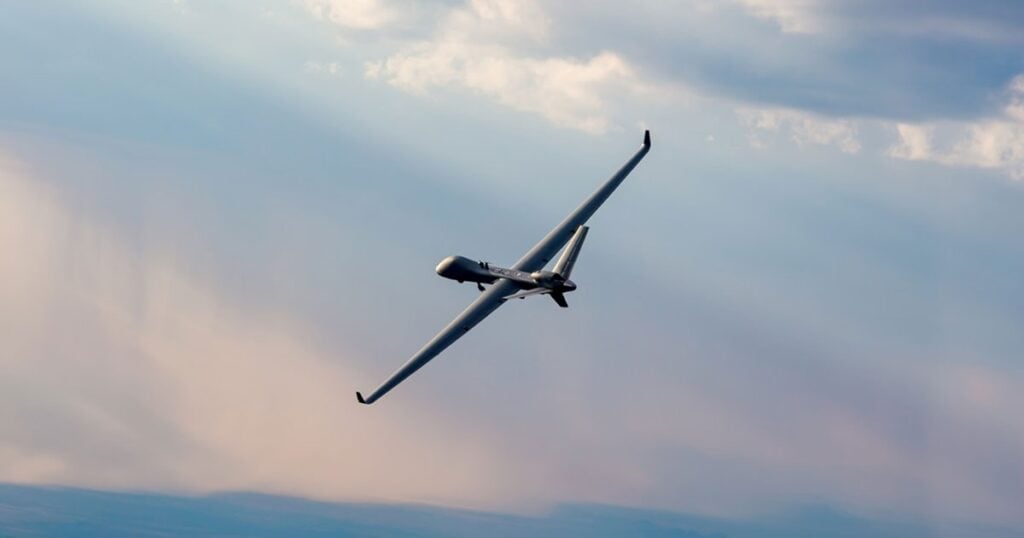
General Atomics Aeronautical Systems, Inc. (GA-ASI) has announced the first flight of the Guardian Remotely Piloted Aircraft (RPA) in Japan during an opening ceremony on Iki Island. The demonstration flights, taking place over three weeks, intend to promote the civil and scientific applications of the RPA.

“We thank the Mayor of Iki and the many other public and private stakeholders for their making this demonstration possible,” said Linden Blue, CEO GA-ASI. “We believe that these flights of long-endurance RPAs in Japan’s maritime environment will provide valuable information, and we look forward to reviewing the important data gathered from these flights.”

Mayor Shirakawa provided a statement, which said: “We are delighted to host the RPA flight demonstration on our island of Iki. The demonstration is an important milestone for the many peaceful uses of RPAs, including maritime disaster security and maritime resource management. Iki is located near the boundaries of Japan, so surveillance capabilities are an important matter for us. Furthermore, holding the nation’s first demonstration of this kind has great economic significance for our island. I thank the national government’s ministries and agencies and the many other public and private stakeholders for their cooperation.”

The Guardian will collect data for scientific research that will be shared across multiple government agencies, while operating from the island of Iki, in Japan’s Nagasaki Prefecture.

This is the first demonstration of a long endurance RPA by a private company in Japan. The aircraft’s sensors include a long-range maritime surface-search radar, stabilized optical and infrared video cameras, and an active collision-avoidance system, which includes a short range air-to-air radar. This configuration is similar to that operated by the U.S. Department of Homeland security over the maritime approaches to the U.S.

For demonstration purposes, the Guardian flights will consist of approximately 10 five-hour sorties over a three week period, originating out of Iki Airport; however, this aircraft configuration is capable of more than 20 hours endurance in a single sortie. The Guardian system will demonstrate various missions, including:

  • Meteorological, disaster-relief and oceanic observations
  • Marine accidents and rescue support
  • Airspace management and support of communications

GA-ASI is leading the demonstrations in cooperation with Iki Airport personnel and Japanese national authorities. The sensor data collected by Guardian will be provided to scientific research institutions, and flight data will be given to airspace management organizations to help establish procedures for using RPA systems in national and international civil airspace.

GA-ASI has sent its own team of experienced RPA pilots, sensor operators, and maintenance personnel to Japan to ensure safe operations during all phases of the demonstration. The demonstration is funded by GA-ASI and the equipment used belongs to the company.


To learn more, visit the General Atomics Aeronautical Systems, Inc Partner Hub: Innovation Partner Hub
Posted by Mike Ball Mike Ball is our resident technical editor here at Unmanned Systems Technology. Combining his passion for teaching, advanced engineering and all things unmanned, Mike keeps a watchful eye over everything related to the unmanned technical sector. With over 10 years’ experience in the unmanned field and a degree in engineering, Mike’s been heading up our technical team here for the last 8 years. Connect

More from General Atomics Aeronautical Systems, Inc

GA-ASI Partners with Belgian Defense Leaders on MQ-9B ISR Technology

GA-ASI, Thales, Octave, and dotOcean sign a landmark MoU to integrate advanced C4ISR software, geospatial visualization, and AI sensor processing into MQ-9B SkyGuardian and SeaGuardian platforms for European defense operations

Jul 30, 2026
GA-ASI Enters Partnership to Integrate SPEAR Missiles on MQ-9B & Gambit 6

General Atomics Aeronautical Systems and MBDA have committed to integrate SPEAR precision strike missiles onto the MQ-9B and Gambit 6 uncrewed aircraft to deliver advanced long range combat capabilities worldwide

Jul 28, 2026
GA-ASI Progresses Joint Strike Missile Integration for MQ-9B UAS

General Atomics Aeronautical Systems and KONGSBERG are advancing the integration of the Joint Strike Missile with the MQ-9B, completing key design reviews as part of a jointly funded effort to add long-range strike capability to the uncrewed platform

Jul 24, 2026
GA-ASI Completes Weapons Qualification Testing for RAF Protector

General Atomics Aeronautical Systems has concluded weapons qualification testing for the Royal Air Force’s Protector RG Mk1, qualifying Paveway IV and Brimstone 3 following six years of US-UK governmental and industry collaboration

Jul 22, 2026
GA-ASI Showcases Full-Scale CCA Model at Farnborough

General Atomics Aeronautical Systems is exhibiting a full-scale Collaborative Combat Aircraft model at Farnborough International Airshow following its FQ-42A production contract and increased CCA production capacity

Jul 20, 2026
A Decade of UAS Innovation at GA-ASI Flight Test & Training Center

General Atomics Aeronautical Systems marks 10 years of operations at its North Dakota facility, celebrating historic uncrewed aviation milestones and training over 4,000 pilots and operators

Jul 20, 2026
Advancing Unmanned Systems Through Strategic Collaboration UST works with major OEMs to foster collaboration and increase engagement with SMEs, to accelerate innovation and drive unmanned systems capabilities forward.