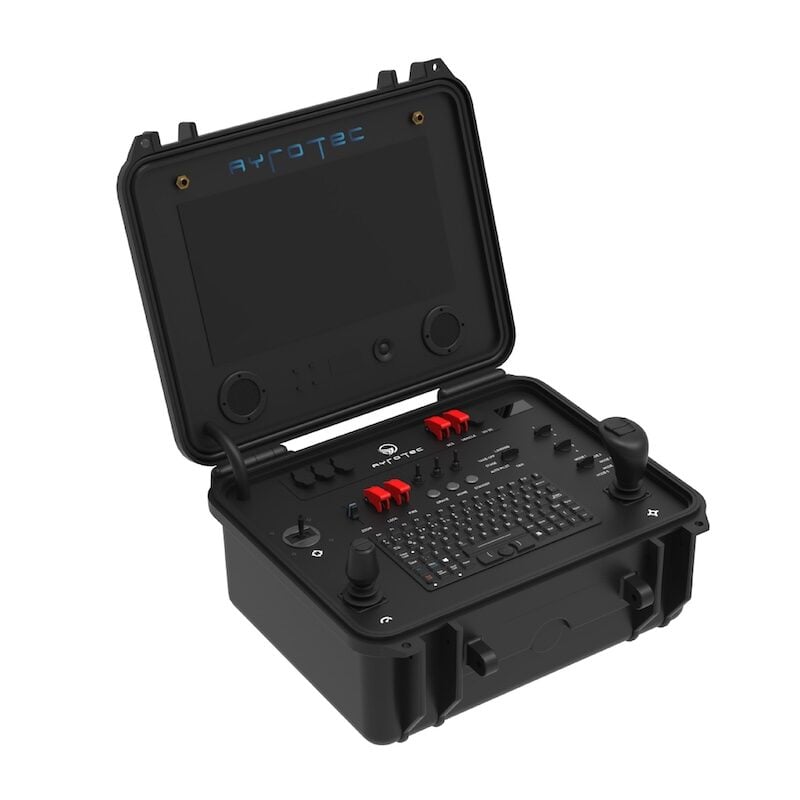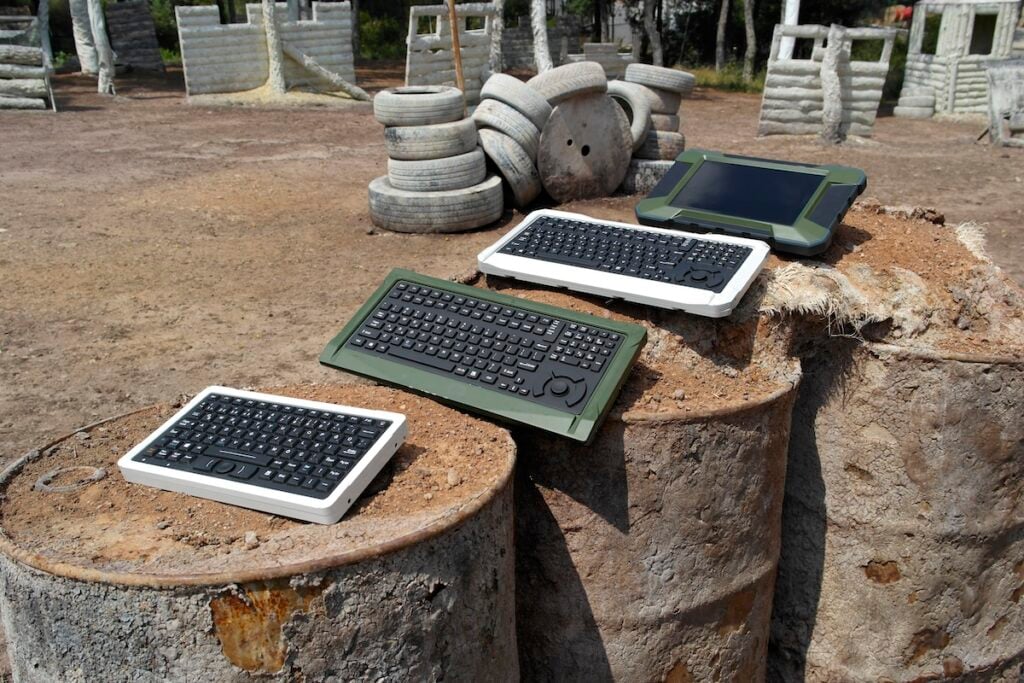
Ruggmate outlines how Human-Machine Interface (HMI) design plays a critical role in the safe and effective operation of unmanned aerial and ground systems, particularly in defense and industrial environments.
As unmanned platforms are increasingly relied upon for high-value and time-sensitive missions, the physical interface between operator and system must deliver consistent, precise control under demanding conditions.
Tactile HMI for Eyes-Up Operation
 Touchscreen-based control interfaces offer flexibility but can introduce limitations when operators must visually confirm inputs. In contrast, tactile hardware allows commands to be confirmed through physical feedback, reducing cognitive load and helping operators remain focused on live video and telemetry data.
This approach is reflected in Ruggmate’s RSK-series keyboards and RSTK-series trackball units, which provide distinct mechanical feedback that can be felt through gloves. The tactile response supports eyes-up operation, enabling confident input without diverting attention from mission-critical displays.
Precision Control Using Hall-Effect Technology
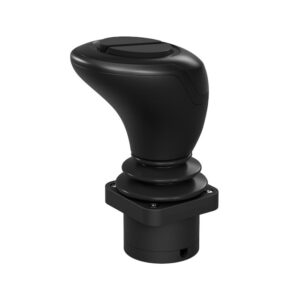 Accurate input is essential for flight control and payload operations such as stabilized gimbal management. Many consumer-grade joysticks rely on potentiometers that degrade over time, potentially introducing dead zones or inconsistent response.
The RJH-01 rugged joystick uses non-contact Hall-effect sensing to measure movement via magnetic field changes rather than physical contact. This design supports long service life and delivers smooth, high-resolution control, allowing small operator inputs to translate into predictable aircraft or payload response.
As autonomy increases across unmanned platforms, manual control is most often required during abnormal or high-risk situations. By integrating tactile feedback, non-contact sensing, and ruggedized construction, Ruggmate’s HMI technologies are designed to support reliable human-machine interaction when operational demands are highest.