Long Endurance Drones
Discover cutting-edge solutions from 20 leading global suppliers
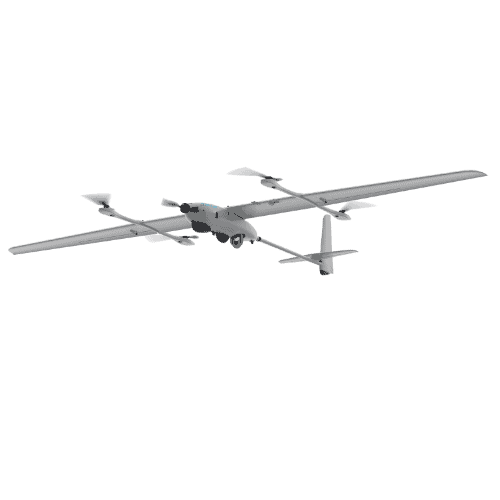
Otto Aerospace has successfully completed a flight-test campaign for a long endurance unmanned drone designed to validate advanced laminar-flow technology at the White Sands Missile Range.
Conducted from Spaceport America, the campaign confirmed predicted aerodynamic efficiency by maintaining smooth, uninterrupted airflow over the surfaces of the fixed-wing aircraft. This research was funded in part by a 24-month contract with the Defense Advanced Research Projects Agency (DARPA) and the Operational Energy Capability Improvement Fund (OECIF) to support the Energy Web Aircraft (EWA) program. The EWA program explores the use of airborne relays to facilitate laser-based power transfer, a concept intended to keep aircraft aloft indefinitely through a distributed energy web.
Otto Aerospace focused on the development of a highly efficient airframe, leveraging aerodynamic expertise to design a vehicle that informs parameters for future energy-relay systems and fuel-efficient platforms. “This aircraft proved what we’ve modeled for years, that high-efficiency laminar-flow aerodynamics can deliver extraordinary endurance and performance,” said Scott Drennan, president and CEO of Otto Aerospace. “We’re proud that Otto’s expertise helped advance DARPA’s research objectives and equally proud of our team for executing a flawless flight campaign that pushes aerodynamic science forward.”

Flight operations were executed in partnership with Swift Engineering, which provided vehicle preparation, range coordination, and telemetry support. Swift’s experience with high-altitude unmanned aerial vehicles (UAVs) assisted in the management of multiple sorties throughout the campaign. Hamed Khalkhali, president of Swift Engineering, stated, “The performance demonstrated in flight confirms the promise of laminar-flow aerodynamics to redefine long-endurance efficiency for unmanned systems across defense and commercial applications.”
The flight demonstrator serves as a validation platform for Otto’s broader research, with data applicable to both future energy-relay concepts and the company’s commercial and defense programs. “The data collected in this test opens new possibilities for energy-efficient aviation,” said Drennan. “From business jets to long-endurance UAVs, we’re showing how laminar flow can change what’s possible in flight.”