Discover World-Leading Unmanned and Autonomous Technologies
Discover cutting-edge solutions from leading global suppliers
Claire Jolly, Lead of the Ocean Economy programme at the Organisation for Economic Co-operation and Development (OECD), will outline key priorities for a sustainable ocean economy during a keynote address at Oceanology International 2026 in London.
The ocean covers around 71% of the Earth’s surface and underpins both planetary health and global prosperity. Supporting more than 100 million jobs and generating an estimated 3–4% of global GDP, the ocean economy is valued at approximately $2.6 trillion. Over the past 25 years, the ocean economy has grown at an average annual rate of 2.8%, according to OECD statistics and analysis, driven by offshore oil and gas, marine and coastal tourism, fisheries and aquaculture, maritime transport and port activities. The Asia-Pacific region accounted for around 75% of global ocean economic growth between 1995 and 2020.
Despite this expansion, the ocean economy faces mounting pressures, including climate change, biodiversity loss, environmental degradation and illicit activity. Structural forces such as population growth, trade and globalisation, the energy transition, technological advances and shifting geopolitical dynamics are expected to shape both ocean health and long-term economic performance. OECD findings indicate that, without policy action, these forces could slow or even reverse growth by 2050, with faltering productivity trends and digitalisation gaps impacting the ocean economy’s future potential.
Launched in March 2025, the OECD’s report The Ocean Economy to 2050 introduced updated international estimates through the Ocean Economy Monitor, providing coherent statistics on ocean economy employment across time, economic activities and countries. The report identified four strategic priorities for policymakers: strengthening ocean governance, promoting technological innovation, enhancing ocean data collection, and ensuring the inclusion of developing countries in global value chains.
OECD to Update the Ocean Technology Community at Oi26
At Oceanology International 2026, Claire Jolly will provide an update on the OECD’s latest findings and outline how evidence-based analysis can support decision-makers across government, industry and academia.
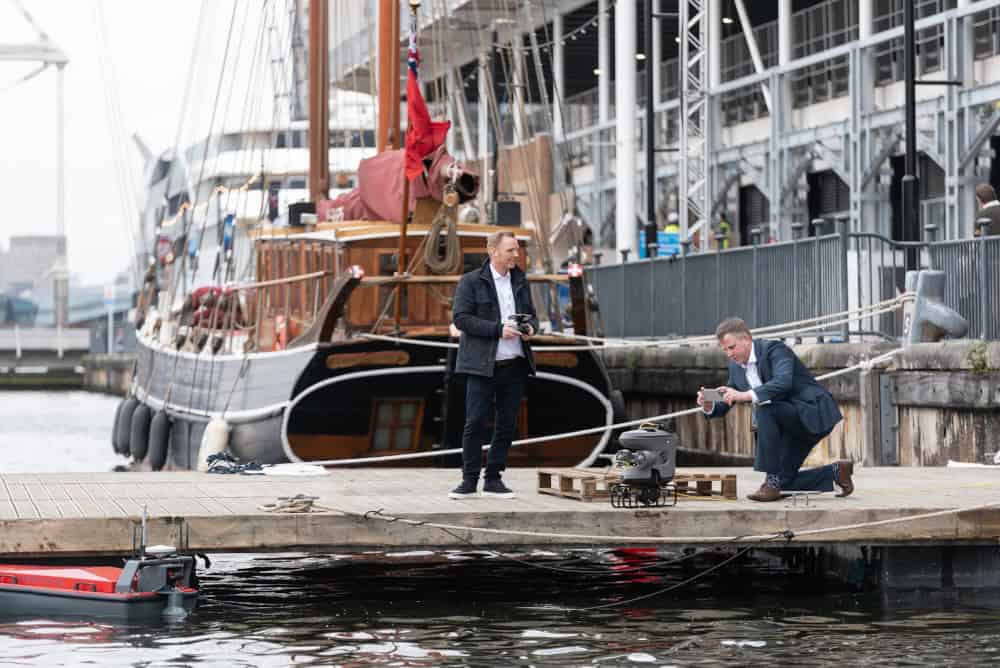
Previewing her keynote speech at Oi26, Claire Jolly said, “I have four main messages coming out of the work that we are conducting at the OECD on the ocean economy. The first one is that the ocean economy is a growth frontier, but only if we manage it wisely. Our latest OECD data show that the ocean economy has doubled in value added in 25 years, but economic prosperity and ocean health must advance together, and strong science foundations are essential.
“Secondly, sustainability is not a constraint. We see through the evidence that we collected, that it’s the enabler of long term value. Overfishing, pollution and habitat loss are eroding the natural capital that underpin the ocean economy. Investing in marine conservation, circular economy models and low carbon technologies is essential for ensuring both economic and ecological resilience.
“The third message – one which really resonates with the Oceanology International audience – is that innovation and data are the new tides shaping ocean industries. Emerging technologies, from ocean observation systems and AI-driven monitoring to green shipping and renewable marine energy, can really transform how we use and protect ocean resources. At the OECD, we emphasise that innovation is really the key for balancing growth with stewardship, but also for making some productivity gains that are essential to sustain the ocean economy.
“And the final message is that global collaboration is really the anchor of a sustainable blue future. The ocean connects us all, and international cooperation on governance, finance and data sharing, including through OECD frameworks, is vital to unlock the full potential of a sustainable ocean economy.”
The OECD has also announced a new biennial flagship publication, The Ocean Economy at A Glance, scheduled for release in autumn 2026, aimed at supporting public and private sector decision-makers with up-to-date statistics and analysis.
Claire Jolly added, “Evidence on the ocean economy is essential from local to global levels, and the OECD and our team are well placed to help and advise governments as well as other actors, stakeholders to put in place the right frameworks.”
OECD Joins Key Speakers at Oi26
Claire Jolly will speak in the plenary session titled The Role of the Ocean Enterprise in Enabling a Future Sustainable Ocean Economy at 15.20 on Tuesday, 10 March in the Ocean Futures Theatre at ExCeL London. The session will explore the future trajectory of the ocean economy and the role of technological innovation and ocean intelligence in driving sustainable Blue Economy growth.
The full Conference Programme for Oi26 features three days of technical, strategic, policy and Blue-Economy-focused content across different conference locations.
Oceanology International 2026 will be held at ExCeL London from 10–12 March 2026, bringing together more than 8,000 attendees and 500 exhibitors from over 80 countries across offshore renewables, oil and gas, ocean observation, defence, maritime security, marine science, ports, aquaculture and subsea sectors.
The 2026 edition will also introduce COAST, a new coastal and shallow water exhibition zone and conference track.
Visitors can register for entry now via the Oi26 website for the chance to join ocean professionals from key ocean industries who will unite across a wide range of sectors, including offshore renewables, oil & gas, ocean observation, defence, maritime security, marine science, ports, aquaculture and subsea.