Single Board Computers (SBCs)
Discover cutting-edge solutions from leading global suppliers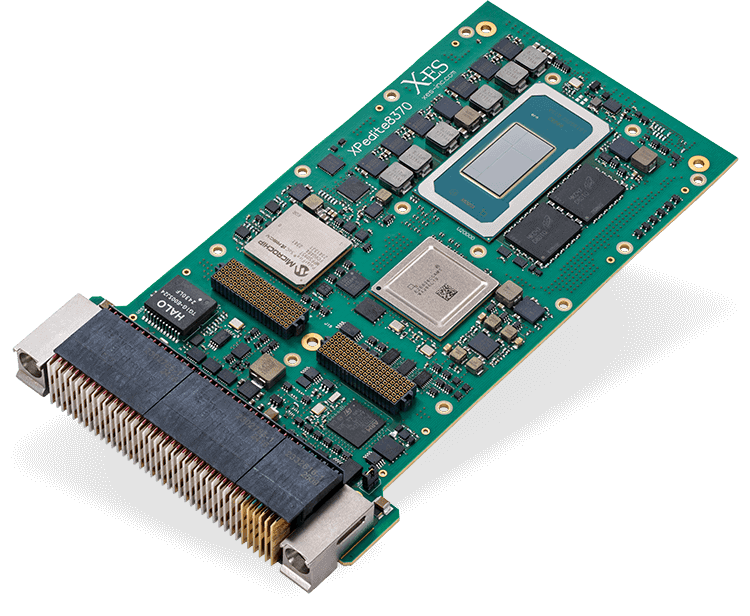
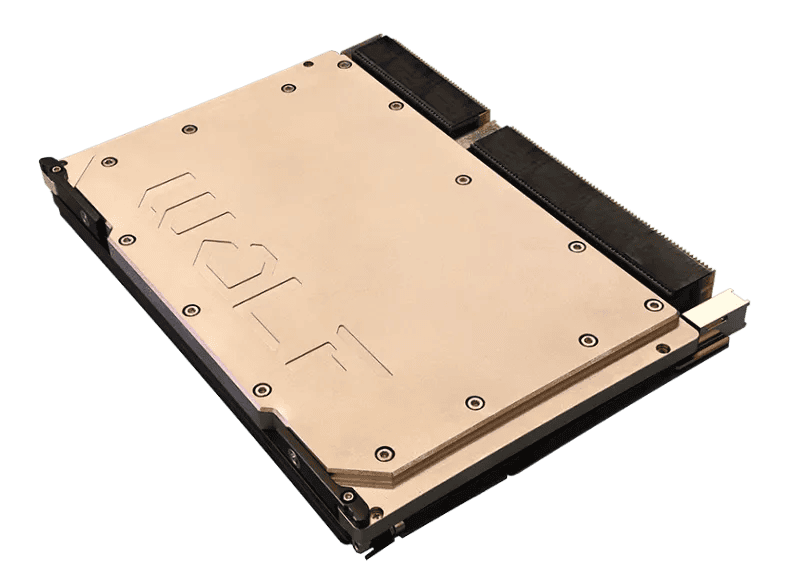
Extreme Engineering Solutions (X-ES) has announced the availability of its latest Single Board Computers (SBC) featuring Intel Core Ultra (Series 3) processors, formerly code-named Panther Lake.
These platforms are engineered to deliver computational performance for real-time processing and data-intensive workloads in harsh operational conditions where reliability is non-negotiable. As the first Intel processor produced on the new 18A process, an advanced 1.8 nm-class semiconductor manufacturing technology, the Core Ultra (Series 3) provides higher performance alongside reduced power consumption. This architecture represents the next evolution of the Core i processor family, maintaining compatibility and lifecycle stability for embedded systems.
The hardware utilizes a three-tier hybrid architecture that combines performance cores, efficiency cores, and low-power efficiency cores for a total of up to 16 cores. This design enables the processor to match compute resources to specific workload demands. Furthermore, mixed-criticality compute cores allow for the separation of latency-sensitive tasks from throughput workloads, ensuring deterministic operation across diverse mission profiles.
Exceptional power scaling is achieved through distributed core usage. This allows workloads to balance performance and efficiency dynamically while operating across the full processor temperature range without the need for Dynamic Temperature Range (DTR) restrictions or system reboots. To support these processing capabilities, the boards include up to 64 GB of LPDDR5 SDRAM with native in-band ECC, providing high-bandwidth memory performance and enhanced data integrity for long-life deployments.
For AI and graphical tasks, the systems leverage the new GFX Xe3 architecture GPU, which delivers speeds up to four times faster than the previous generation. An integrated Neural Processing Unit (NPU) 5.0 provides dedicated AI acceleration with a three-fold increase in TOPS performance. The built-in Intel Arc graphics can access more than 50% of system memory, further pushing advanced AI performance to the edge.
System connectivity is managed through 20 lanes of high-speed PCIe, including 12 lanes of PCIe Gen5, to accommodate throughput-intensive peripherals such as NICs and GPU co-processors. To ensure long-term program stability, the Intel Core Ultra processors are backed by a 10+ year supply life assurance, offering predictable availability for demanding embedded applications.