

Drone Swarm Technology
Discover cutting-edge solutions from leading global suppliersSIRBAI launched AI-powered autonomous drone swarm technology at UMEX 2026, reportedly a first for the Middle East.
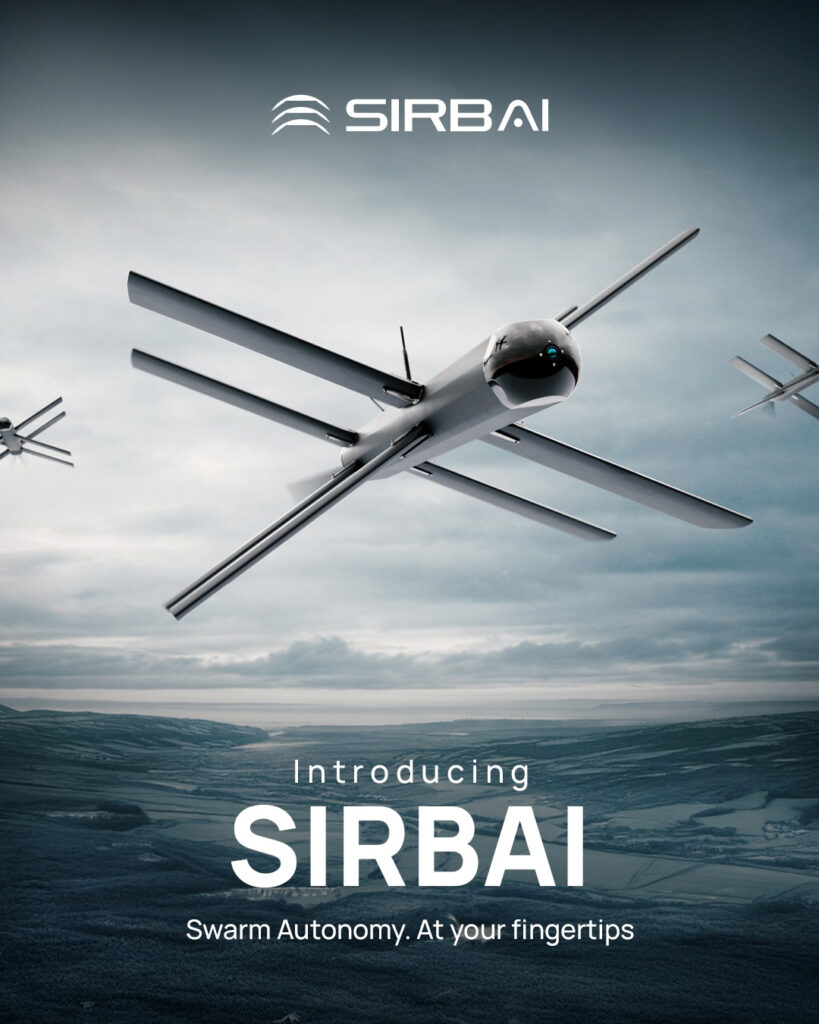
The platform is designed to allow multiple Unmanned Aerial Systems (UAS) to operate collaboratively with high levels of autonomy in complex and contested environments.
Developed by a team of more than 40 engineers specializing in Artificial Intelligence (AI), robotics, and autonomy, SIRBAI’s technology builds upon research originating from the Technology Innovation Institute (TII) in Abu Dhabi. The company utilizes a software-first model and an in-house technology stack to ensure rapid capability development and high security assurance across various deployment environments.
By integrating AI-driven mission planning and real-time coordination, the system is intended to reduce operator workload while enhancing mission resilience. The modular, end-to-end platform consolidates command and swarm execution to accelerate decision cycles. This approach supports a wide range of defense applications, including surveillance, protection, and manned-unmanned teaming.
Dr. Najwa Aaraj, Chief Executive Officer at TII, said, “The launch of SIRBAI’s next-generation swarm technology marks an important milestone for the region’s defense technology ecosystem. By combining advanced AI with autonomous drone operations, SIRBAI is setting a new benchmark for resilient, operator-centric mission systems. TII is proud to support this achievement, which reflects our shared commitment to delivering advanced technologies that strengthen national security and enhance defense capabilities globally.”
The technology is engineered to be scalable and compatible with various platforms, ranging from tactical drones to advanced Unmanned Combat Aerial Vehicles (UCAVs). To maintain operational effectiveness in modern combat zones, the system features resilient navigation capabilities designed to function in GPS-denied environments or under electronic jamming conditions.
Dr. Dario Albani, Chief Technology Officer at SIRBAI, added, “SIRBAI bridges the gap between human intent and autonomous mission execution, enabling seamless coordination across manned and unmanned systems. Our platform ensures resilient autonomy, continuous information flow, and agile response in rapidly changing and demanding environments. By keeping operators and autonomous assets connected and working together, SIRBAI delivers the reliability and operational advantage needed for modern missions.”
The system is built to maintain operator oversight while allowing autonomous assets to function reliably in demanding environments, establishing a new standard for mission systems that prioritize both technical resilience and user ease.