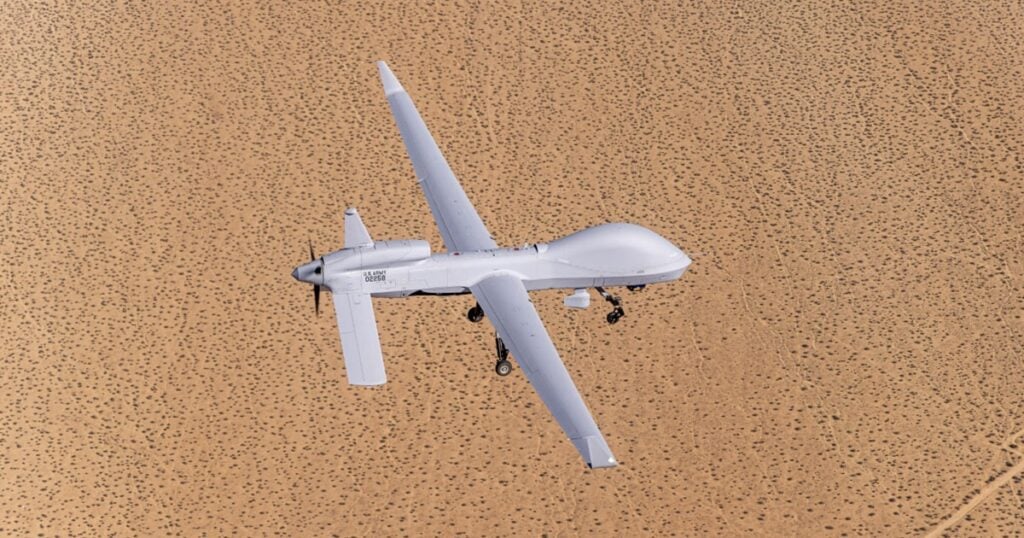
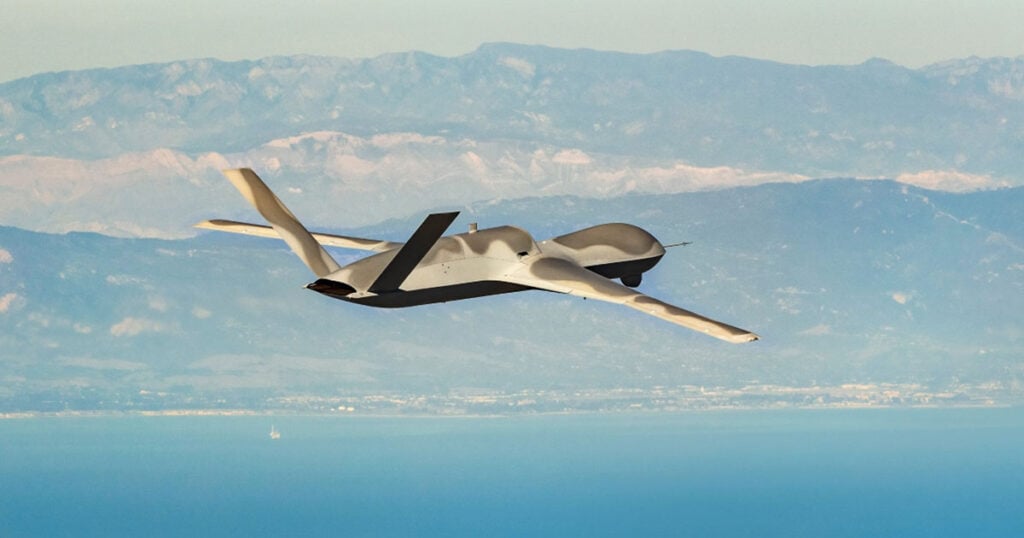
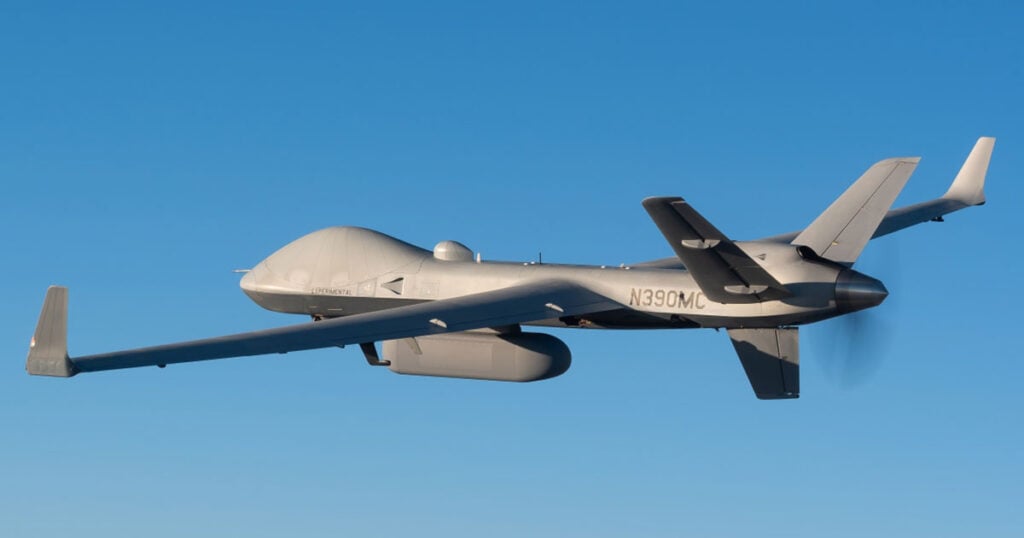
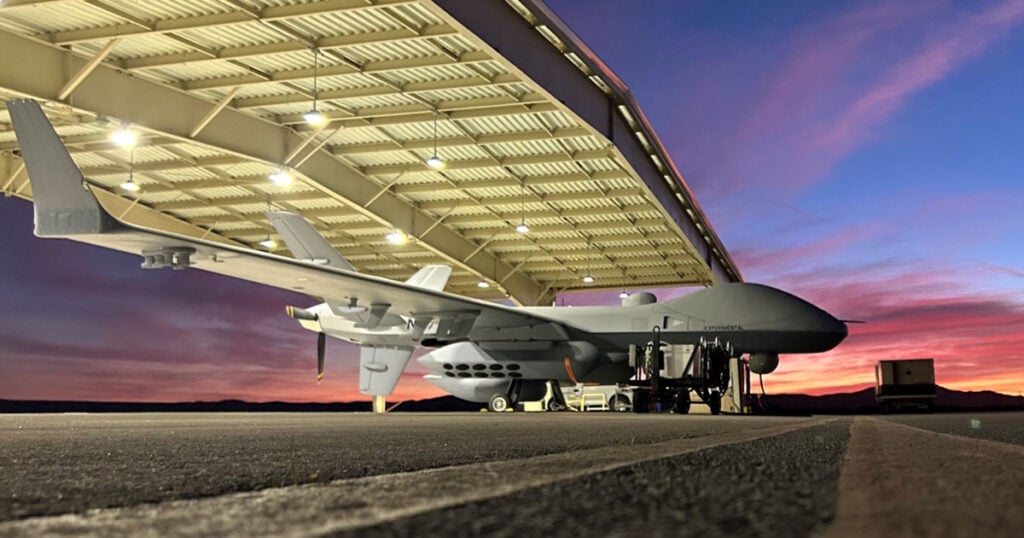
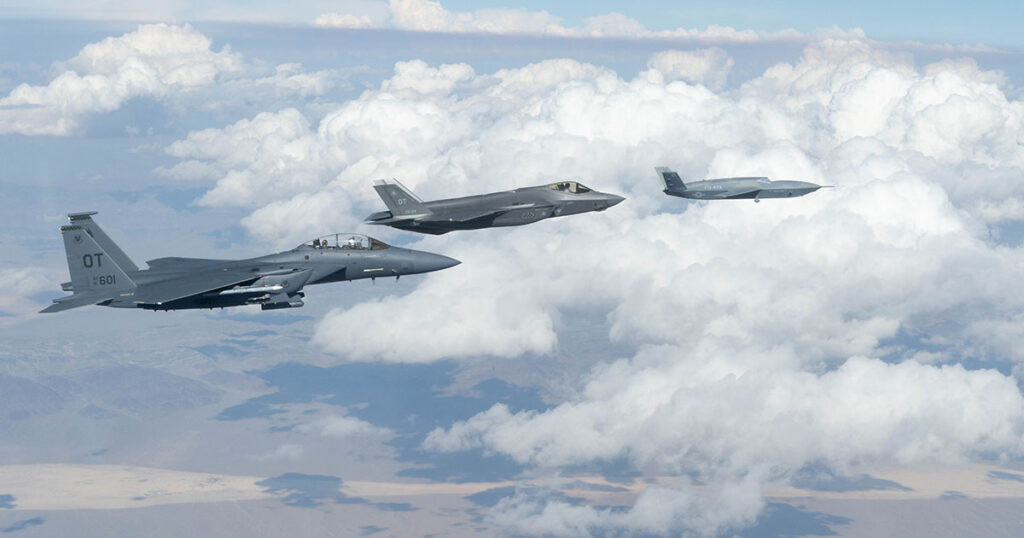
General Atomics Aeronautical Systems, Inc. (GA-ASI) has been contracted by the U.S. Navy to develop conceptual designs for a Collaborative Combat Aircraft (CCA).
The CCA is intended to support future carrier-based air wing operations. GA-ASI was contracted to design the Navy’s CCAs using a modular approach to platform selection, allowing each aircraft to be rapidly reconfigured and upgraded for evolving mission requirements, including operations on and from aircraft carriers.
The approach also supports the Navy’s new acquisition strategy of smaller, more frequent purchases that allow for rapid technology insertion rather than traditional long-lifecycle programs.
CCAs are highly capable, semi-autonomous jet fighters that complement and enhance traditional, human-piloted combat aircraft. They can be produced in high quantities at relatively low cost, allowing commanders to shift risk away from human crews, improve the sensing and other capabilities of existing aircraft formations, increase the air wing’s overall lethality, and maximize operational flexibility across missions.
The Navy’s CCA design will emphasize seamless coordination among manned fighters, uncrewed vehicles, and support platforms. It will take on higher-risk missions, reducing danger to crewed aircraft, as well as support and enhance 4th- and 5th-generation aircraft while complementing future 6th-generation platforms. Overall, the CCA will maximize operational flexibility, cost efficiency, and mission effectiveness.
At the 2024 UK Farnborough Air Show, GA-ASI unveiled its company-developed concept for ship-based CCA operations, called Gambit 5. The Gambit Series envisions a design built around a common Gambit Core, allowing multiple CCA variants to be rapidly reconfigured. This approach ensures high commonality for faster and more cost-effective production at scale.
David R. Alexander, GA-ASI President, stated, “We’re honored by the vote of confidence from the U.S. Navy and we’re eager to put what we’ve built to work for the future fleet. No one has more experience than we do with unmanned combat aircraft and we’re leveraging that to help the Navy get this capability onto the flight deck fast.”
GA-ASI’s Navy CCA contract follows its selection to design and fly the U.S. Air Force’s first CCA, the YFQ-42A. This production-representative unmanned fighter was the first Air Force CCA to begin flight testing in August, making a key achievement for the company.
GA-ASI has configured all of its unmanned combat air vehicles (UCAVs) to be AMS-GRA compliant, including the XQ-67A, YFQ-42A, and MQ-20 Avenger®. The company rapidly reconfigured and upgraded its modular XQ-67A Off-Board Sensing Station, an autonomous-capable unmanned jet developed under contract for the Air Force Research Laboratory. The aircraft achieved its first flight in 2024.
The company has recorded many aviation milestones with its aircraft at sea. In 2023, Mojave, a short takeoff and landing demonstrator, launched from and landed aboard the British aircraft carrier HMS Prince of Wales. In 2024, the demonstrator also took off from the South Korean amphibious assault ship Dokdo and flew to a naval base ashore.
GA-ASI has led unmanned jet operations for over 17 years, beginning with the MQ-20 Avenger in 2008, and has much experience working with the U.S. Navy and other nations on carrier-based unmanned aircraft operations.
It has developed over two dozen different types of unmanned aircraft. GA-ASI has delivered more than 1,200 units to customers, and built over 100 aircraft per year at its 5 million-square-foot manufacturing facility in Poway, Calif.
The company’s aircraft have recorded 9 million total flight hours and more than 50 GA-ASI aircraft are airborne around the world every minute of every day.