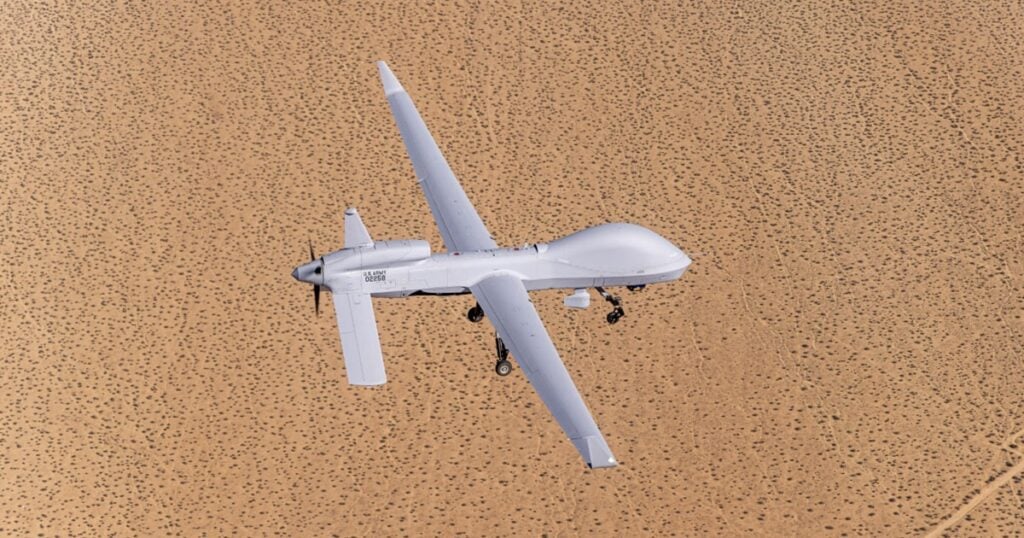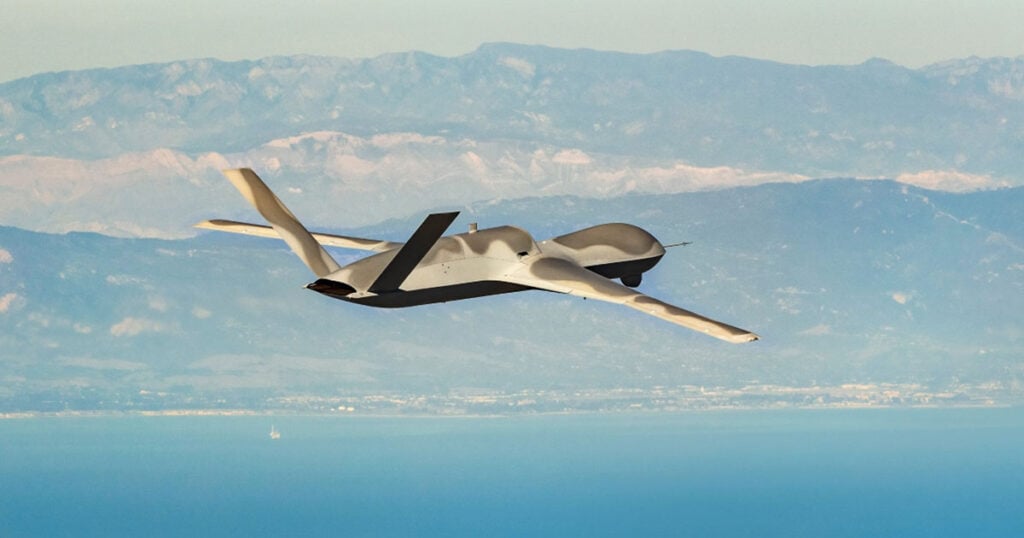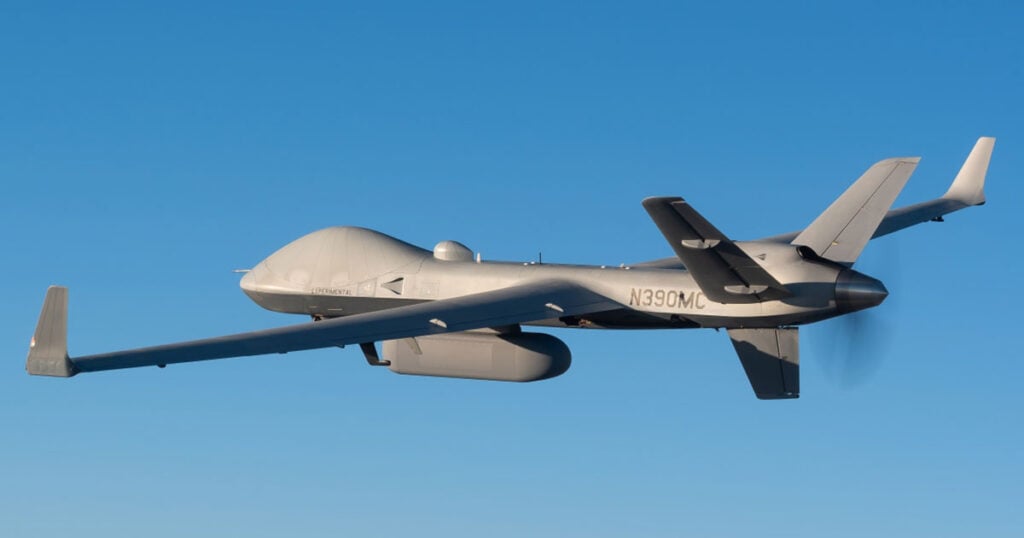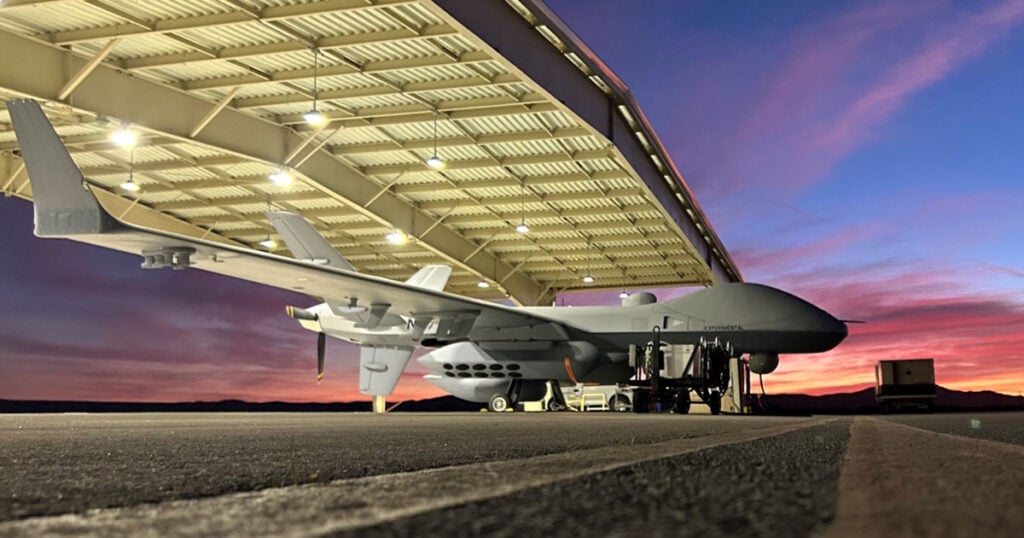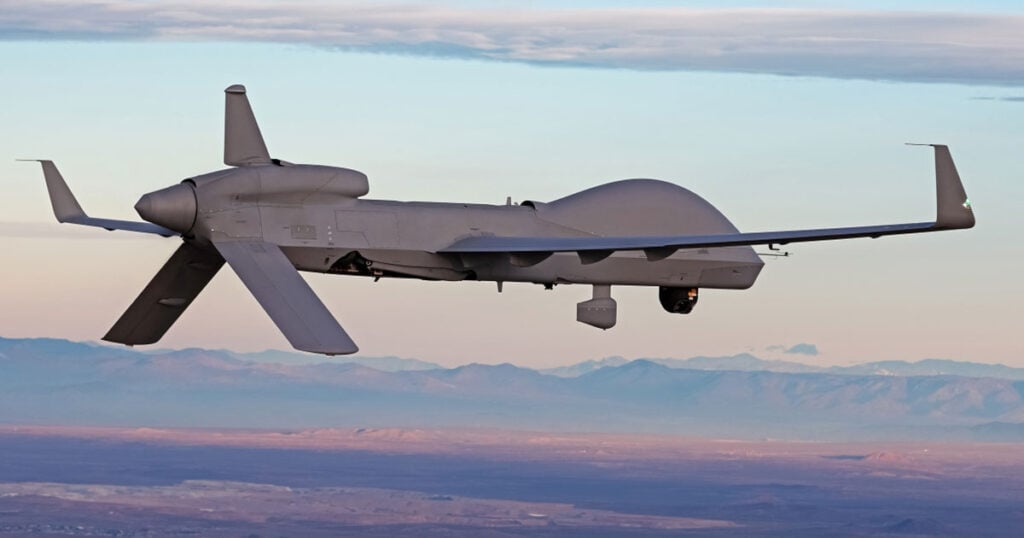
General Atomics Aeronautical Systems, Inc. (GA-ASI) has supported the U.S. Army’s Project Convergence Capstone 5 (PC-C5), which ran throughout March and featured an MQ-1C Gray Eagle® Extended Range (GE-ER) Unmanned Aircraft System (UAS).
The GE-ER was equipped with commercially available next-generation long-range sensors that were operated by Army Soldiers throughout the event.
The GA-ASI-produced UAS flew unimpeded by the employed electronic threats and generated targets of interest at Multi-Domain Operations (MDO)-relevant ranges for the 82nd Airborne Division and participating units. The exercise was based out of Fort Irwin, California, and surrounding ranges.
The GE-ER was configured with modernized Communications Intelligence (COMINT), Electronic Intelligence (ELINT), Synthetic Aperture Radar/Moving Target Indicator (SAR/MTI), and Mobile Ad Hoc Network (MANET) radios, highlighting the GE-ER’s CMOSS (C5ISR Modular Open Suite of Standards) open architecture.
The GE-ER was operated at an altitude and range that negated kinetic threats and utilized the long-range sensors to effectively detect, identify, and target threat emitters and vehicles.
In addition, U.S. Army Soldiers demonstrated Gray Eagle’s laptop-based Expeditionary Ground Control System, which significantly reduces the footprint of both personnel and materials. It also enables Soldiers to fly missions from tents, buildings, or mobile shelters as the mission and threat dictate and allows commanders to rapidly relocate or deploy to remote sites without significant infrastructure or strategic air limitations.
The multi-mission, multi-sensor configuration of the GE-ER performed persistent Detect, Identify, Locate, Report (DILR) missions while performing mesh network aerial tier support to maneuver units, connecting the Soldiers and launched effects that might otherwise be obstructed by terrain or be out of range. This demonstrated GE-ER’s ability to transform in contact, fight, and survive against advanced threats and provide easy-to-use human-machine interfaces. The MQ-1C employed ELINT, COMINT, SAR, and Aerial Tier Network Expansion (ATNE) capabilities to support the Combined Joint Task Force (CJTF) to sense, track, identify, and target enemy positions.
“The Gray Eagle is a true workhorse,” said GA-ASI President David R. Alexander. “We were able to rapidly integrate third-party systems, develop Soldier-focused interfaces, and disseminate relevant data to support MDO requirements for long-range deep sensing and ATNE. GE-ER’s long-range sensors enabled it to execute missions outside of the threat range, proving survivability against advanced threats.”
PC-C5 is considered the U.S. Army’s premier modernization experiment. It brought together joint and multinational partners in a series of complex and realistic scenarios designed to push the boundaries of future warfare capabilities.