Discover World-Leading Unmanned and Autonomous Technologies
Discover cutting-edge solutions from leading global suppliers
Explore UST’s round-up of our five most read articles in the industry this week, including new technologies, flight records, and industry successes.

Amprius Technologies’ ultra-high-energy silicon anode lithium-ion batteries have helped AALTO break an endurance record, completing a continuous 67-day flight in the stratosphere with its Zephyr high-altitude pseudo-satellite (HAPS) aircraft.
Operating at altitudes near 70,000 feet, the solar-powered Zephyr utilizes daytime solar energy to recharge its battery system, relying entirely on Amprius’ silicon anode batteries to sustain flight through the dark, multi-night cycles of the stratosphere. .
2. Latest Drone Technology Combines UAV Platform with Gremsy Imaging Payload
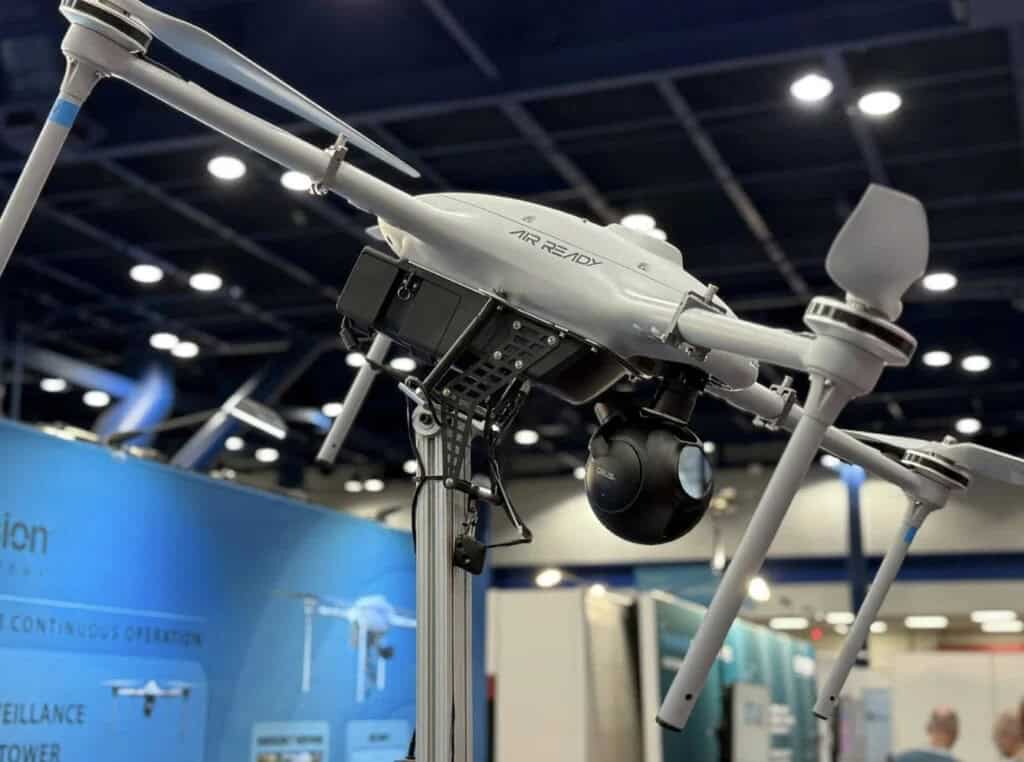
Proxima Vision Aerospace, a developer of advanced intelligent drone platforms, has partnered with precision imaging specialist Gremsy to integrate the Orus L, Gremsy’s imaging payload, with Proxima’s latest UAV systems.
The collaboration combines real-time aerial intelligence with long-endurance flight capabilities, resulting in a fully integrated solution optimized for professional applications in public safety, infrastructure inspection, and defense. The new system was unveiled at Xponential 2025.
3. FAA Approves Canadian UAVs’ Sparrowhawk™ Radar for BVLOS Drone Operations
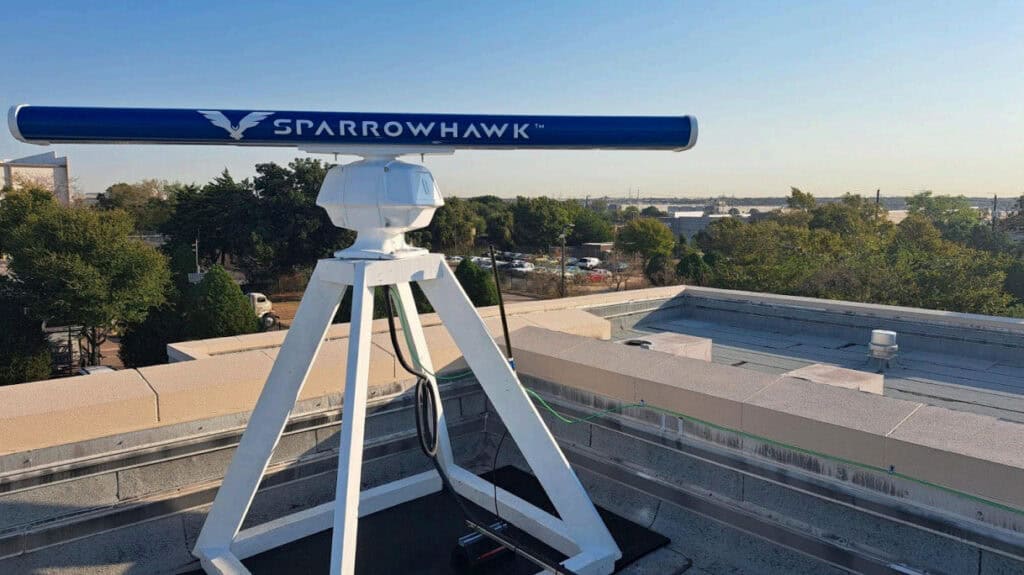
Canadian UAVs, at Xponential 2025 confirmed recent approval from the US Federal Aviation Administration (FAA) for the use of Sparrowhawk™ Radar as a Ground-Based Detect and Alert System (GBDAA).
Installed in Irving, Texas, Sparrowhawk provides airspace detection coverage up to 5,000 feet, with a maximum range of 12 nautical miles (23 km). Within this airspace, police first responders are operating ‘drones-in-a-box’ provided by Unmanned Vehicle Technologies (UVT) of Arkansas.
4. GA-ASI Integrates Advanced Software into USMC Common Intelligence Picture During WTI Course

General Atomics Aeronautical Systems, Inc. (GA-ASI) has achieved a key milestone in enhancing the U.S. Marine Corps’ Intelligence, Surveillance, and Reconnaissance (ISR) capabilities by successfully integrating its advanced Optix software into the Common Intelligence Picture (CIP) during a recent multi-service Weapons and Tactics Instructor (WTI) course.
Developed by General Atomics Integrated Intelligence, Inc. (GA-i3), Optix delivers real-time situational awareness and decision support, significantly bolstering the operational effectiveness of unmanned systems in a joint training environment.
5. UAS Solution for Real-Time Electromagnetic Spectrum Monitoring

Skyeton, a Ukrainian leading manufacturer of unmanned aerial systems (UAS) has entered a strategic collaboration with Quadsat, expert in UAV-based RF testing and measurement, to deliver solutions for monitoring the electromagnetic spectrum.
The partnership combines Skyeton’s fixed-wing UAS platform, the Raybird UAS, known for its battlefield-proven performance in Ukraine, with Quadsat’s industry-validated radio frequency (RF) payload and spectrum monitoring technology.