


Textron Systems Completes RIPSAW M5 Vehicle Deliveries to Support U.S. Army’s RCV Medium Program

The RIPSAW M5 offers unprecedented endurance and revolutionary capabilities and its hybrid engine allows for quiet maneuvers and increased reliability By Joe Macey / 02 Jun 2024

Discover World-Leading Unmanned and Autonomous Technologies

Discover cutting-edge solutions from leading global suppliers
SUPPLIER SPOTLIGHT
Follow UST

Textron Systems and Howe & Howe Inc have delivered the fourth RIPSAW® M5 vehicle to the U.S. Army in support of the Robotic Combat Vehicle (RCV) medium program.
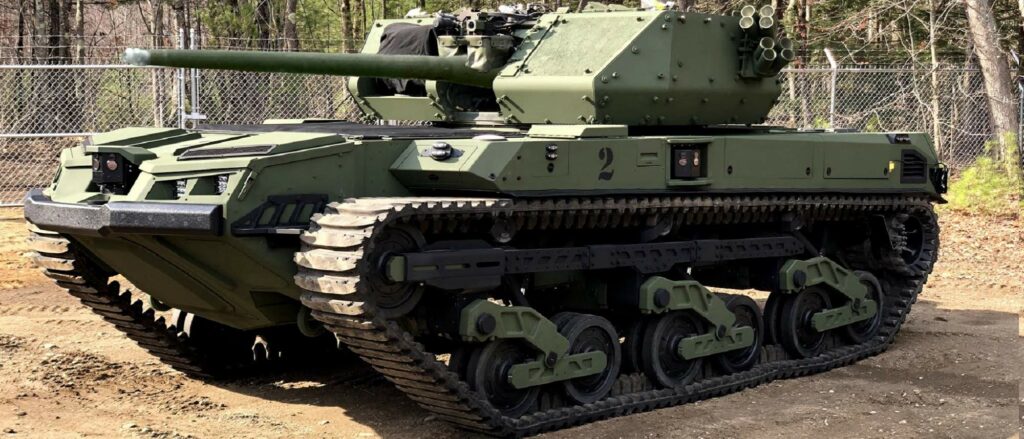
With innovative engineering and systems integration, this vehicle offers unprecedented endurance and revolutionary capabilities. Its hybrid engine allows for quiet maneuvers and increased reliability.

Leveraging Howe & Howe’s commitment to innovation, and Textron Systems’ decades of design and manufacturing excellence, the M5 vehicles provide the speed, mobility and unmanned capability needed to modernize future forces, while protecting our warfighters.

The customer will begin integration and testing of their own robotic controller technologies in preparation for the 2022 Soldier Operational Experiment. Insights gained from these vehicles will help shape future capability requirements and program priorities.


Posted by Joe Macey Joseph Macey is a Content Specialist at Unmanned Systems Technology. Since joining in 2022, he has focused on emerging technologies in unmanned systems, with particular expertise in Counter-UAS, communication systems, and camera technologies. A graduate of Falmouth University in Journalism, Joseph began his career in 2019 as a local reporter. His journalism experience not only sharpens his reporting but also enhances his ability to conduct in-depth interviews, enabling him to deliver authoritative insights on the latest industry trends. Connect
Advancing Unmanned Systems Through Strategic Collaboration UST works with major OEMs to foster collaboration and increase engagement with SMEs, to accelerate innovation and drive unmanned systems capabilities forward.