

WOLF Advanced Technology
HP | MJF for Unmanned Systems
General Atomics Aeronautical Systems, Inc

First Students Graduate from GA-ASI UAS Training Academy

By Mike Ball / 25 Aug 2016
Follow UST

GA-ASI UAS Training Academy

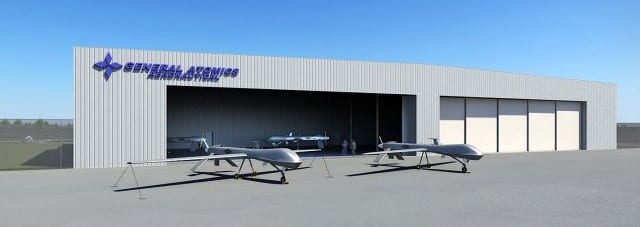
General Atomics Aeronautical Systems, Inc. (GA‑ASI) has announced that the company’s new Unmanned Aircraft System (UAS) Flight Training Academy has graduated its first cadre of GA-ASI aircrews.

“Our first graduates have benefitted from safe, effective, cutting-edge training that will enable them to support flight operations for our global customers,” said David R. Alexander, president, Aircraft Systems, GA-ASI. “We look forward to providing the same high-quality training services to our customers’ aircrews to meet their growing demands in the very near future.”

GA-ASI’s North Dakota-based Flight Training Academy now demonstrates a dramatic reduction in the time required to train qualified aircrew, thereby expanding the company’s ability to meet the growing demand for Predator-series UAS and the aircrew required to fly them. Prior to the Academy’s opening, training occurred at the company’s California flight operations facilities, where long logistical pipelines stretched aircrew instruction to as long as six months. Today, students can complete their UAS training in as little as two months. Pilots complete 15 flights (36 hours), 25 simulator lessons (59 hours), and 114 hours of academic studies. Sensor operator training time is similar with the exception that slightly fewer hours are required for graduation.

Three pilots comprised the Academy’s first graduating class. Five additional pilots and six sensor operators will follow shortly. Upon graduation, the new aircrews will join GA-ASI’s approximately 230 qualified aircrews currently deployed around the world.

Prior to entering training, all GA-ASI UAS pilots must possess a Bachelor’s degree, a FAA commercial instrument pilot rating and accumulate 300 hours as a pilot-in-command. For sensor operators, a commercial pilot rating or a private pilot license is required. Both pilots and sensor operators also must be able to maintain a Class II FAA medical certificate and to obtain and maintain a DoD security clearance,

GA-ASI Flight Training Academy graduates are qualified aircrews for Predator A. The company expects to have its second training system, Predator B, available before the end of this year, providing students with the opportunity to qualify on both aircraft.

As an additional benefit, the Training Academy also can serve to augment U.S. Air Force RPA training programs.


To learn more, visit the General Atomics Aeronautical Systems, Inc Partner Hub: Innovation Partner Hub
Posted by Mike Ball Mike Ball is our resident technical editor here at Unmanned Systems Technology. Combining his passion for teaching, advanced engineering and all things unmanned, Mike keeps a watchful eye over everything related to the unmanned technical sector. With over 10 years’ experience in the unmanned field and a degree in engineering, Mike’s been heading up our technical team here for the last 8 years. Connect

More from General Atomics Aeronautical Systems, Inc

Thirteen Dutch Innovators Selected to Pitch Defense & Dual-Use Technologies at Blue Magic Netherlands

Featuring keynotes from senior military and NATO leaders, thirteen Dutch tech companies prepare to pitch cutting-edge solutions addressing critical defense challenges to industry decision-makers at the Eindhoven innovation event

Nov 05, 2026
GA-ASI Opens North Dakota Facility for Remote MQ-9A Operations

GA-ASI has opened a new Remote Split Operation (RSO) facility in North Dakota to support MQ-9A aircraft missions for U.S. Africa Command, reducing overseas personnel requirements and operational costs through US-based remote flight operations

Nov 03, 2026
GA-ASI & Saab Demonstrate Uncrewed Airborne Early Warning Flight Capabilities on MQ-9B

Flight trials in California paired General Atomics’ long-endurance uncrewed aircraft with Saab’s advanced radar to track multiple airborne and maritime targets, transforming persistent surveillance while eliminating operational risk to crewed platforms

Oct 29, 2026
GA-ASI & Spirit Defense Partner to Scale Collaborative Combat Aircraft Production

GA-ASI has partnered with Spirit Defense to manufacture fuselages for the Air Force's FQ-42 Collaborative Combat Aircraft, significantly expanding industrial capacity to accelerate autonomous military fleet production

Oct 27, 2026
GA-ASI Flight Tests New ESM System for Long-Range Sensing on Army Gray Eagle UAS

GA-ASI has completed successful flight testing of SNC's Electronic Support Measures system on the MQ-1C Gray Eagle ER, enhancing long-range threat detection and survivability for U.S. Forces

Oct 19, 2026
Arizona Army National Guard to Receive First Gray Eagle® 25M UAS

General Atomics Aeronautical Systems plans to deliver eight Gray Eagle® 25M unmanned aircraft to the Arizona Army National Guard in September 2027, with four additional units scheduled for fielding by the end of 2029 as part of a wider initiative to establish eight divisional UAS companies

Oct 14, 2026

THE WEEKLY eBRIEF

The latest unmanned systems news, straight to your inbox.

Get our weekly roundup of technology developments, new products and industry news.

By subscribing, you agree to receive the weekly UST eBrief newsletter from EchoBlue Ltd. Unsubscribe at any time using the link in every email. See our Privacy Notice.

Advancing Unmanned Systems Through Strategic Collaboration UST works with major OEMs to foster collaboration and increase engagement with SMEs, to accelerate innovation and drive unmanned systems capabilities forward.