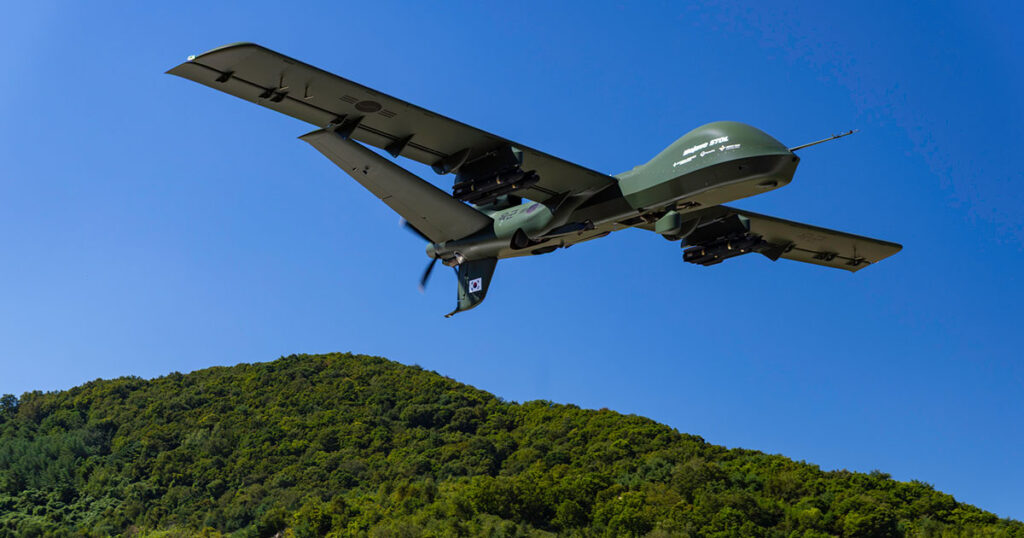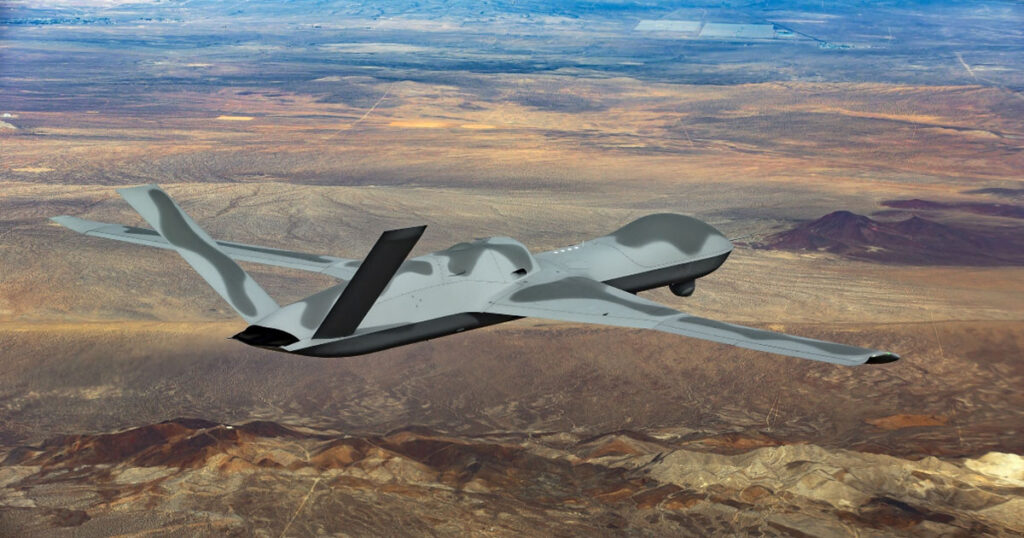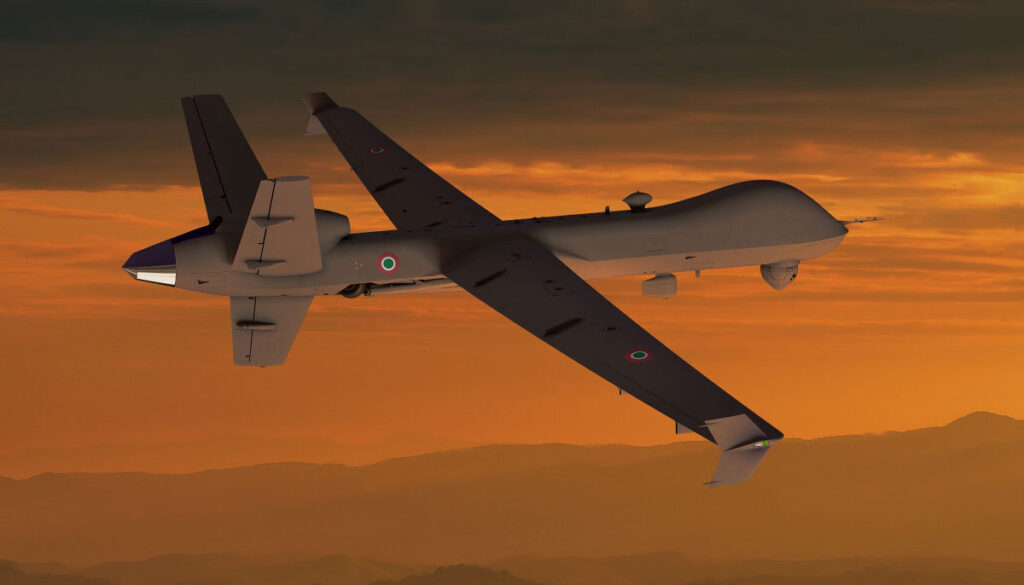



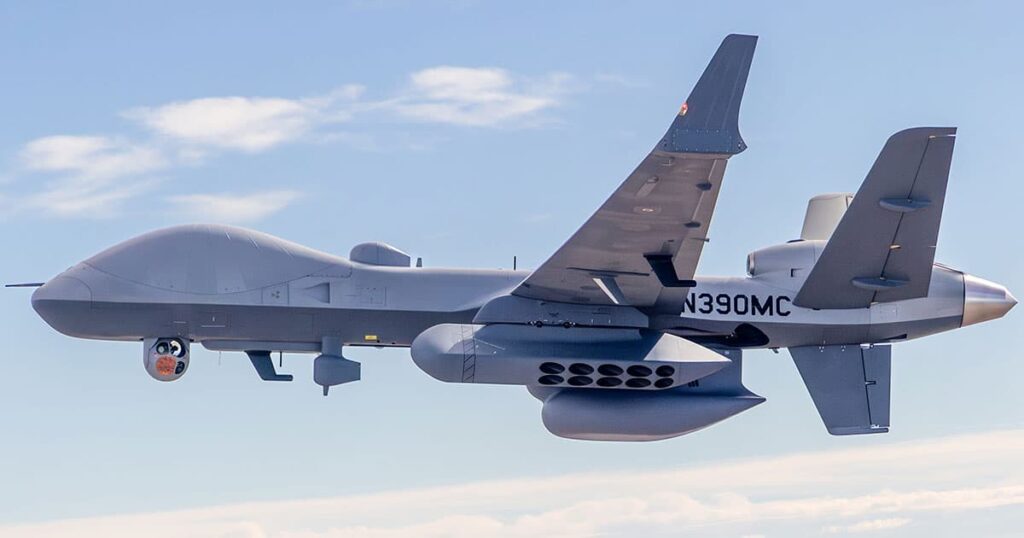
The MQ-9B SeaGuardian® is a maritime-optimized Remotely Piloted Aircraft System (RPAS) designed for persistent maritime domain awareness and multi-mission flexibility.
Developed by General Atomics Aeronautical Systems, Inc. (GA-ASI), it is equipped with advanced sensors and long-endurance surveillance systems, with optional anti-submarine warfare (ASW) capabilities. It is the first RPAS in its class to conduct real-time surface and subsurface patrols.
Overview of the MQ-9B SeaGuardian
The MQ-9B SeaGuardian is a naval-optimized variant of the SkyGuardian® RPAS, specifically designed to provide long-range intelligence, surveillance, and reconnaissance (ISR) over the maritime domain. It builds upon the MQ-9 Predator-series aircraft—a platform with over 8 million operational flight hours—while integrating bolt-on/bolt-off missionized maritime sensors to expand its operational flexibility.
SeaGuardian operates beyond the horizon via SATCOM, providing persistent surveillance for over 30 hours in all weather conditions. Its ability to integrate with civil airspace regulations allows seamless coordination with military and civilian authorities. This makes it an ideal platform for naval defense, search and rescue (SAR), and law enforcement, with optional anti-submarine warfare (ASW) capabilities.
Key Features and Capabilities
Persistent Maritime Domain Awareness
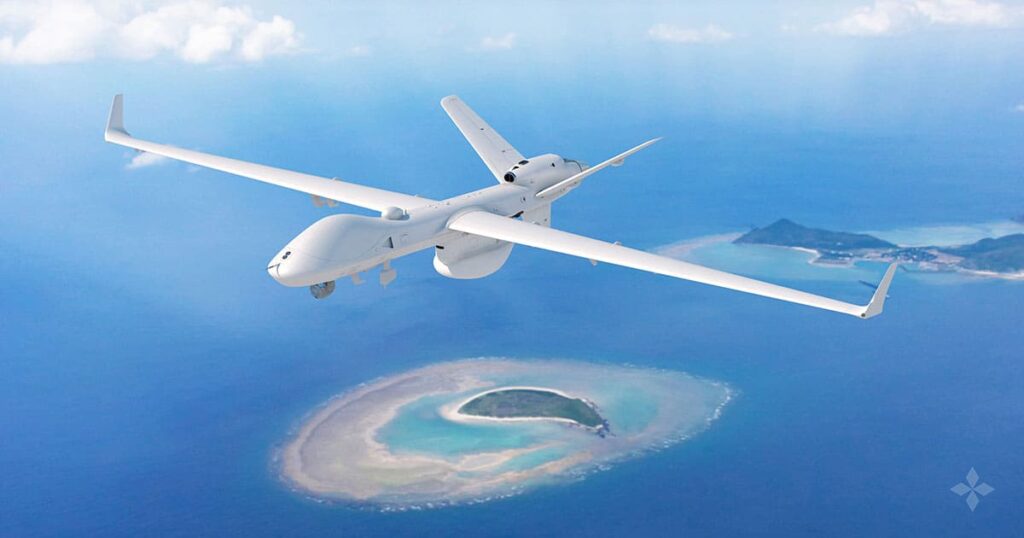
SeaGuardian is built to extend the reach of naval forces through continuous ISR over vast oceanic regions. It integrates a multi-mode 360° maritime radar, Automatic Identification System (AIS), and Electronic Support Measures (ESM) to detect, track, and classify vessels across a wide area.
The platform enables over-the-horizon targeting, ensuring naval commanders receive real-time intelligence for surface and subsurface threats. Unlike traditional ISR aircraft, SeaGuardian can loiter for extended durations, allowing for persistent area monitoring and dynamic threat response.
Advanced Anti-Submarine Warfare (ASW) Capabilities
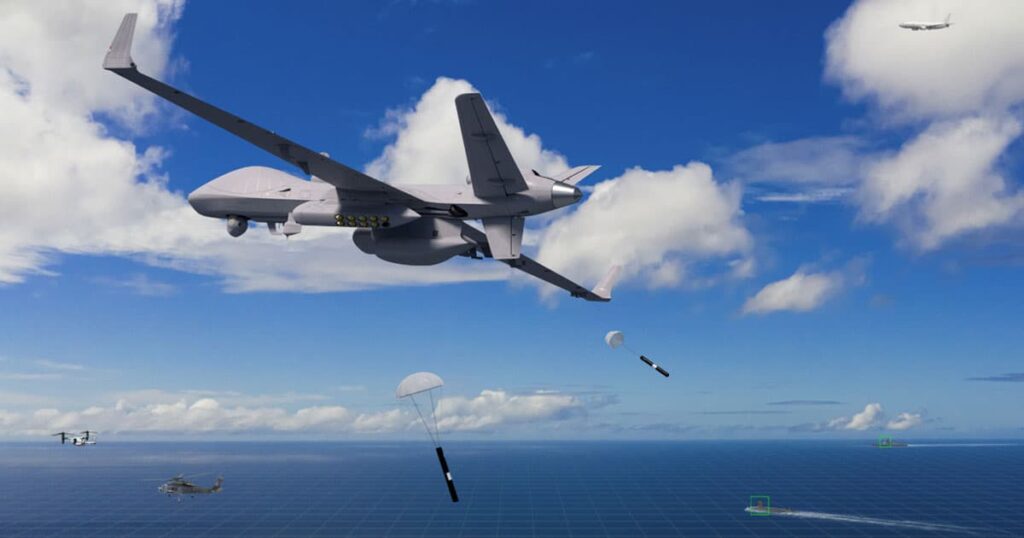
One of SeaGuardian’s most revolutionary capabilities is its integrated sonobuoy management and control system (SMCS). This system allows the RPAS to:
- Deploy, monitor, and control sonobuoys remotely, a first for unmanned aircraft.
- Carry up to 40 ‘A’-size or 80 ‘G’-size sonobuoys using four external Sonobuoy Dispenser System (SDS) pods.
- Maintain a 1,200 nautical mile mission radius, ensuring extended on-station time for submarine detection and prosecution.
- Operate as a stand-alone ASW platform or complement human-crewed maritime patrol aircraft (manned-unmanned teaming).
During Navy exercises in 2023, SeaGuardian successfully detected and tracked a simulated submarine, relaying precise targeting data to allied aircraft for engagement.
Airspace Integration & Civilian Compliance
SeaGuardian is the first RPAS in its class designed for seamless integration into civil airspace. It features a Detect and Avoid System (TCAS, ADS-B, Due Regard Radar) that allows it to operate like a standard crewed aircraft, eliminating the need for segregated airspace or escort planes.
GA-ASI has worked closely with the U.S. FAA and UK Civil Aviation Authority to secure regulatory approvals, ensuring safe interoperability with commercial air traffic. This capability enhances SeaGuardian’s utility for border patrol, law enforcement, and search and rescue operations.
All-Weather Durability & Cold-Weather Performance
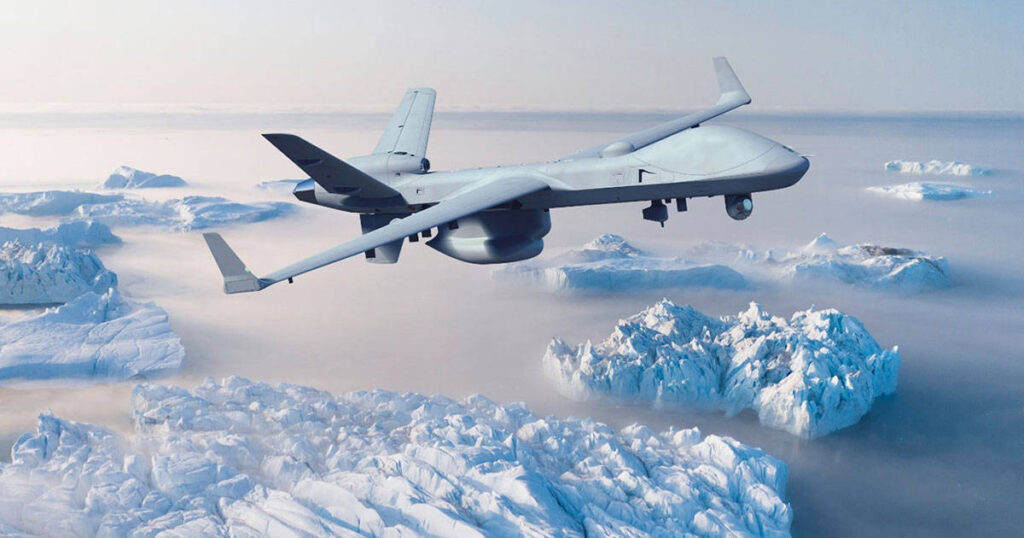
Designed for harsh maritime environments, SeaGuardian features:
- Lightning protection and de-ice/anti-ice systems for extreme weather resilience.
- A fatigue- and damage-tolerant airframe with a 40,000-hour service life.
- Proven cold-weather operation, successfully demonstrated in Grand Forks, North Dakota, in early 2023.
These enhancements enable uninterrupted operations in stormy seas, Arctic conditions, and low-visibility environments.
Mission Roles
SeaGuardian’s flexible payloads and open architecture allow it to perform a variety of critical maritime missions, including:
Military and Homeland Security Applications
- Anti-Surface Warfare (ASuW) – Detects, tracks, and classifies surface threats, including naval vessels and illegal maritime activity.
- Anti-Submarine Warfare (ASW) – Deploys, monitors, and controls sonobuoys to locate and track submarines.
- Airborne Mine Countermeasures (AMCM) – Conducts mine detection and monitoring.
- Long-Range Strategic ISR & Over-the-Horizon Targeting – Extends naval ISR capabilities well beyond the operational range of human-crewed assets.
Civilian & Multi-Agency Operations
- Search and Rescue (SAR) – Locates and tracks distressed vessels, survivors, and maritime incidents.
- Humanitarian Assistance & Disaster Relief – Provides real-time aerial reconnaissance during natural disasters.
- Law Enforcement & Border Enforcement – Supports coast guards, customs agencies, and naval patrols in monitoring illegal activities.
By integrating GA-ASI’s Optix+ geospatial intelligence software, SeaGuardian can rapidly detect, classify, and track vessels of interest, providing actionable intelligence to naval commanders in real-time.
Cost-Effective Force Multiplier
SeaGuardian provides 80% of the capability of a human-crewed maritime patrol aircraft at just 14% of the operating cost. This allows navies to:
- Conduct routine patrols at a fraction of the cost of traditional ISR platforms.
- Preserve the operational lifespan of more expensive crewed aircraft by assigning unmanned assets to high-endurance missions.
- Expand their ISR capabilities without additional crew commitments.
SeaGuardian’s ability to detect and track maritime threats for extended periods allows commanders to deploy manned aircraft and strike forces only when necessary, maximizing operational efficiency.